
Background and Recent Developments
- U.S. President Donald Trump revived Greenland takeover demands in January 2025.
- Denmark rejected the proposal, reiterating Greenland is not for sale.
- Trump threatened high tariffs and possible military force to press negotiations.
- In January 2026, the White House proposed 10% tariffs on eight European countries.
- Tariffs were planned to rise to 25% by June 2026 if no Greenland agreement emerged.
- At Davos 2026, Trump softened rhetoric, announcing a “framework of a future deal”.
Strategic and Security Dimensions
- The U.S. cites Greenland’s Arctic location as vital for national and regional security.
- Trump claimed expanding Russian and Chinese influence justified U.S. involvement.
- Greenland already falls under NATO’s collective security umbrella.
- The 1951 U.S.-Denmark pact allows expanded U.S. military presence during security threats.
- U.S. troop presence declined from 10,000 during the Cold War to about 200 today.
- Discussions included the $175 billion Golden Dome missile defence system.
Resource and Economic Motivations
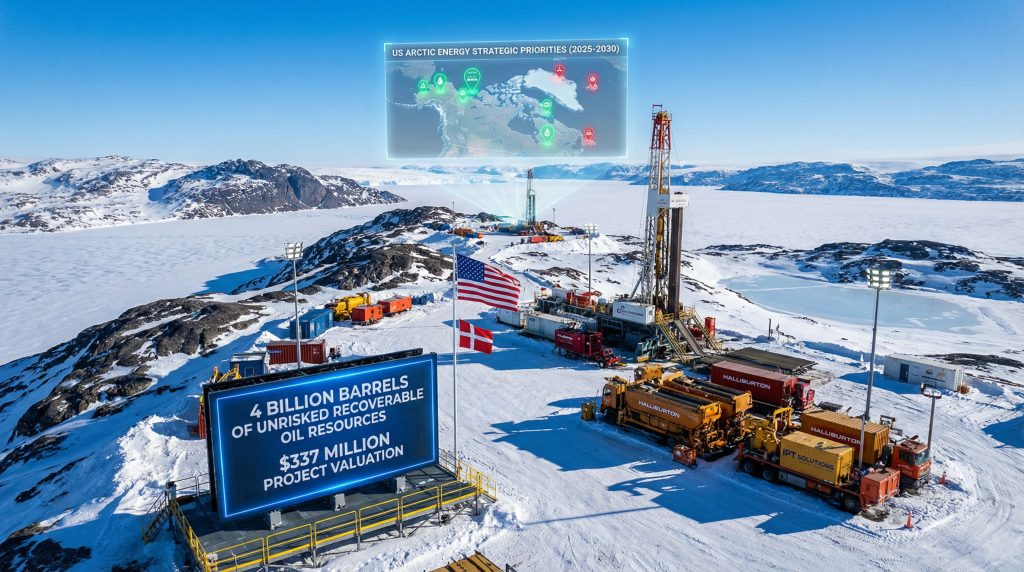
- Greenland holds significant reserves of oil and natural gas.
- The territory contains 25 of 34 critical raw materials listed by the European Commission.
- Key minerals include graphite and titanium, vital for defence and clean energy sectors.
- Reports suggest resource extraction, not security, drives Washington’s strategic interest.
Diplomatic and Legal Implications
- NATO Secretary General stated Danish sovereignty was not discussed in talks.
- U.S. officials hinted at partial territorial control, similar to U.K. bases in Cyprus.
- European nations warned of counter-tariffs targeting major U.S. technology firms.
- Legal challenges may arise against U.S. tariff use under emergency economic powers.
Broader Global Ramifications
- The episode raises fears of neo-imperialist interference in sovereign territories.
- Countries like India and China are urged to defend territorial sovereignty principles.
- The case highlights stress on the rules-based international order in strategic competition.