

Context
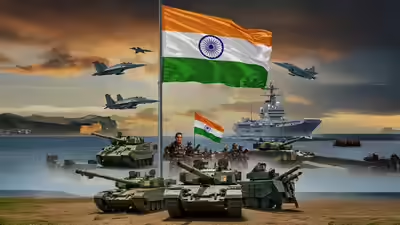
- Union Budget 2026-27 allocated ₹7.85 lakh crore (~$86.7 billion) for national security. It is a 15.19% increase over the previous year
- Capital outlay rose to ₹2.19 lakh crore i.e a 21.8% surge for military modernisation and next-generation platforms like fighter aircraft, submarines, and drones
- Revenue budget raised to ₹3.65 lakh crore to ensure higher operational readiness and logistics
Structural Weaknesses That Justify the Surge
- Fighter squadrons have dwindled to levels far below sanctioned strength
- Naval assets are overstretched across an expanding maritime theatre
- Air defence coverage remains patchy
- Army continues to rely on legacy platforms outdated even before the last decade of border tensions
- These are structural weaknesses, not marginal shortfalls as they directly shape adversaries’ calculations about India’s resolve
India’s Evolving Security Environment
- Pakistan’s military posture tightly coupled to nuclear strategy, designed to exploit conventional imbalance; tolerance for risk under domestic political strain cannot be ignored
- China’s two decades of modernising forces, expanding naval reach, and hardening positions along the Line of Actual Control (LAC)
- Further the 2020 Galwan Crisis is a stark reminder that Beijing is willing to test India’s resolve and exploit perceived weakness
- China-Pakistan coordination: Growing diplomatic and military coordination represents a two-front dynamic India must now confront in increasingly tangible ways
- US unpredictability: Transactional global commitments from Washington reinforce India’s need for strategic autonomy through credible self-reliance
Deterrence Consolidation
- Increased defence spending is deterrence consolidation i.e. closing capability gaps and reducing vulnerability to coercion
- Deterrence is a material condition rooted in capability as an adversary is deterred only when it believes aggression will fail or cost more than it is worth
- A country unable to defend its borders, protect sea lanes, or absorb a first blow without crisis is not strategically autonomous but it is merely exposed
- A weak India encourages risk-taking by adversaries who believe they can coerce or punish New Delhi at acceptable costs
- Underinvestment creates the worst of both worlds like louder alarms without stronger locks
Aatmanirbhar Bharat: Domestic Dimension of Defence Modernisation
- Government has achieved nearly 75% domestic procurement through the modernisation fund under the Atmanirbhar Bharat initiative
- Focus on plugging known gaps, modernising outdated systems, and building resilience to prevent crises from escalating
- Simultaneously boosts domestic manufacturing and reduces import dependency
Conclusion
- The defence budget is not escalation but rather it is insurance, the minimum required for a country with India’s geography, adversaries, and responsibilities. A more secure India ensures a more stable Asia and this comes from credible deterrence, not wishful thinking. Deterrence consolidation is the foundation of stability in a region where the margin for error is shrinking. India is finally taking real responsibility for its own security.
