Context
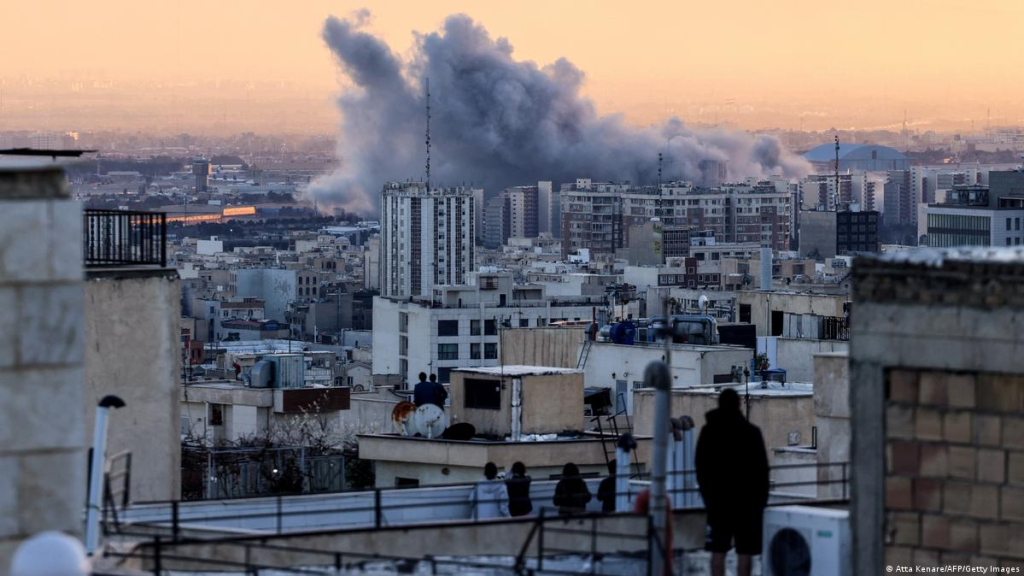
- The US and Israel launched coordinated strikes across Iran on February 28, 2026, framing the operation as a “pre-emptive” response to an imminent threat.
- A missile struck a girls’ primary school in Minab, southern Iran, killing around 150 people, mostly schoolchildren, and injuring nearly 100.
- UNESCO condemned this as a grave violation of International Humanitarian Law (IHL).
- The strikes raise two distinct but equally important legal questions: the legality of initiating the use of force under the UN Charter, and the legality of how the war is being fought under IHL (International Humanitarian Law).
UN Charter Framework (Jus Ad Bellum)
- The UN Charter (1945) was created to save future generations from the “scourge of war” and maintain international peace and security.
- Article 2(4) prohibits all member states from threatening or using force against the territorial integrity or political independence of another state.
- Only the UN Security Council can authorise the use of force against a member state in response to breaches of international peace.
- The sole exception is Article 51, which permits use of force in self-defence, but only in response to an actual armed attack, not a potential future one.
Why the Legal Justification Is Weak
- Iran had not recently attacked either Israel or the US as any earlier threat had long dissipated, making a self-defence claim under Article 51 implausible.
- The operation rests at best on “anticipatory self-defence” by using force against an attack that has not yet occurred, a doctrine many scholars argue international law does not recognise.
- Even under the broadest theory of anticipatory self-defence, three conditions must be met simultaneously
- Iran’s leadership must have decided to attack
- If it possessed the capability to do so, and
- The strike must be the last window of opportunity to prevent it.
- None of the above conditions has been established.
- Neither regime change nor protection of Iranian populations from their government finds any basis in international law as a lawful justification for the use of force.
International Humanitarian Law (Jus In Bello)
- While the UN Charter governs the legality of starting war (jus ad bellum), IHL governs how wars are fought (jus in bello), ensuring humane conduct regardless of how the war was initiated.
- IHL was codified in its modern form through the Geneva Conventions of 1949, complemented by subsequent treaties and customary international law.
- IHL protects the wounded, sick, prisoners of war, and civilians while restricting brutal weapons and methods of warfare.
- It regulates the conduct of hostilities based on four core principles: distinction, proportionality, military necessity, and precaution.
Way Forward
- The UN Security Council must convene urgently to examine the legality of the strikes and consider appropriate measures under the UN Charter.
- An independent international investigation into the Minab school strike must be conducted to determine whether war crimes were committed under the Rome Statute.
- The ICC must assess whether the targeting of civilian infrastructure constitutes a war crime under its jurisdiction.
- States must reaffirm their commitment to the prohibition on anticipatory self-defence to prevent powerful states from using speculative future threats to justify pre-emptive wars.
- The normative power of international law must be strengthened through consistent state compliance, multilateral pressure, and institutional accountability mechanisms.