
Context
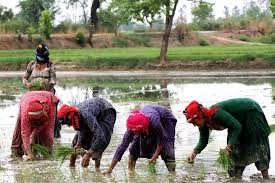
- Women form 73% of rural agricultural workforce yet remain invisible in law and policy. Women works 3,300 hours per crop season i.e. double their male counterparts but without any significant recognition.
- Accelerating male migration has “feminised” agriculture, leaving women to manage everything alone.
Challenges Faced
- Land and Legal Exclusion
- Women own only 11% of agricultural land despite performing 70% of farming activities.
- Without land titles, women are locked out of credit, insurance, and government schemes.
- Only 4% of women farmers in Uttar Pradesh access institutional credit per OXFAM study.
- 29% of suicide farmers’ widows could not get land transferred to their names (MAKAAM 2018).
- Only 2 in every 1,000 women have received any official agricultural training (NSO 2021).
- Health and Work Burden
- Women work 14 hours daily, rising to 16 hours during peak harvesting seasons.
- Anaemia among women rose from 53% to 57% between NFHS-4 and NFHS-5 — worsening trend.
- Maternal undernutrition causes low birth weight, stunting, and impaired child development.
- Heavy workloads with no drudgery-reducing tools severely damage women’s long-term health.
- Gaps in Food Security
- Despite Rs 940.1 crore spent on Anaemia Mukt Bharat, anaemia rates have continued rising.
- In 22 states, more women have slipped into anaemia over the past five years.
- PDS remains cereal-centric, ignoring pulses, millets, and nutrient-dense foods women need.
- Poor digital literacy and connectivity exclude many women from claiming rightful entitlements.
Way Forward
- Agricultural policies must recognise women cultivators, tenants, and sharecroppers as farmers.
- Joint spousal land titles must be promoted urgently as female landholdings grew just 1% in five years.
- FAO estimates equal resource access could raise farm yields by 20–30%, feeding millions more.
- Women with secure property rights earn nearly four times more per Landesa’s 2018 report.
- Public procurement must prioritise nutri-cereals and pulses grown by women farmers.
- Kitchen gardens, seed banks, and localised food planning can transform community dietary patterns.
- Labour-saving tools and tailored extension services must reach women to reduce drudgery meaningfully.
- Gender-disaggregated agricultural data must be collected to make women’s contributions truly visible.