
Geomorphology
- Origin of earth
- Solar system.
- Interior of earth.
- Types and characteristics of rocks.
- Theories of continent formation.
- Volcanoes and earthquakes.
- Landforms
- Weathering and mass erosion.
Geomorphology: An Introduction for UPSC
What is Geomorphology?
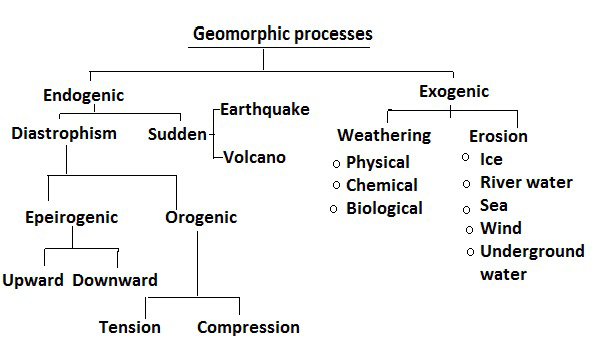
Geomorphology is the scientific study of landforms and the processes that shape them. The term is derived from three Greek words: ge (earth), morphe (form), and logos (discourse). In essence, it is the “study of the Earth’s surface features” .
As a core branch of physical geography, geomorphology seeks to answer two fundamental questions:
- What do various landforms look like (their description and classification)?
- How and why do they evolve over time (their origin and development)?
For a UPSC aspirant, understanding geomorphology is crucial because it provides the base upon which the rest of the geography syllabus is built. It explains the very stage on which the drama of human and environmental geography unfolds. Topics like soil formation, drainage patterns, distribution of minerals, and even the location of human settlements are directly linked to geomorphic processes.
2. The Scope of Geomorphology for UPSC
The study of geomorphology for the UPSC exam can be divided into a few key thematic areas. The table below outlines the major topics you must cover.
Why is this important for UPSC?
- General Studies Paper I (Mains): Questions are often directly asked from these topics, such as the mechanism of earthquakes, the formation of coastal landforms, or the impact of tectonic processes .
- Geography Optional (Paper I): Geomorphology forms a significant portion of the physical geography section. The syllabus demands a deeper understanding, including concepts like denudation chronology, slope development, and recent views on mountain building .
- Prelims Examination: Factual questions on national parks (located in specific landform regions), pass areas, soil types, and the occurrence of natural disasters are common and require a strong grasp of geomorphic concepts .
How to Approach Your Study of Geomorphology
- Start with the Basics: Begin with NCERT textbooks (Grades 11 and 12) to build a strong foundation. Understand the key terms and processes clearly.
- Master the Theories: Pay special attention to the Plate Tectonics theory, as it is the unifying concept that explains most of the Earth’s dynamic processes. Compare and contrast it with the Continental Drift Theory .
- Visualize with Diagrams and Maps: Geomorphology is a highly visual subject. Practice drawing and labeling diagrams for landforms (e.g., how a meander forms, the structure of a volcano) and tectonic plate boundaries. Use an atlas to understand the global distribution of these features .
- Integrate with Current Affairs: Link static topics with current events. For example, when you read about a glacial lake outburst flood (GLOF) in the news, revise the related glacial landforms .
- Refer to Standard Texts: After covering the NCERTs, refer to standard books like “GC Leong’s Certificate Physical Geography” for conceptual clarity and “Savindra Singh’s Physical Geography” (especially for optional) for detailed explanations .
By systematically covering the topics mentioned above and adopting a visual and integrated learning approach, you can master geomorphology and build a strong foundation for your geography preparation.