

Heatwave
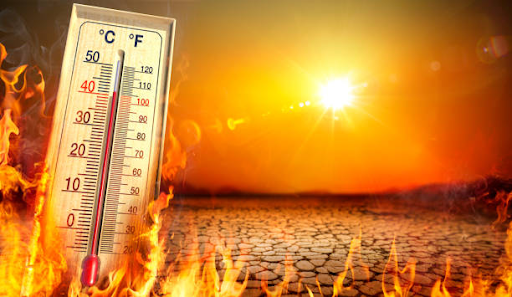
Criteria for Declaring Heatwave
- A heatwave is considered when maximum temperature reaches at least 40°C in plains and 30°C in hilly regions.
- The criteria must be satisfied in at least two stations of a meteorological subdivision for two consecutive days.
- Based on Departure from Normal
- Heat Wave: Declared when temperature departure from normal ranges between 4.5°C to 6.4°C.
- Severe Heat Wave: Declared when temperature departure from normal exceeds 6.4°C.
Based on Actual Maximum Temperature
- Heat Wave: Declared when actual maximum temperature is 45°C or above.
- Severe Heat Wave: Declared when actual maximum temperature reaches 47°C or above.
Coastal Heatwave Criteria
- In coastal regions, heatwave may be declared when temperature departure is 4.5°C above normal.
- The actual maximum temperature should also be 37°C or more.
Favourable Conditions for Heatwave
- Presence of hot and dry air masses over a region favours heatwave development.
- Absence of upper atmospheric moisture allows rapid increase in surface temperatures.
- Practically cloudless skies permit maximum solar insolation over affected regions.
- Large amplitude anti-cyclonic circulation supports stable and extremely hot weather conditions.
Confederation of Indian Industry (CII)
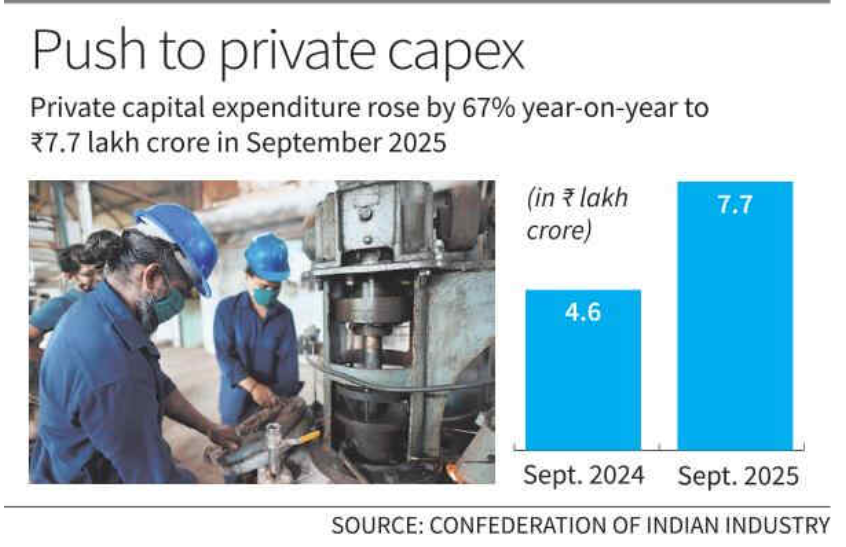
Context: The Confederation of Indian Industry stated that private sector capital expenditure increased by 67% in September 2025. According to CII, private sector capex reached nearly ₹7.7 lakh crore compared to September 2024 levels.
More In News
- Manufacturing sector committed nearly ₹3.8 lakh crore, led by metals, automobiles, and chemical industries.
- Services sector contributed around ₹3.1 lakh crore, mainly through trading, communications, and IT/ITeS sectors.
- Capacity utilisation reportedly increased to 75.6%, indicating improving industrial activity and investment confidence.
- Bank credit growth approached nearly 14% during the second half of FY26.
About Confederation of Indian Industry (CII)
- The Confederation of Indian Industry was established in 1895 as a non-government, not-for-profit organisation.
- The organisation collaborates with the Ministry of Commerce and Industry while functioning independently.
- Headquarters of CII is located in New Delhi.
- Aim of CII
- CII aims to create a conducive environment for industrial growth and economic development.
- It works towards promoting sustainable development, industrial competitiveness, and global integration of Indian businesses.
Chagos Islands
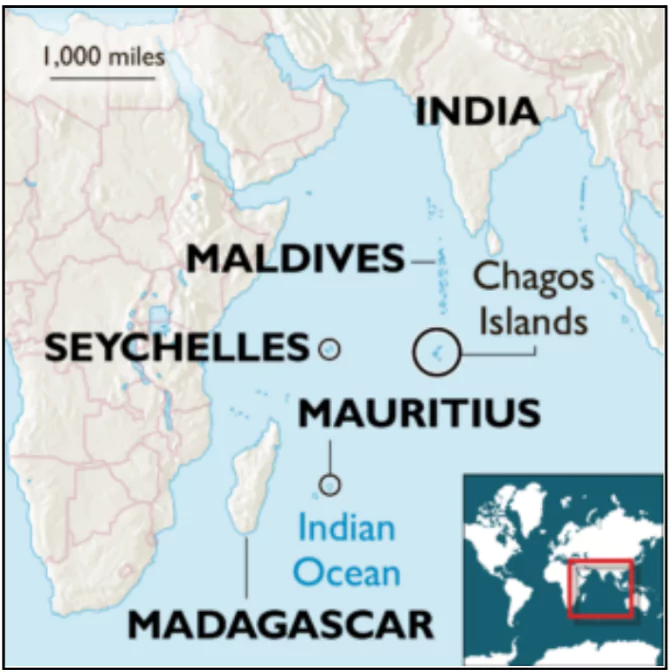
Location
- The Chagos Archipelago comprises more than 60 small islands located in the central Indian Ocean region.
- The islands are situated:
- south of the Maldives,
- and east of Seychelles.
- Diego Garcia, the largest island of the archipelago, hosts a strategically important US-UK military base.
Historical Background
- The Chagos Islands came under British control in 1814 following their cession by France.
- In 1965, the United Kingdom separated the Chagos Archipelago from Mauritius prior to Mauritian independence.
- The islands were subsequently constituted as the British Indian Ocean Territory (BIOT).
- Mauritius attained independence from Britain in 1968.
UK–Mauritius Chagos Sovereignty Deal (2025)
- Following a ruling by the UK High Court, the United Kingdom signed a treaty recognising Mauritian sovereignty over the Chagos Islands.
- The agreement provides for a 99-year lease arrangement permitting continued UK-US military presence on Diego Garcia.
- Under the arrangement, the United Kingdom will pay Mauritius approximately £101 million annually during the lease period.
Indian Ocean Region (IOR)
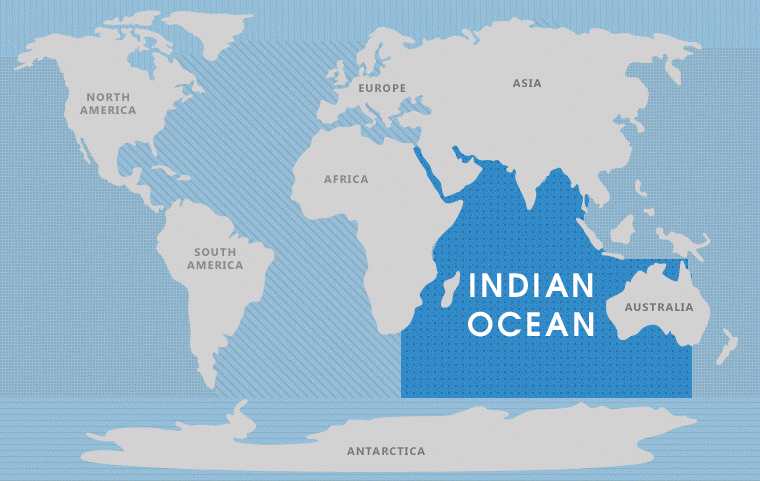
Indian Ocean Region (IOR)
- The Indian Ocean Region (IOR) comprises the Indian Ocean and its surrounding littoral states and island territories.
- The region extends from:
- the African coast in the west to the Australian coast in the east,
- and from the Arabian Peninsula in the north to southern Australia in the south.
- The Indian Ocean is the world’s third-largest ocean, covering nearly 70.6 million sq. km.
- Strategic Importance
- The IOR contains some of the world’s most critical Sea Lanes of Communication (SLOCs).
- Major maritime chokepoints in the region include:
- Strait of Malacca
- Suez Canal
- Bab-el-Mandeb Strait
Indian Ocean Rim Association (IORA)
- The Indian Ocean Rim Association is an inter-governmental organisation established on 7 March 1997.
- It was earlier known as:
- Indian Ocean Rim Initiative
- and Indian Ocean Rim Association for Regional Cooperation (IOR-ARC).
- The Secretariat of IORA is located in Mauritius.
- Membership
- IORA consists of 23 Member States and 11 Dialogue Partners.
- China is a dialogue partner of IORA.
- IORA became an observer to the United Nations General Assembly (UNGA) and the African Union in 2015.
Hantavirus Pulmonary Syndrome (HPS)
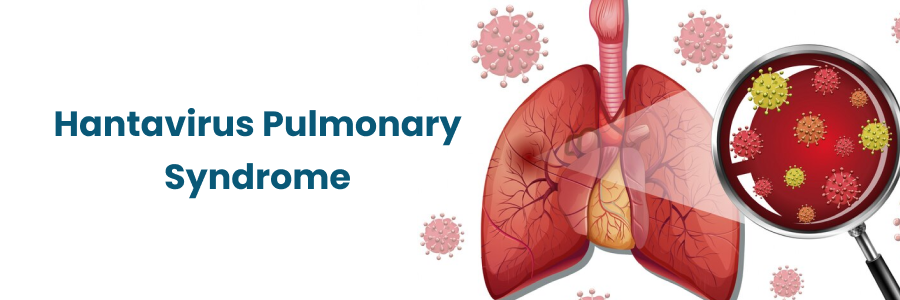
Brief Overview
- Hantavirus refers to a family of rodent-borne viruses capable of causing severe illness in humans.
- Hantavirus Pulmonary Syndrome (HPS) is a serious respiratory disease associated with hantavirus infections.
- HPS is primarily endemic to the Western Hemisphere.
- Another hantavirus-associated illness, Haemorrhagic Fever with Renal Syndrome (HFRS), occurs mainly in Europe and Asia.
- Transmission: Infected rodents transmit hantaviruses through urine, faeces, and saliva.
- Human infection usually occurs through inhalation of virus-contaminated particles from rodent excreta.
- Human-to-human transmission is generally uncommon in most hantavirus infections.
- Rare person-to-person transmission has been reported with strains such as the Andes virus.
Types and Hosts
- Different hantavirus strains are associated with different geographical regions and specific rodent hosts.
- The most common HPS-causing hantavirus is carried by the deer mouse.
- Hantaviruses found in Europe and Asia are commonly associated with Haemorrhagic Fever with Renal Syndrome (HFRS).
- There is currently no specific cure or definitive treatment available for Hantavirus Pulmonary Syndrome.
Hypersonic Missile Development
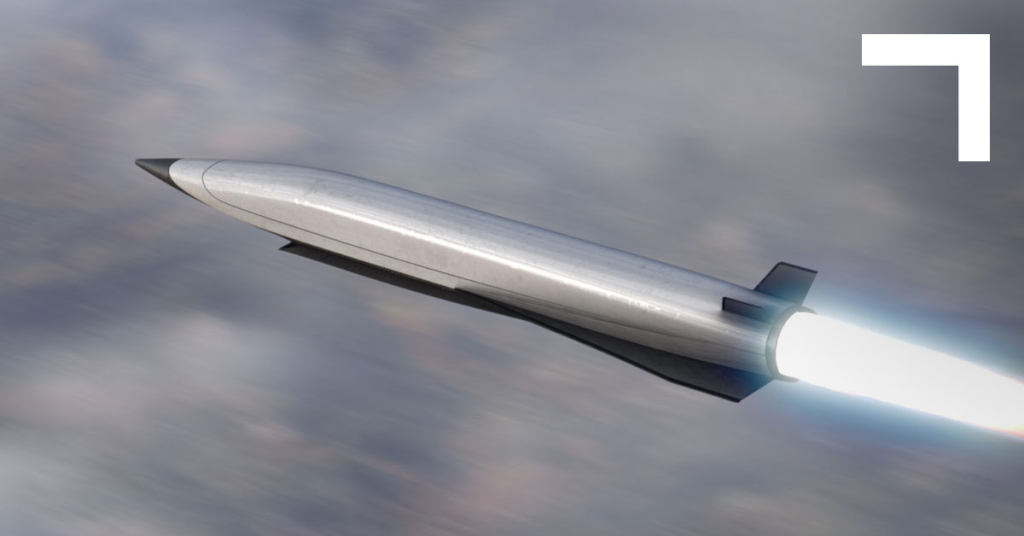
Context
- The Defence Research and Development Organisation successfully achieved a 1,200-second runtime of an actively cooled scramjet combustor. The test was conducted at the Scramjet Connect Pipe Test (SCPT) facility in Hyderabad. The achievement marks a significant advancement in India’s hypersonic missile technology programme.
About Hypersonic Missiles
- Hypersonic missiles are advanced weapons capable of travelling at speeds exceeding Mach 5.
- These systems can travel at speeds above 6,100 km per hour for sustained durations.
- Hypersonic weapons are considered difficult to intercept using existing air defence systems.
- Strategic Significance
- Hypersonic systems provide: rapid strike capability, improved survivability, and enhanced penetration against missile defence networks.
About Scramjet Engine
- A Scramjet (Supersonic Combustion Ramjet) is an advanced air-breathing propulsion system used in hypersonic flight.
- The engine utilises supersonic combustion to sustain extremely high-speed flight.
- Key Features
- Scramjet engines operate using atmospheric oxygen, reducing the need to carry onboard oxidisers.
- The combustor incorporates advanced flame stabilisation technology for maintaining combustion at extremely high airspeeds.
- The system uses an indigenously developed liquid hydrocarbon endothermic fuel.
- The fuel provides:
- enhanced cooling,
- and easier ignition capability.
HPV Vaccination Drive
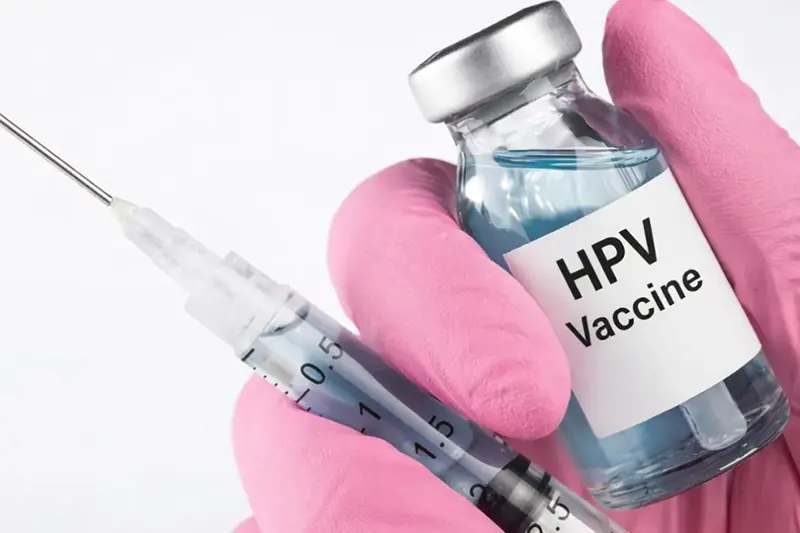
Key Features of the Vaccination Drive
- The programme will primarily target 14-year-old girls across the country.
- Vaccination will be:
- voluntary,
- and provided free of cost through government health facilities.
- The drive will be conducted through:
- Ayushman Arogya Mandirs,
- and District Hospitals.
Vaccine Used
- The programme will initially use Gardasil, manufactured by US-based MSD.
- Gardasil is a quadrivalent vaccine protecting against:
- HPV 16 and 18,
- and HPV 6 and 11.
- HPV types 16 and 18 are responsible for the majority of cervical cancer cases.
Vaccination Regimen
- India has adopted a single-dose HPV vaccination regimen based on WHO recommendations.
- An optional delayed second dose may be administered after 3–5 years.
- The indigenous vaccine Cervavac has not yet received WHO approval for programme inclusion.
Scientifc Efficacy and Safety
- HPV vaccines are non-live vaccines and do not cause HPV infection.
- More than 500 million doses have been administered globally since 2006 with a strong safety profile.
- Studies indicate nearly 93–100% effectiveness against HPV-related cervical cancers.
- Implementation and Monitoring
- The programme is being implemented under India’s partnership with GAVI, the Vaccine Alliance.
- Vaccination coverage will be monitored through the U-WIN digital platform.
- Unlike routine UIP immunisation, the HPV campaign will operate through special immunisation drives.
About Human Papillomavirus (HPV)
- HPV refers to a group of more than 200 related viruses belonging to the Papillomaviridae family.
- These are non-enveloped, double-stranded DNA viruses primarily infecting epithelial cells.
- Classification of HPV Types
- Low-Risk Types
- HPV types 6 and 11 commonly cause:
- genital warts,
- and benign skin lesions.
- HPV types 6 and 11 commonly cause:
- High-Risk Types
- HPV types 16 and 18 are considered oncogenic and linked with multiple cancers.
- These strains account for the majority of cervical cancer cases in India.
- Low-Risk Types
WHO Elimination Targets (2030)
- 90% of girls should be fully vaccinated by age 15.
- 70% of women should undergo cervical screening by ages 35 and 45.
- 90% of women identified with cervical disease should receive proper treatment and care.
Competition Commission of India (CCI)
Brief Overview
- The Competition Commission of India was established in 2003 under the Competition Act, 2002.
- The Commission became fully operational in 2009.
- It functions under the administrative control of the Ministry of Corporate Affairs.
- Headquarters of the CCI is located in New Delhi.
Composition and Appellate Authority
- The Commission consists of one Chairperson, and six Members appointed by the Central Government.
- Appellate Authority
- Appeals against CCI orders lie before the National Company Law Appellate Tribunal.
- The appellate mechanism operates under the provisions of the Companies Act, 2013.
Major Functions of CCI
- Eliminate Anti-Competitive Practices
- CCI works to eliminate practices causing an adverse effect on competition in markets.
- In the Umar Javeed vs Google case, CCI directed Google not to restrict app distribution through side-loading.
- Side-loading refers to installation of applications outside official app stores.
- Protect Consumer Interests
- The Commission safeguards consumer interests against abuse of market dominance.
- CCI imposed penalties on Meta regarding sharing of WhatsApp user data with other Meta companies.
- Advisory Role
- CCI advises the government on issues relating to market competition and regulatory reforms.
- It developed a Competition Assessment Toolkit to evaluate laws restricting market competition.
Recent Initiatives
- Competition (Amendment) Act, 2023
- Deal Value Threshold (DVT)
- Mergers and acquisitions exceeding ₹2,000 crore deal value must be notified to the CCI.
- The provision primarily targets large transactions in digital markets.
- Settlement and Commitment Mechanism
- The amendment empowers CCI to accept voluntary commitments in specified anti-competitive cases.
- Deal Value Threshold (DVT)
