Context
- India’s growing waste burden has evolved into a major ecological crisis and public health challenge. The Solid Waste Management Rules, 2026 were introduced to strengthen scientific waste management and circular economy practices.
India’s Expanding Waste Crisis
- Urban Waste Challenges
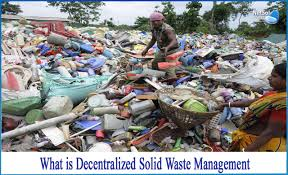
- Indian cities are increasingly burdened by overflowing landfills, plastic waste, and open dumping.
- Plastic-clogged drainage systems intensify urban flooding during monsoon seasons.
- Open burning of waste contributes significantly to air pollution and toxic emissions.
- Rural Waste Concerns
- Rural regions are also witnessing rising accumulation of plastic waste, e-waste, and sanitary waste.
- Expanding packaged consumption has increased non-biodegradable waste generation in villages.
- Weak rural waste infrastructure has aggravated environmental degradation and public health risks.
Objectives of the Solid Waste Management Rules, 2026
- Environmental and Administrative Goals
- The Rules seek to strengthen source segregation and reduce dependence upon landfills.
- The framework promotes scientific waste processing and remediation of legacy dumpsites.
- The Rules also encourage adoption of digital monitoring systems and circular economy approaches.
- Inclusion of Rural Local Bodies
- The Rules extend waste-management responsibilities to gram panchayats and rural institutions.
- Rural waste management is increasingly recognised as an important governance challenge.
Federalism and Constitutional Concerns
- Use of Article 253
- The Environment (Protection) Act, 1986 derives authority from Article 253 linked to international obligations.
- Parliament can legislate on State-related subjects while implementing international environmental commitments.
- However, national standards should not become instruments for administrative centralisation.
- Violation of Federal Principles
- The Rules reflect a strong centralisation tendency within environmental governance structures.
- States and local bodies risk becoming mere implementing agencies of centrally designed policies.
- Such approaches weaken cooperative federalism and institutional autonomy of sub-national governments.
- Principle of Subsidiarity
- Effective governance requires decisions to be taken at the lowest competent level closest to local realities.
- Waste management depends heavily upon local ecological conditions and administrative capacity.
- Uniform national models cannot effectively address regional diversity across India.
Ground-Level Administrative Challenges
- Diversity of Local Conditions
- Waste-management systems suitable for megacities may not work in tribal or hilly regions.
- Local geography and infrastructure availability significantly influence waste-management capacity.
- Centralised frameworks often fail to accommodate differentiated governance realities.
- Weak Capacity of Rural Institutions
- Most gram panchayats lack adequate staff, technical expertise, and financial resources for waste-management systems.
- Requirements related to four-stream segregation and Material Recovery Facilities may remain impractical for villages.
- Excessive compliance obligations may create administrative burden without effective environmental outcomes.
- Risks of Compliance-Oriented Governance
- Local authorities may spend excessive time on digital reporting and procedural compliance.
- Governance risks shifting from service delivery towards bureaucratic data submission.
- Such systems may encourage paper compliance rather than actual waste reduction.
Need for Decentralised Waste Governance
- States as Policy Laboratories
- Federal systems function effectively when States experiment with innovative governance models suited to local realities.
- Different States can develop context-specific approaches for composting and recycling systems.
- Successful models can later be scaled nationally through evidence-based learning.
- Differentiated Urban and Rural Strategies
- Rural waste management should prioritise community composting, awareness campaigns, and cluster-based systems.
- Megacities require specialised metropolitan waste authorities with technical expertise and citizen oversight.
- Waste-governance frameworks should reflect differences in administrative capacity and population density.
- Democratic Participation and Accountability
- Waste management succeeds only through active citizen participation and local accountability.
- Gram sabhas and municipal councils should become central institutions within waste governance systems.
- Local-language reporting and public transparency can strengthen community ownership of waste management.
Financial and Institutional Concerns
- Unfunded Mandates
- Municipalities and panchayats are assigned expanded responsibilities without guaranteed financial support.
- Weak fiscal capacity may result in selective compliance and ineffective implementation.
- Risk of Judicialisation
- Failure of implementation may trigger public interest litigations and prolonged judicial intervention.
- Environmental governance may gradually shift towards court-monitored compliance processes.
Way Forward
- Strengthen Federal Flexibility
- The Centre should prescribe minimum national standards while allowing States operational flexibility.
- States should receive greater autonomy to design context-specific systems suited to local conditions.
- Empower Local Bodies
- Municipalities and panchayats should receive predictable finance and institutional support for waste governance.
- Capacity-building programmes should strengthen technical capabilities of local institutions.
- Promote Participatory Governance
- Citizen participation mechanisms should be integrated into waste-management planning and monitoring systems.
- Digital platforms should function as collaborative governance tools rather than bureaucratic control instruments.
Conclusion: India’s waste crisis requires a governance framework balancing environmental objectives, federalism, and local democracy. Sustainable waste management will depend upon decentralised governance, empowered institutions, and community participation.