

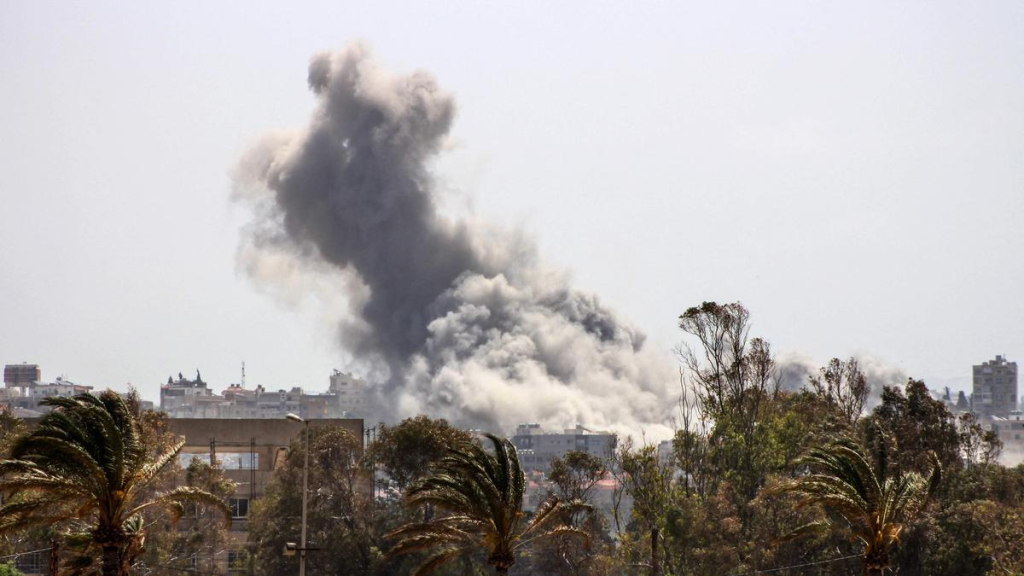
Context
- Contemporary geopolitical conflicts have revived debates regarding just war theory, self-defence, and legitimacy of military intervention. Growing unilateral military interventions indicate weakening respect for international law and multilateralism.
Concept of Just War
- Meaning and Evolution
- Hugo Grotius developed the concept of just war theory to regulate legitimate use of force among States.
- The theory sought to distinguish lawful warfare from arbitrary aggression and expansionism.
- Earlier European diplomacy relied upon a balance of power to maintain relative peace and stability.
- International Legal Framework
- The Hague Convention III (1907) introduced procedures regarding formal declaration before hostilities.
- The League of Nations promoted arbitration and cooling-off periods to avoid military conflicts.
- The Kellogg-Briand Pact (1928) condemned war as an instrument for resolving international disputes.
- UN Charter and Self-Defence
- Article 2(4) of the UN Charter prohibits the threat or use of force against sovereign States.
- Article 51 recognises the inherent right of self-defence against armed attacks.
- Differences in interpretation continue regarding anticipatory self-defence against imminent threats.
- Balance of Power and Collective Security
- NATO and other collective-defence arrangements emerged as mechanisms for collective security cooperation.
- The post-Cold War decline of bipolarity weakened traditional balance-of-power constraints.
- Unipolar dominance has increased the frequency of unilateral military interventions.
Ongoing Issues and Concerns
- Misuse of Anticipatory Self-Defence
- The United States has repeatedly invoked anticipatory self-defence to justify military interventions abroad.
- Such interpretations weaken the normative boundaries established under international law.
- Expansive use of self-defence doctrines risks legitimising pre-emptive aggression.
- Weakening of International Institutions
- United Nations has increasingly lost effectiveness as a peacekeeping institution. The powerful nations frequently bypass multilateral mechanisms while pursuing strategic objectives.
- Weak enforcement capacity undermines faith in the global rules-based order.
- West Asia Conflict and Regional Instability
- The conflict involving Israel and Iran reflects deeper geopolitical tensions within West Asia.
- Military actions in Gaza, Lebanon, Syria, and Iran have intensified humanitarian and strategic instability.
- Gulf countries continue depending upon external powers for security and energy protection.
- Strategic Importance of Strait of Hormuz
- Control over the Strait of Hormuz remains central to global energy and trade security.
- Escalation in the region may disrupt oil supplies and destabilise global markets.
- Geopolitical competition around strategic maritime chokepoints increases risks of prolonged conflict.
- Humanitarian and Ethical Crisis
- Modern conflicts increasingly produce large-scale civilian suffering and humanitarian emergencies.
- Strategic interests frequently override humanitarian concerns and moral accountability.
- The ethical foundations of just war theory have weakened significantly in contemporary geopolitics.
- Decline of Liberal International Order
- Post-World War II institutions promoting democracy and human rights face growing legitimacy crises.
- Human-rights narratives are sometimes used selectively to justify imperial interventions and geopolitical dominance.
- Global governance institutions increasingly appear fragmented and ineffective.
Way Forward
- The international community should strengthen adherence to international law and multilateral conflict-resolution mechanisms.
- The United Nations requires institutional reforms to improve peacekeeping credibility and enforcement capacity.
- Global powers should avoid excessive reliance upon anticipatory self-defence and unilateral military actions.
- Regional conflicts should prioritise negotiated settlements, humanitarian protection, and civilian welfare.
- Wider multilateral dialogue involving Gulf countries, China, and other stakeholders should address regional security concerns.
- Democracies and civil societies must strengthen the global moral voice against war and militarism.
Conclusion
- The weakening of balance-of-power mechanisms has intensified unilateral interventions and geopolitical instability. Sustainable peace will depend upon restoring multilateralism, respecting international law, and strengthening humanitarian ethics in global politics.
