Context
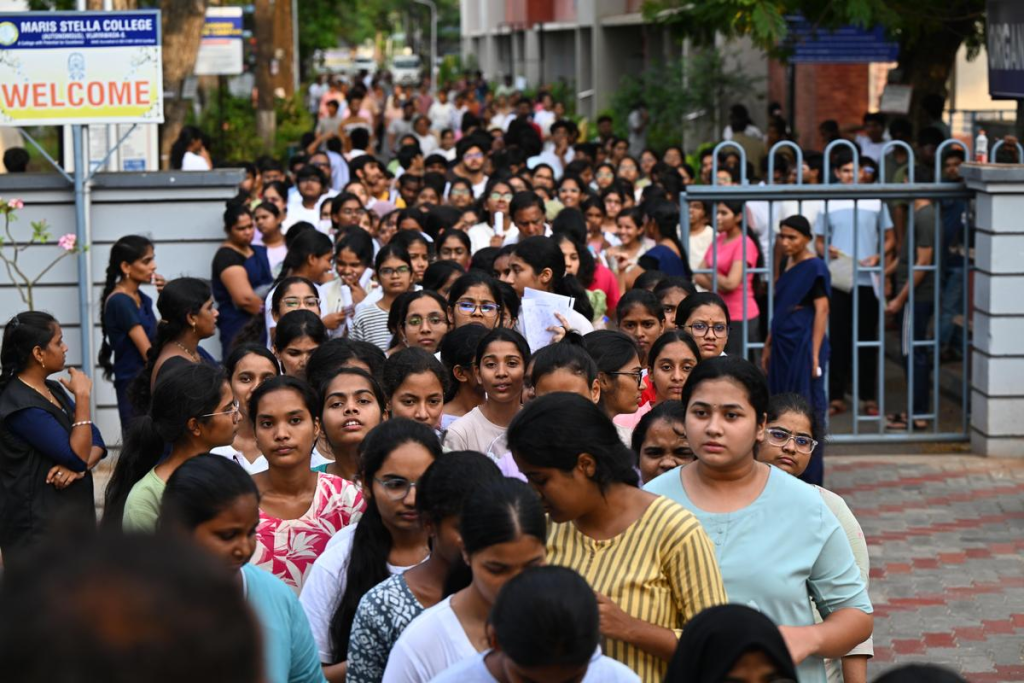
- Nearly 22 lakh students appeared for NEET-UG 2026, one of India’s largest competitive examinations. The National Testing Agency (NTA) later admitted that the examination had been “compromised”, necessitating a re-test. The controversy revived concerns regarding paper leaks, institutional credibility, and examination governance.
Controversy over the Years
- Recurring Allegations of Paper Leaks
- Concerns regarding paper leak incidents have repeatedly emerged in NEET examinations over the years.
- The 2024 controversy involved allegations that 155 students benefited from leaked question papers.
- Students demanding re-examination in 2024 did not receive institutional relief.
- Rank Inflation and Credibility Concerns
- In 2024, 67 students secured full marks, compared to only two students in 2023.
- The unusually high concentration of top scores triggered concerns regarding rank inflation and fairness.
- Intense competition for nearly 1.1 lakh MBBS seats further amplified anxiety among aspirants.
- Student Distress and Judicial Intervention
- The decision to conduct a re-test created widespread uncertainty among lakhs of medical aspirants.
- The Federation of All India Medical Association (FAIMA) approached the Supreme Court seeking institutional reforms.
- Repeated controversies have weakened public trust in national-level examination systems.
Issues with the NTA
- Institutional and Administrative Weaknesses
- Despite repeated controversies, the NTA failed to undertake meaningful institutional restructuring.
- Following the 2024 controversy, the NTA functioned without a full-time chief for over a year.
- Leadership instability weakened administrative continuity and accountability mechanisms.
- Failure of ‘Zero Error’ Policy
- NTA announced a “Zero Error, Zero Tolerance” policy before conducting NEET-UG 2026.
- The agency claimed implementation of extensive surveillance, biometric authentication, and secure transportation systems.
- Despite these safeguards, investigators found circulation of a “guess paper” containing 120 actual questions.
- Overdependence on Pen-and-Paper Testing
- NEET continues to rely primarily upon the pen-and-paper format, increasing security vulnerabilities.
- Physical transportation and storage of question papers create opportunities for leaks and malpractice.
- Existing examination infrastructure remains inadequate for managing such a large-scale national test securely.
- Technological and Infrastructure Constraints
- NTA currently possesses Computer-Based Testing (CBT) capacity for only around 1.5 lakh students daily.
- The agency has only about 552 CBT centres, mainly utilised for JEE and CUET examinations.
- Failure to expand digital infrastructure delayed transition towards more secure examination formats.
Recommendation of Radhakrishnan Panel
- Formation of the Committee
- Following the 2024 controversy, the Ministry of Education constituted a high-level committee under former ISRO Chairman K. Radhakrishnan.
- The committee submitted its report in October 2024 highlighting structural weaknesses within examination systems.
- Shift towards Computer-Based Testing
- The panel identified the pen-and-paper model as a major security risk.
- It recommended gradual transition towards Computer-Based Testing similar to JEE Main examinations.
- CBT systems were viewed as more secure, scalable, and technologically reliable.
- Computer-Assisted Secure PPT Model
- The committee proposed a Computer-assisted Secure PPT mechanism for improved examination security.
- Under this model, encrypted question papers would be digitally transmitted and printed locally before examinations.
- The proposal sought to minimise risks associated with physical transportation of question papers.
- Limited Implementation of Recommendations
- The committee’s recommendations were not implemented in letter and spirit.
- NTA continued relying upon GPS-enabled vehicles and police escorts instead of technological transformation.
- Delays in infrastructure expansion prevented effective implementation of proposed reforms.
Conclusion
- Repeated NEET controversies highlight serious concerns regarding institutional capacity, examination integrity, and governance accountability. Restoring public confidence will require technological modernisation, transparent administration, and timely implementation of structural reforms.