

Context
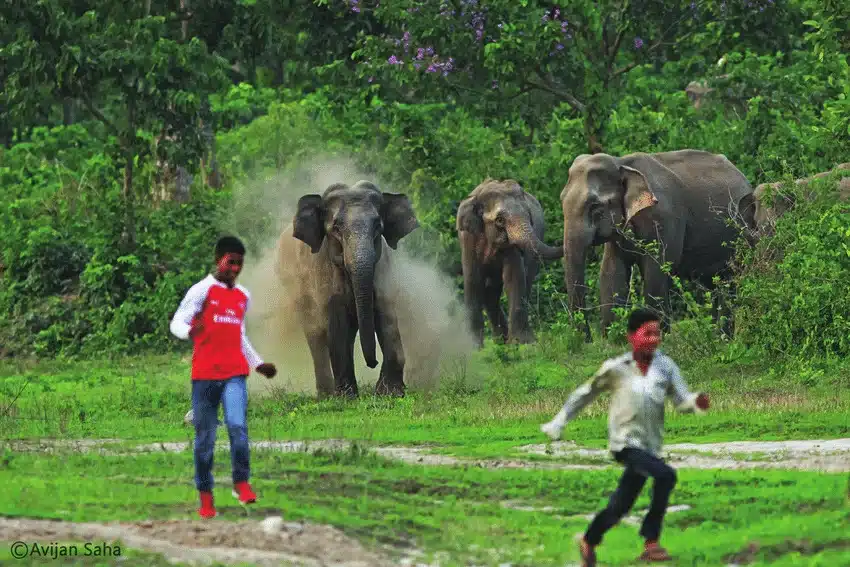
- India is witnessing a significant rise in human-wildlife conflict (HWC) across multiple ecological landscapes. Karnataka recorded 53 human deaths during 2025-26, while Madhya Pradesh reported a major tiger mortality crisis. Increasing conflict reflects growing pressures arising from ecological degradation, developmental expansion, and shrinking wildlife habitats.
What is Human-Wildlife Conflict?
- Human-wildlife conflict refers to negative interactions between humans and wild animals causing mutual ecological and economic losses.
- Such conflicts include human casualties, crop damage, livestock predation, and retaliatory killing of animals.
- Human-wildlife conflict has emerged as a major challenge for both conservation governance and rural livelihoods.
- Human and Wildlife Losses
- Approximately 500 people are killed annually in India due to elephant-related encounters.
- India also loses nearly 100 elephants annually due to electrocution, train collisions, and poaching.
- In 2025, India recorded 166 tiger deaths, the highest annual figure since 1973.
- Economic and Social Impact
- Around 5 lakh families are affected annually by crop-raiding incidents and wildlife-related damages.
- Marginal farmers often face severe debt burdens due to repeated agricultural losses.
- Frequent conflicts gradually weaken local support for conservation initiatives.
Reasons for Rising Human-Wildlife Conflict
- Habitat Fragmentation
- Large-scale infrastructure projects are fragmenting forests and disrupting wildlife corridors.
- Highways, railways, mining, and urban expansion force animals into human settlements.
- Fragmented habitats reduce safe movement pathways for wide-ranging species such as elephants and tigers.
- Agricultural Expansion
- Expansion of cultivation near forest boundaries increases direct interaction between humans and wildlife.
- Leopards in Maharashtra have increasingly adapted to living within sugarcane landscapes near villages.
- Agricultural fields often provide easy food sources for herbivores and opportunistic predators.
- Climate Variability and Ecological Stress
- Rising temperatures and drought conditions reduce availability of food and water resources inside forests.
- Elephants in Jharkhand increasingly migrate towards croplands during dry seasons.
- Climate stress intensifies competition over shrinking ecological resources.
- Ecological Imbalance and Invasive Species
- Spread of invasive species such as Lantana camara has degraded natural grazing ecosystems.
- Wildfires and declining native vegetation reduce natural forage availability for herbivores.
- Crop-raiding increasingly becomes a survival adaptation for wildlife populations.
- Behavioural and Management Issues
- Aggressive deterrence methods may trigger panic and increase animal aggression.
- Anti-Depredation Squads in Assam reportedly contributed to accidental elephant deaths during chase operations.
- Unscientific responses often worsen risks for both humans and wildlife.
Challenges in Managing Human-Wildlife Conflict
- Delayed Compensation Mechanisms
- Compensation systems often involve complex procedures and slow administrative processing.
- Marginalised communities frequently struggle to access timely financial relief.
- Delayed compensation weakens trust between local communities and conservation authorities.
- Technological and Infrastructure Constraints
- Early-warning systems often fail due to poor connectivity and maintenance challenges.
- Scaling GPS-based monitoring across fragmented landscapes remains operationally difficult.
- Technological interventions require continuous institutional and financial support.
- Weak Institutional Capacity
- Lack of formal training sometimes converts local response teams into unorganised crowd-based actions.
- Poor coordination may escalate animal panic and increase human casualties.
- Institutional gaps weaken long-term conflict management strategies.
- Declining Community Tolerance
- Repeated losses without adequate support generate growing social hostility towards wildlife conservation.
- Retaliatory poisoning and illegal trapping incidents have increased in some regions.
- Conservation efforts become unsustainable without local community cooperation.
Way Forward
- Strengthening Landscape Connectivity
- India should legally protect and restore critical wildlife corridors for safe animal movement.
- Eco-bridges and underpasses should become mandatory in infrastructure projects crossing forest landscapes.
- Community-Centric Conservation
- Local communities should become active partners in wildlife governance and conservation benefits.
- Revenue-sharing models linked to eco-tourism can strengthen community participation.
- Greater local involvement can improve long-term coexistence and conservation outcomes.
- Improving Compensation and Governance
- Compensation systems should be digitised and simplified for rapid financial assistance.
- Victims of wildlife conflict should receive support within a predictable and time-bound framework.
- Responsive governance mechanisms can reduce public resentment against conservation policies.
- Habitat Restoration and Ecological Management
- Conservation efforts should focus upon removing invasive species and restoring degraded grasslands.
- Improving habitat quality can reduce wildlife dependence upon agricultural landscapes.
- Long-term ecological restoration remains essential for sustainable coexistence.
Conclusion
- Human-wildlife conflict is increasingly becoming a structural outcome of unsustainable land-use patterns and ecological disruption. Sustainable coexistence will require balancing conservation goals with community welfare, ecological restoration, and decentralised governance.