

Current Account Deficit (CAD)
About Current Account Deficit
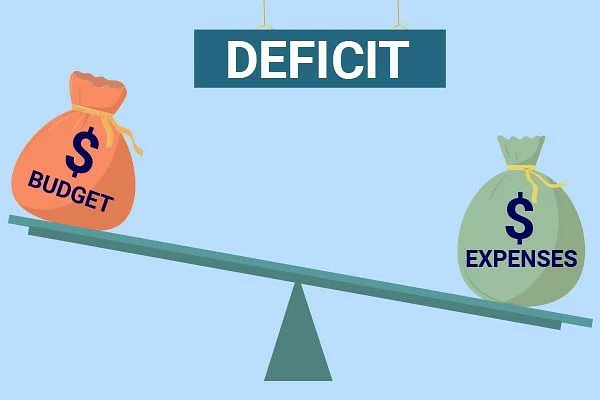
- Current Account Deficit (CAD) occurs when a country’s total external outflows exceed its total external inflows.
- The current account forms an important component of the country’s Balance of Payments (BoP) framework.
- It captures all transactions relating to goods, services, income and transfers between domestic residents and the rest of the world.
Components of Current Account
- Trade Deficit
- A trade deficit arises when the total value of imports exceeds the total value of exports.
- It represents a negative balance in the country’s merchandise and services trade account.
- A persistent trade deficit leads to higher foreign exchange outflows from the domestic economy.
- Net Income
- Net Income refers to earnings and payments arising from cross-border investments and employment activities.
- It includes:
- dividends,
- interest payments,
- and wages paid to foreign residents.
- A net income deficit emerges when payments made abroad exceed income earned from overseas investments.
- Net Transfers
- Net Transfers include unilateral transfers made without any direct exchange of goods or services.
- These transfers primarily include remittances, gifts, donations and foreign assistance.
Significance of CAD
- A moderate Current Account Deficit may support economic growth through higher investment and capital formation.
- A persistently high CAD exerts pressure on exchange rate stability, foreign exchange reserves and macroeconomic sustainability.
- Elevated CAD levels increase dependence on external capital inflows and foreign borrowings.
National Testing Agency (NTA)
About NTA
- The National Testing Agency (NTA) was established as a Society under the Indian Societies Registration Act, 1860.
- It functions as an autonomous and self-sustained testing organisation for conducting entrance examinations.
- NTA conducts examinations for admission into various higher educational institutions across the country.
Governance Structure
- The NTA is chaired by an eminent educationist appointed by the Ministry of Human Resource Development.
- The Chief Executive Officer (CEO) of NTA functions as the organisation’s Director-General.
- NTA is governed through a Board of Governors comprising representatives from user institutions.
Major Functions of NTA
- Conduct of Online Examinations
- NTA identifies suitable institutions with adequate digital infrastructure for conducting online entrance examinations efficiently.
- The agency ensures examination activities do not adversely affect the academic routine of institutions.
- Development of Question Banks
- NTA develops comprehensive question banks for different subjects using modern assessment techniques.
- The agency focuses on improving the quality and reliability of standardised testing systems.
- Research and Development
- NTA promotes a strong research and development culture in the field of educational assessment.
- It also develops a pool of experts in various aspects of testing and evaluation.
- International Collaboration
- NTA collaborates with international organisations such as Educational Testing Services (ETS) for improving testing standards.
- Such collaborations aim to strengthen the credibility and efficiency of entrance examination systems.
- NTA may conduct examinations entrusted by Ministries of Government of India, State Governments and other authorised institutions.
Right to Education (RTE) Act, 2009
Genesis of the RTE Act
- In Unnikrishnan vs State of Andhra Pradesh (1993), the Supreme Court recognised Right to Education under Article 21. The Court held that every child possesses a fundamental right to free education up to 14 years.
- The 86th Constitutional Amendment Act, 2002 inserted Article 21A into the Fundamental Rights chapter. Article 21A mandates the State to provide free and compulsory education to children aged 6–14 years.
- The Amendment substituted Article 45 under Directive Principles of State Policy. Article 45 directs the State to provide early childhood care and education for children below six years.
- The Amendment inserted Article 51A(k) under Fundamental Duties. It made parents and guardians responsible for providing educational opportunities to children aged 6–14 years.
Enactment of RTE Act, 2009
- The Right of Children to Free and Compulsory Education Act, 2009 was enacted to operationalise Article 21A. The Act came into force on 1 April 2010 across India.
- Free and Compulsory Education
- Every child between 6 and 14 years possesses the right to free and compulsory elementary education.
- Children not enrolled in schools must be admitted into an age-appropriate class.
- Elementary education remains free until completion, even if the child crosses 14 years during schooling.
- No Detention Policy
- No child shall be held back, expelled or required to pass a board examination until completion of elementary education.
- Curriculum and Recognition
- The appropriate government shall designate an academic authority for curriculum and evaluation procedures.
- Schools must comply with prescribed pupil-teacher ratio and infrastructural norms.
- No school may function without fulfilling mandatory recognition requirements.
- Teacher Qualification
- Teachers must qualify the Teacher Eligibility Test (TET) conducted by the appropriate government.
- The National Council for Teacher Education prescribes minimum teacher qualification standards.
Responsibilities of Schools and Teachers
- Government and Aided Schools
- Government schools must provide free and compulsory education to all admitted children.
- Aided schools must reserve at least 25% seats proportionate to government financial assistance received.
- Duties of Teachers
- Teachers are prohibited from providing private tuition and undertaking non-teaching assignments except specified government duties.
- School Management Committees (SMCs)
- Schools must establish School Management Committees (SMCs) comprising:
- Parents, teachers and local authority representatives.
- SMCs monitor school development, utilisation of grants, and implementation of educational plans.
- Schools must establish School Management Committees (SMCs) comprising:
Responsibilities of Governments
- Central Government
- The Central Government constitutes a National Advisory Council for implementation of the Act.
- It also develops national curriculum framework and teacher training standards.
- State Governments
- State Governments are responsible for ensuring admission, attendance and completion of elementary education.
- States must ensure availability of neighbourhood schools for eligible children.
- Grievance Redressal Mechanism
- The National Commission for Protection of Child Rights monitors safeguards under the RTE Act.
- State Governments may establish State Commissions for Protection of Child Rights for grievance redressal.
- These commissions possess powers similar to a civil court during investigations.
- Financial Provisions
- The Act provides for shared financial responsibility between Central and State Governments.
- The Central Government may request the Finance Commission to recommend additional financial assistance for implementation.
Polyendocrine Metabolic Ovarian Syndrome (PMOS)
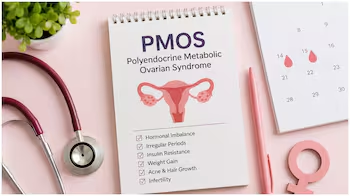
Context: The Endocrine Society renamed Polycystic Ovary Syndrome (PCOS) as Polyendocrine Metabolic Ovarian Syndrome (PMOS) to improve diagnosis and treatment outcomes.
Why was the Name Changed?
- The earlier term PCOS excessively focused on ovarian cysts despite broader endocrine and metabolic abnormalities underlying the disorder.
- Experts observed that dependence on ovarian cysts frequently resulted in delayed diagnosis, incorrect self-diagnosis and social stigma.
- The revised term PMOS more accurately reflects hormonal imbalance, metabolic dysfunction and ovarian abnormalities.
About PMOS / PCOS
- PMOS is a complex endocrine-metabolic disorder affecting women primarily during reproductive years.
- The disorder affects nearly 170 million women globally during their reproductive age.
- PMOS was traditionally viewed as a gynaecological disorder, although wider systemic manifestations are now recognised.
- Diagnostic Features
- Diagnosis generally requires the presence of at least two major clinical features.
- Women with PMOS commonly experience irregular menstrual cycles, infrequent ovulation or complete absence of ovulation.
- Increased male hormone levels (Hyperandrogenism) may result in excessive facial hair, acne and hair loss.
- Ultrasound examination may reveal multiple small ovarian follicles associated with the disorder.
- Elevated Anti-Müllerian Hormone (AMH) levels may also support clinical diagnosis.
Major Health Implications
- PMOS is strongly associated with obesity, type-2 diabetes, hypertension and abnormal lipid levels.
- The disorder may also lead to infertility, pregnancy complications, irregular menstruation and increased endometrial cancer risk.
- PMOS may additionally contribute to anxiety, depression and emotional stress.
Coal Gasification
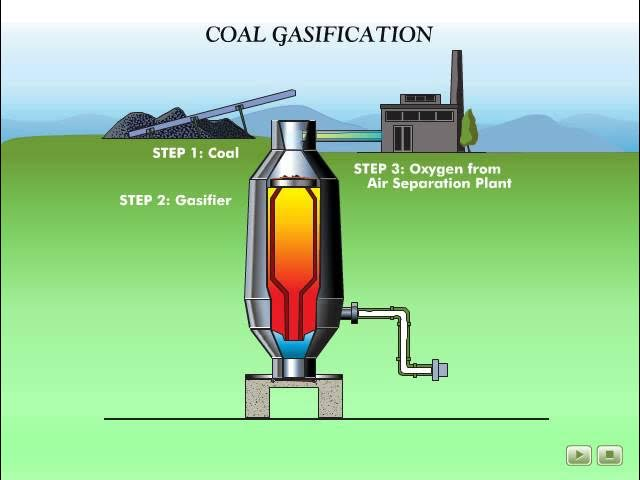
Context: The Union Cabinet approved a ₹37,500 crore incentive package to promote large-scale coal gasification projects in India.
About
- Thermo-chemical process converting solid coal into syngas (CO + H₂ + CH₄).
- Considered cleaner than direct coal burning due to pre-combustion removal of pollutants.
- Produces a versatile fuel and industrial feedstock.
- Process Mechanism
- Coal reacts with steam and limited oxygen under high temperature and pressure.
- Undergoes partial oxidation, not complete combustion.
- Produces syngas (CO, H₂, CH₄) as primary output.
- Gas cleaning stage removes sulfur, nitrogen compounds, and particulates.
- Clean syngas used for power generation or chemical production.
- Types
- Surface Coal Gasification → Above-ground industrial plants.
- Underground Coal Gasification (UCG) → In-situ conversion of deep coal seams.
- Key Features
- Pre-combustion cleaning reduces emissions significantly.
- Versatile output: Electricity, fertilizers (urea), chemicals, liquid fuels.
- Generates useful by-products such as slag and elemental sulfur.
- Relatively lower water use compared to conventional thermal plants.
Significance for India
- Reduces dependence on imported crude oil and natural gas.
- Utilises India’s abundant coal reserves efficiently.
- Supports fertilizer and petrochemical industries.
- Helps transition towards cleaner coal technologies under climate commitments.
AI-Enabled Monsoon Forecasting Platforms

Context: The Union Government launched two AI-enabled and impact-based forecasting systems for hyper-local monsoon prediction. The platforms aim to strengthen climate-risk management across 16 States and over 3,000 sub-districts.
About AI-Enabled Monsoon Forecasting Platforms
- These are advanced forecasting systems using Artificial Intelligence (AI) and Machine Learning (ML) for weather prediction.
- The platforms shift India’s forecasting model from broad regional forecasts to location-specific forecasting.
- The systems provide probabilistic forecasts, impact-based advisories and real-time decision support.
- The forecasting platforms were jointly developed by:
- India Meteorological Department
- Indian Institute of Tropical Meteorology
- National Centre for Medium Range Weather Forecasting
- Objectives
- To provide high-precision forecasts up to 10 days in advance.
- To deliver extended-range forecasts up to four weeks ahead.
- To support farmers, disaster management agencies and local administrators in reducing climate-related risks.
- Major AI-Based Forecasting Systems
- The system provides block-level probabilistic forecasts for the first time in India.
- It currently covers 3,196 blocks across 15 States and one Union Territory.
- The system mainly focuses on rainfed monsoon regions of India.
- It provides weekly monsoon updates up to four weeks in advance.
- Significance
- Transition towards block-level forecasting improves precision in agricultural planning significantly.
- Hyper-local forecasts can reduce losses caused by erratic monsoon patterns, flood events, and extreme weather conditions.
- AI-enabled forecasting strengthens disaster preparedness, climate resilience and evidence-based governance.
