

National Centre for Sustainable Coastal Management (NCSCM)
Context: The National Centre for Sustainable Coastal Management (NCSCM) completed documentation and ground truthing of 23,415 wetlands across Maharashtra. This paves the way for formally notifying wetlands under the Wetlands (Conservation and Management) Rules.
More in News
- Chhatrapati Sambhajinagar division has the highest number of wetlands at 5,196, followed by Nagpur division with 5,086.
- District-wise, Ahmednagar leads with 1,596 wetlands, followed by Nashik (1,236) and Chandrapur (1,231).
- Mumbai city has 37 wetlands, Mumbai suburban has 210, Thane has 247, and Raigad has 1,093.
- Ground truthing for 11 wetlands in Pune is still remaining out of the total 23,415.
- Ground truthing refers to physical on-site verification of wetlands to confirm existence, boundaries, ecological condition, and present land use against satellite imagery.
- MoEFCC launched the decadal-change version of the National Wetland Atlas in 2020 to track changes in wetlands over time.
- The exercise gained momentum following interventions by NGO Vanashakti and subsequent Supreme Court directions to States and UTs.
About NCSCM
- NCSCM was established in 2011 as a research institute supporting conservation and management of Indian coasts.
- It functions under the Union Ministry of Environment, Forest and Climate Change (MoEFCC).
- Its mission is to provide integrated coastal zone management solutions for coastal ecosystems, habitats, and communities.
- NCSCM collaborates with national and international organisations to develop research-based coastal management solutions.
- It plays a key role in mangrove conservation through research, monitoring, and community-based management strategies.
- Mangroves provide ecosystem services such as carbon sequestration, erosion control, and species habitat.
Wetlands (Conservation and Management) Rules
Legal Basis
- Both sets of rules were enacted under the Environment Protection Act, 1986.
- The 2010 Rules were India’s first comprehensive regulatory framework for wetland protection.
- The 2017 Rules were introduced to address the lacunae in the 2010 Rules.
Definition of Wetland
- A wetland is an area where water is the primary factor controlling the environment and associated life.
- It includes areas where the water table is at or near the surface, or land is submerged under water.
- Under the 2010 Rules, wetlands include marsh, fen, peat-land, lakes, reservoirs, lagoons, creeks, estuaries, and man-made wetlands.
- Marine water bodies where depth at low tide does not exceed six metres are also included.
Significance of Wetlands
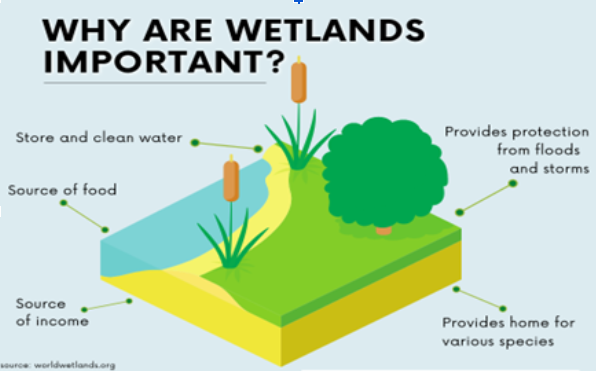
- Wetlands are called “kidneys of the landscape” as they receive and filter flows from upstream sources.
- They are called “biological supermarkets” due to their rich biodiversity and food chains.
- Key functions include groundwater recharge, shoreline protection, water purification, and flood mitigation.
Key Provisions of 2010 Rules
- Prohibited activities include reclamation, industrialisation, solid waste dumping, and disposal of hazardous substances.
- Activities requiring prior approval include water withdrawal, harvesting of resources, and dredging.
- A Central Wetlands Regulatory Authority (CWRA) was constituted, chaired by the Secretary, Ministry of Environment and Forests.
- State Governments must submit a Brief Document about wetlands qualifying for protection.
- Appeals against the authority’s decisions can be raised before the National Green Tribunal (NGT).
Key Provisions of 2017 Rules
- Each State and UT must establish a State Wetlands Authority, headed by the State Environment Minister.
- The CWRA was replaced by a National Committee to advise the Central Government on wetland policies.
- The National Committee recommends designation of wetlands under the Ramsar Convention and advises on international collaboration.
- A comprehensive digital inventory of all wetlands must be prepared within one year and updated every ten years.
- Prohibited activities include conversion of wetlands, encroachment, industrial expansion, hazardous waste storage, and discharge of untreated effluents.
- State Governments were given protection and conservation powers; the Central Government retained monitoring powers.
Suryastra Rocket System
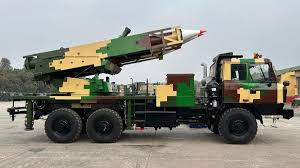
Context: Pune-based Nibe Limited successfully conducted firing trials of its Suryastra rockets with strike ranges of 150 km and 300 km at the Integrated Test Range on May 18 and 19. This marks the first time an Indian private defence company demonstrated indigenous long-range rocket systems of such capability.
About Suryastra
- Suryastra is India’s first Made-in-India, multi-calibre, long-range rocket launcher system.
- It was developed by Pune-based NIBE Limited in collaboration with Israel’s Elbit Systems.
- It leverages Elbit’s PULS (Precise and Universal Launching System) architecture for precision surface-to-surface strikes.
- It delivers strike capability at ranges of 150 km and 300 km, marking the first domestic production of a 300 km strike-capable rocket launcher.
- It has demonstrated accuracy of less than 5 metres Circular Error Probable (CEP) in trials.
- It can also fire loitering munitions up to 100 km.
- Key Capabilities
- Multi-Calibre Capability: A single launcher can fire multiple types of rockets and guided munitions, enhancing operational flexibility.
- High Tactical Mobility: It is mounted on a BEML High Mobility Vehicle (HMV), enabling rapid deployment and shoot-and-scoot operations.
- Strategic Significance
- Suryastra aligns with the Aatmanirbhar Bharat initiative by combining Israeli technology with Indian manufacturing.
- It enhances deep-strike deterrence and represents a shift toward long-range, precision, mobile artillery.
Viksit Bharat Gramin Rozgar Guarantee Act (VB-G RAM G)

Core Objectives
- Provides 125 days of guaranteed wage employment to rural households, up from 100 days under MGNREGA.
- Aims to build water, livelihood, and climate-resilient rural infrastructure through public works.
- Ensures agriculture-labour balance by avoiding farm labour shortages during peak seasons.
- Promotes Viksit Gram Panchayat Plans (VGPP) linked with PM Gati Shakti for coordinated planning.
- Strengthens governance through biometrics, GIS monitoring, real-time dashboards, and AI-enabled oversight.
Key Statutory Provisions
- All works are aggregated into the Viksit Bharat National Rural Infrastructure Stack (VB-NRIS), prioritising water security and climate resilience.
- States may pause works for up to 60 days during sowing and harvesting seasons to ensure farm labour availability.
- The programme is implemented as a Centrally Sponsored Scheme (CSS) with shared Centre-State responsibilities.
- Normative allocation provides rule-based fund distribution to states; excess expenditure is borne by states.
- The Centre is authorised to grant temporary relaxations during natural calamities or extraordinary situations.
- Oversight is strengthened through biometrics, GIS-based planning, social audits, and public disclosures.
- Central and State Gramin Rozgar Guarantee Councils are established for monitoring and policy guidance.
- The Centre is authorised to notify wage rates under the Act.
- States must notify their implementation schemes within six months of commencement of the Act.
- States are obliged to pay unemployment allowance if work is not provided on time.
MGNREGA vs VB-G RAM G
| Aspect | MGNREGA | VB-G RAM G |
| Wage Guarantee | 100 days per rural household | 125 days per rural household |
| Nature of Works | Multiple scattered categories | 4 priority areas — water security, rural infrastructure, livelihoods, climate resilience |
| Funding (Wages) | Centre bears unskilled wage costs | 60:40 (Centre:State) for most states; 90:10 for special category regions |
| Pause Provision | No explicit statutory pause window | States can notify up to 60 days pause per financial year |
| Funding Approach | Demand-based, unpredictable allocations | Normative funding for predictable budgeting |
| Planning Framework | Gram Panchayat planning is central | Integrates VGPP with PM Gati Shakti and national spatial systems |
National Commodities and Derivatives Exchange (NCDEX)
About NCDEX
- NCDEX is an Indian online commodities exchange that specialises in agricultural commodities.
- It is a public limited company incorporated under the Companies Act, 1956 on April 23, 2003.
- It was established by prominent financial institutions including ICICI Bank, National Stock Exchange (NSE), and NABARD, among others.
- NCDEX is headquartered in Mumbai with offices across the country.
- It is governed by an independent board of directors with no ties to the agricultural industry.
Regulation
- NCDEX is regulated by the Securities and Exchange Board of India (SEBI).
- It operates under various laws including the Securities Contracts (Regulation) Act, 1956, the Companies Act, and the Contract Act.
Trading Commodities
- NCDEX offers trading in 23 agricultural commodities including pulses, spices, and guar.
- As of March 2018, there are 27 commodity contracts traded on the exchange, of which 25 are agricultural contracts.
- Several commodities traded on NCDEX, such as guar, are not traded on any global platforms yet are economically vital to India.
NCDEX AGRIDEX
- NCDEX AGRIDEX is India’s first return-based agricultural futures index.
- It tracks the performance of ten liquid commodities traded on the NCDEX exchange.
- The ten-commodity basket is selected based on liquidity on the trading platform.
- AGRIDEX acts as a benchmark for the performance of underlying agricultural commodities.
Benefits of NCDEX
- NCDEX improves market transparency by maintaining an online futures market for agricultural crops.
- It aids in price discovery for Indian farmers, helping them price goods more accurately.
- It eliminates middlemen (commission agents), reducing the cost of price information for farmers.
- It has improved quality standards in Indian agriculture by standardising quality criteria through contracts.
Ebola Virus Disease (EVD)

About EVD
- EVD was formerly known as Ebola haemorrhagic fever and affects humans and other primates.
- It is caused by viruses belonging to the Orthoebolavirus genus of the Filoviridae family.
- Six species of Orthoebolaviruses have been identified so far.
- Three species are known to cause major outbreaks:
- Ebola virus (EBOV) causing Ebola Virus Disease (EVD).
- Sudan virus (SUDV) causing Sudan Virus Disease (SVD).
- Bundibugyo virus (BDBV) causing Bundibugyo Virus Disease (BVD).
- Origin
- The virus was first identified in 1976 during two simultaneous outbreaks.
- One outbreak occurred in Yambuku, DRC, near the Ebola River, giving the disease its name.
- The second outbreak occurred in Nzara, South Sudan.
- Transmission
- Natural host: Fruit bats of the Pteropodidae family are the natural reservoir of the Ebola virus.
- Animal-to-Human: Spreads through contact with blood or bodily fluids of infected animals such as bats, chimpanzees, gorillas, and monkeys.
- Human-to-Human: Spreads through direct contact with blood or bodily fluids of an infected or deceased person.
- Contaminated objects such as bedding and clothing also serve as transmission vectors.
- Symptoms
- Initial symptoms include fever, extreme fatigue, muscle pain, headache, and sore throat.
- Advanced symptoms include vomiting, diarrhoea, rash, and impaired kidney and liver function.
- Severe cases may involve internal and external bleeding.
- Fatality Rate and Treatment
- Average case fatality rate is around 50%, ranging from 25% to 90% across outbreaks.
- Early supportive care with oral or intravenous fluids significantly improves survival rates.
- Monoclonal antibody treatments such as Inmazeb and Ebanga — are available but only for the Zaire strain.
Ayush Anudan Portal
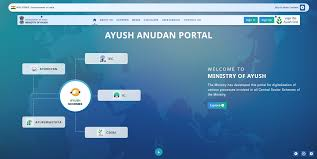
Context: The Union Minister officially launched the Ayush Anudan Portal at Kartavya Bhawan, New Delhi.
About Ayush Anudan Portal
- It is a centralised, interactive digital platform for managing distribution of financial grants within the Ayush sector.
- It was developed under the Ayush Grid Initiative as a fully paperless platform.
- Nodal Ministry is the Ministry of Ayush, Government of India.
- It digitises end-to-end submission, evaluation, and tracking of funding grants under Central Sector Schemes of the ministry.
- It aims to achieve 100% transparency, operational efficiency, and strict accountability in grant management.
- Key Features of the Portal
- NGO Darpan Integration: Cross-links with NITI Aayog’s NGO Darpan portal for automated background authentication of applicant organisations.
- Real-Time Tracking System: An interactive dashboard allows both government reviewers and applicants to monitor proposal approval status live.
- Single-Window Integration: Accessible directly or via the My Ayush Integrated Services Portal (MAISP).
About Ayush Grid Initiative
- Ayush Grid is a nationwide IT infrastructure project serving as the unified digital backbone for the traditional Indian medicine sector.
- It was initiated by the Ministry of Ayush in 2018 under the Digital India Programme.
- It covers all streams of traditional medicine: Ayurveda, Yoga and Naturopathy, Unani, Siddha, Sowa-Rigpa, and Homoeopathy.
- It is fully aligned with the Ayushman Bharat Digital Mission (ABDM), enabling traditional health records to interoperate with mainstream medical systems.
- It operates the Ayush Health Management Information System (AHMIS), a cloud-based framework for standardising patient documentation across clinical establishments.
- Citizen-facing portals include the Yoga Locator and Bhuvan spatial tracking applications.
- Healthcare services are supported through telemedicine portals and apps like Ayush Sanjivani.
Ammonium Sulphate Fertilizer
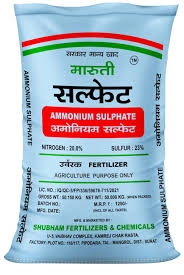
Context: ICAR urged state governments to promote ammonium sulphate as an alternative to urea for paddy cultivation.
About Ammonium Sulphate
- It is an inorganic, water-soluble chemical mineral fertilizer containing two plant macronutrients.
- It contains 21% Nitrogen (in readily available ammonium form) and 24% Sulphur (as active sulphate).
- It is historically used in alkaline soils to provide immediate nourishment and lower soil pH.
- Production
- Direct Synthesis: Produced by reacting gaseous ammonia with a concentrated solution of sulphuric acid.
- Byproduct Recovery: Extracted during industrial manufacture of caprolactam (used to make nylon) or recovered from coke-oven gases in steel plants.
- India’s Current Fertilizer Import Situation
- Fertilizer imports from West Asian suppliers (Saudi Arabia, Qatar, UAE, Oman, Israel) face disruptions due to the 2026 conflict.
- India’s domestic production of urea, DAP, and NPK fertilizers remains insufficient to meet agricultural demand.
- India is fully import-dependent for Muriate of Potash (MOP), making kharif sowing vulnerable to supply disruptions.
How Ammonium Sulphate Can Substitute Urea
- India already has established domestic manufacturing capacity for ammonium sulphate, reducing import dependence.
- Unlike urea, ammonium sulphate can be sourced from multiple countries, improving supply-chain flexibility.
- The ammonium ion binds strongly with soil particles, reducing nutrient losses through leaching, volatilization, and denitrification.
- It provides dual nutrient supply of nitrogen and sulphur simultaneously, helping correct sulphur-deficient soils.
Limitations of Ammonium Sulphate
- Soil Acidity: Continuous application increases soil acidity, requiring higher lime treatment to maintain fertility.
- Waterlogging Toxicity: In flooded or clay-heavy soils, sulphur converts into hydrogen sulphide gas under anaerobic conditions, damaging rice roots.
- Plant Burn Risk: High salt concentration can dehydrate roots and cause chemical burns in sensitive crops.
- Short Soil Life: Being highly water-soluble, its nutrient effect lasts only 4 to 6 weeks, requiring frequent split applications.
- Lower Nitrogen Density: Contains only 21% nitrogen compared to urea’s 46%, requiring larger quantities for the same effect.
