

The ‘Seven-Point IQ Opportunity’ for Indian Children
Context
- India reduced under-five mortality from 43 in 2012 to 32 in 2020 through nutrition and health interventions.
- The Anganwadi system serves approximately eight crore children aged 0-6 years with nutrition and health services.
- Brain and body development do not proceed separately; the developing brain consumes nearly one-fifth of resting energy.
- In the first year, grey matter increases by 149% and the cerebellum by 240% as synapses form rapidly.
Steps Taken
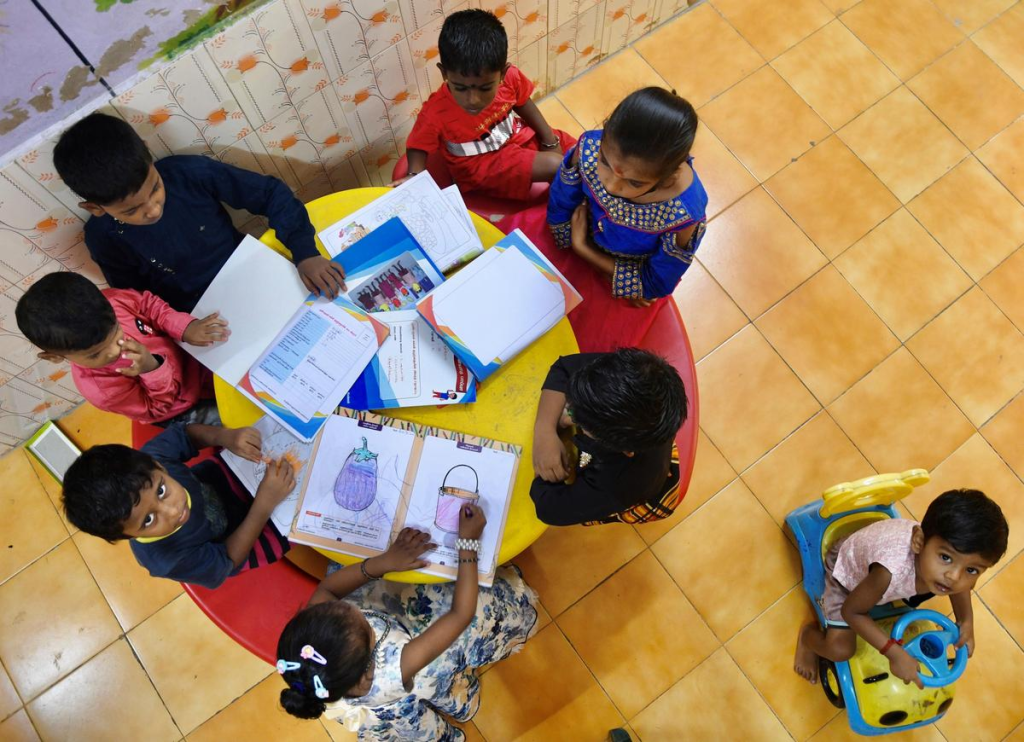
- Aadharshila framework strengthens play-based preschool education within Anganwadi centres.
- Navchetana framework extends early stimulation into the home through caregiver guidance.
- Poshan Bhi Padhai Bhi redefines Anganwadis as centres nourishing both mind and body.
- Poshan Pakhwada (April 2026) by Ministry of Women and Child Development promoted early stimulation and reduced screen exposure.
- Anganwadis now combine nutrition, growth monitoring, counselling and structured play-based learning.
Persisting Challenges
- Nutritional inputs alone are insufficient as infection, inflammation and toxic exposure affect absorption.
- Children with iron deficiency or high lead exposure score lower cognitively despite normal height and weight.
- Growth charts alone never tell the full story of a child’s developmental progress.
- The quality of home environment remains a stronger predictor of cognitive outcomes than diet alone.
- A Vellore birth cohort study (250 children) found stunted children performed worst on cognitive assessments.
Steps Required
- Evidence from Jamaica in the 1980s shows psychosocial stimulation alongside nutrition yields stronger cognitive gains.
- Vellore cohort children attending preschool for 18-24 months scored seven IQ units higher than non-attendees.
- A similar Brazilian cohort showed an eight-unit cognition gain at age five with structured preschool.
- Caregivers must integrate “loving, talking and playing” into daily routines like feeding and cooking.
- The home must build foundations of language and cognition in the first three years.
- Anganwadis must deepen this through play-based activities and peer learning from ages three to six.
- Training women as childcare workers gives them dignity and livelihood, creating a virtuous circle of care.
Conclusion: For a Viksit Bharat, progress cannot rest on calories alone. The physical and interactive environments in homes, Anganwadis and communities must be as enriching as the meals children receive. When the kitchen, classroom and crèche align, children flourish, women work and communities thrive.
