

India-Japan Relations: UPSC Mains Notes
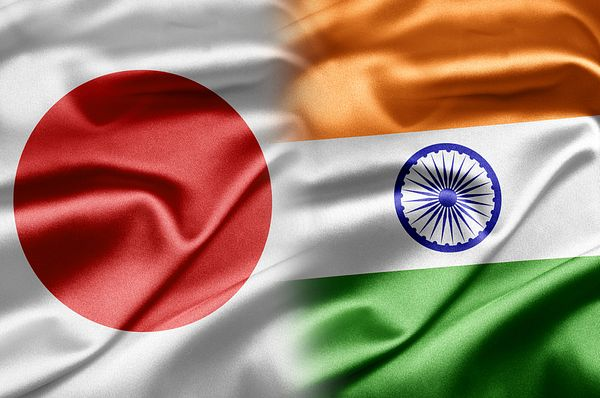
In News
- Japanese Prime Minister Sanae Takaichi is visiting India to strengthen strategic, trade, investment and technology cooperation. She will participate in the 16th India-Japan Annual Summit, continuing the institutional mechanism established between both countries.
Present Scenario
- The Annual Summit mechanism was established in 2006 during Prime Minister Manmohan Singh’s visit to Japan.
- The summit agenda includes economic security, technological cooperation and regional strategic developments.
- Japan remains among India’s largest investors, supporting infrastructure projects and industrial development across several sectors.
- Japan has invested nearly $1.6 billion for twenty projects through the Asian Development Bank.
- Bilateral trade reached $27.5 billion during 2025 and 2026, reflecting expanding economic engagement.
- Japanese companies invested ₹3.2 billion between April and December 2025, mainly in the manufacturing sector.
Areas of Collaboration
- Strategic Partnership: India and Japan launched a Global Partnership in 2000, later strengthening bilateral cooperation through successive upgrades.
- Partnership Upgrade: Bilateral relations became a Strategic and Global Partnership in 2006 under Prime Ministers Modi and Shinzo Abe. Further, India and Japan elevated ties into a Special Strategic and Global Partnership during 2014.
- Counterweight to China: Bilateral relations provide a strategic and economic counterweight to China’s growing regional influence.
- Indo-Pacific Cooperation: Leaders are expected to discuss efforts for a free and open Indo-Pacific region.
- Defence Cooperation: India, Japan, Australia and the United States have expanded defence and strategic collaboration in recent years.
- Economic Security: Economic security has emerged as a key pillar of bilateral cooperation alongside traditional strategic engagement.
- Critical Minerals: Both countries have signed agreements covering critical minerals and resilient supply chain cooperation.
- Semiconductors: Bilateral cooperation extends to semiconductor supply chains to strengthen technological collaboration.
- Artificial Intelligence: India and Japan are expanding cooperation in artificial intelligence and emerging technologies.
Regional Affinities
- Eight Pillars: Cooperation covers economy, economic security, mobility, environment, technology, innovation, healthcare, people to people exchanges and State prefecture engagement.
- Northeast Development: Japan remains India’s leading partner for developing the North Eastern region through collaborative initiatives.
- Act East Forum: India and Japan promote connectivity and development through the India-Japan Act East Forum.
- Development Projects: Cooperation includes infrastructure, agriculture, tourism and skill development projects across Northeast India.
- Nagaland Visit: A proposed visit to Nagaland was considered during the visit but was later ruled out.
Way Forward
- Economic Cooperation: Both countries should further strengthen trade, investment and manufacturing partnerships through sustained institutional engagement.
- Technology Collaboration: Cooperation should continue expanding across economic security, semiconductors, critical minerals and artificial intelligence.
- Strategic Engagement: Regular annual summits should deepen cooperation on regional security and Indo-Pacific developments.
- Regional Connectivity: Both countries should continue supporting connectivity and development projects across India’s Northeastern region.
- People Exchanges: Educational, cultural and State prefecture exchanges should further strengthen long-term bilateral relations.
Source: Indian Express
