

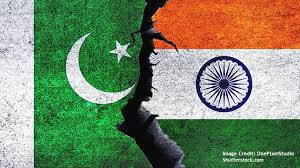
Context
- Operation Sindoor’s first anniversary refocused India’s attention on Pakistan policy. Pakistan used ISI-mentored jihadi tanzeems against India after the Afghan jihad. All Indian PMs since Narasimha Rao sought to normalise ties through engagement. Pakistan’s core concern has always been J&K; India’s primary concern has been terrorism.
Evolution of Composite Dialogue
- India-Pakistan Composite Dialogue (CD) announced in September 1998 after nuclear tests.
- It covered eight subjects such as humanitarian matters, cooperation, and resolution of J&K and terrorism.
- Kargil (1999), IC-814 hijack (1999) and Parliament attack (2001) repeatedly disrupted the process.
- Musharraf’s January 2004 commitment that Pakistani territory would not be used against India revived talks.
- Back channel on J&K continued till 2014 but both sides reached only a modus vivendi, not a permanent solution.
- Mumbai Attacks: A Turning Point
- Mumbai 26/11 (2008) led to the CD being called off entirely.
- Joint Anti-Terror Mechanism (JATM) held four futile rounds and failed to prevent Mumbai attacks.
- CD resumed briefly during 2011-12 but remained structurally weak and terror-prone.
Modi Era: A New Paradigm
- Modi invited Nawaz Sharif to his oath-taking ceremony (2014) and visited Pakistan in December 2015.
- CD was renamed Comprehensive Bilateral Dialogue (CBD) under the Ufa Joint Statement (2015).
- Pathankot attack (2016) within 10 days of Modi’s visit collapsed the renewed engagement entirely.
- Uri attack (September 2016) prompted India to conduct Surgical Strikes thus establishing a new paradigm.
- India’s new position: talks and terror cannot go together under any circumstances.
- Modi held Indus Waters Treaty in abeyance and stated India will not distinguish between terrorists and the Pakistani state.
Why Engagement Repeatedly Fails
- Pakistan’s two-nation theory and irredentism form the structural basis of its anti-India posture.
- Terror is embedded in Pakistan’s security doctrine thus dismantling tanzeems is not possible voluntarily.
- Pakistan has repeatedly sacrificed economic stability over confrontation with India.
- Neither comprehensive engagement nor kinetic force has deterred Pakistan from using terror.
Way Forward
- A robust humanitarian mechanism should be evolved if Pakistan shows genuine willingness.
- India must assert internationally that every terror act is an act of military aggression on its territory.
- Pakistan must demonstrably dismantle terrorist infrastructure before any dialogue resumes.
- Managing a nuclear-armed recalcitrant neighbour requires calibrated diplomatic and strategic pressure.
Conclusion
Eight decades of experience confirm Pakistan’s unwillingness to abandon terror as a state instrument. India’s future policy must firmly balance managing a nuclear neighbour with not rewarding terrorism. Meaningful dialogue is only possible when Pakistan moves from irredentism to responsible statehood.
