

Context
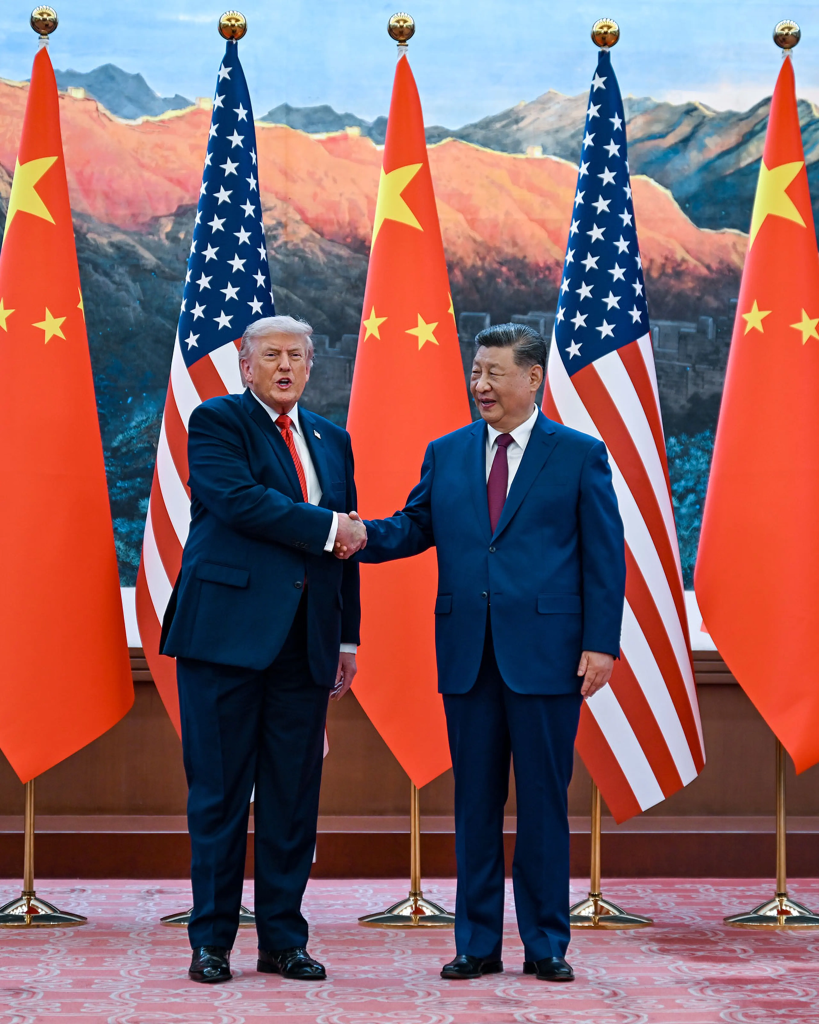
- U.S. President Donald Trump visited China during May 13-15, meeting President Xi Jinping. The visit came after a nine-year gap in U.S.-China presidential meetings. Trump’s first presidency initiated America’s trade war against China in 2018.
- After returning in 2025, Trump escalated tariffs, prompting equal retaliation from Beijing. A one-year trade truce was announced at APEC Summit, Busan, South Korea (October 2025). The visit primarily aimed at initiating a thaw in bilateral relations after years of deterioration.
Ongoing Geopolitical Tussle
- Strait of Hormuz closure during the Iran-U.S. war triggered a severe global energy crisis.
- Cross-strait tensions between China and Taiwan have reached dangerously high levels recently.
- Taiwan’s pro-independence DPP government faces Beijing’s increasing reunification assertiveness directly.
- Finland and Sweden’s NATO accession has further complicated China’s strategic neighbourhood calculations.
- Intense internal power struggles within the Communist Party of China (CPC) have increased significantly.
- U.S. mid-term elections this year place additional domestic pressure on Trump’s diplomatic outcomes.
Key Expectations From Both Sides
- U.S. Expectations:
- Salvaging ties with China during a period of global geopolitical and economic tumult.
- Securing Beijing’s support to end the ongoing Iran-U.S. war through diplomatic channels.
- Convincing China to purchase Nvidia H200 GPUs in exchange for easing technology restrictions.
- Clinching the three Bs deal i.e. beans (soybeans), beef and Boeing aircraft purchases from China.
- Expanding American market access in China to address pressing domestic economic challenges.
- China’s Expectations:
- Keeping the U.S. away from Taiwan and preventing formal support for Taiwanese independence.
- Restoring normalcy and strategic stability in bilateral relations with Washington effectively.
- Seeking relief from U.S. technology restrictions imposed on Chinese firms and critical sectors.
- Using Iran diplomacy to strengthen its strategic foothold across the West Asian region.
- Utilising the visit’s pageantry to bolster Xi Jinping’s domestic political image and authority.
Key Outcomes
- Visit was more symbolic than substantial with no joint statements or formal agreements signed.
- Xi proposed a “constructive China-U.S. relationship of strategic stability” covering the next three years.
- China offered to buy 200 Boeing aircraft, 450-500 engines, American soybeans and restored beef import licenses.
- Xi issued a stern warning on Taiwan of frictions or confrontation if the U.S. does not act cautiously.
- Trump retained strategic ambiguity on Taiwan and remained vague about future arms sales commitments.
Benefits For India
- U.S.-China thaw reduces global trade war uncertainty, benefiting Indian export markets considerably.
- Diplomatic resolution of Iran war would reopen Strait of Hormuz, directly easing India’s energy crisis.
- Reduced cross-strait tensions lower the risk of Indo-Pacific military escalation near India’s strategic interests.
- India gains strategic bargaining space as both powers compete for partnerships with major democracies.
- A stable U.S.-China relationship reduces global economic volatility and supports India’s growth trajectory.
Challenges For India
- A U.S.-China G2 arrangement could marginalise India’s role in shaping the emerging global order.
- Restoration of technology trade between U.S. and China may reduce India’s semiconductor partnership opportunities.
- China’s deeper West Asia diplomatic footprint may complicate India’s Gulf energy and strategic partnerships.
- U.S.-China convergence on agriculture trade may divert American focus away from India’s bilateral trade needs.
- Renewed U.S.-China cooperation may reduce India’s leverage in ongoing trade negotiations with Washington.
Way Forward
- India must deepen its own strategic partnerships with the U.S. and other major powers independently.
- Accelerating domestic chip manufacturing reduces India’s dependence on U.S.-China technology dynamics.
- Strengthening energy diversification through Arctic routes and renewables reduces India’s Gulf dependency.
- India must actively engage in Indo-Pacific security frameworks to firmly safeguard its strategic interests.
- Leveraging BRICS and G20 platforms effectively asserts India’s voice in the emerging multipolar order.
Conclusion
- Trump’s China visit signals a tentative thaw but not a fundamental reset in bilateral relations. The Thucydides Trap question whether major powers can avoid conflict that remains unanswered for now. Both powers seek stability over confrontation, but deep structural rivalries on technology and Taiwan persist. India must pursue a calibrated and autonomous foreign policy to navigate this evolving great power dynamic.
