

Context
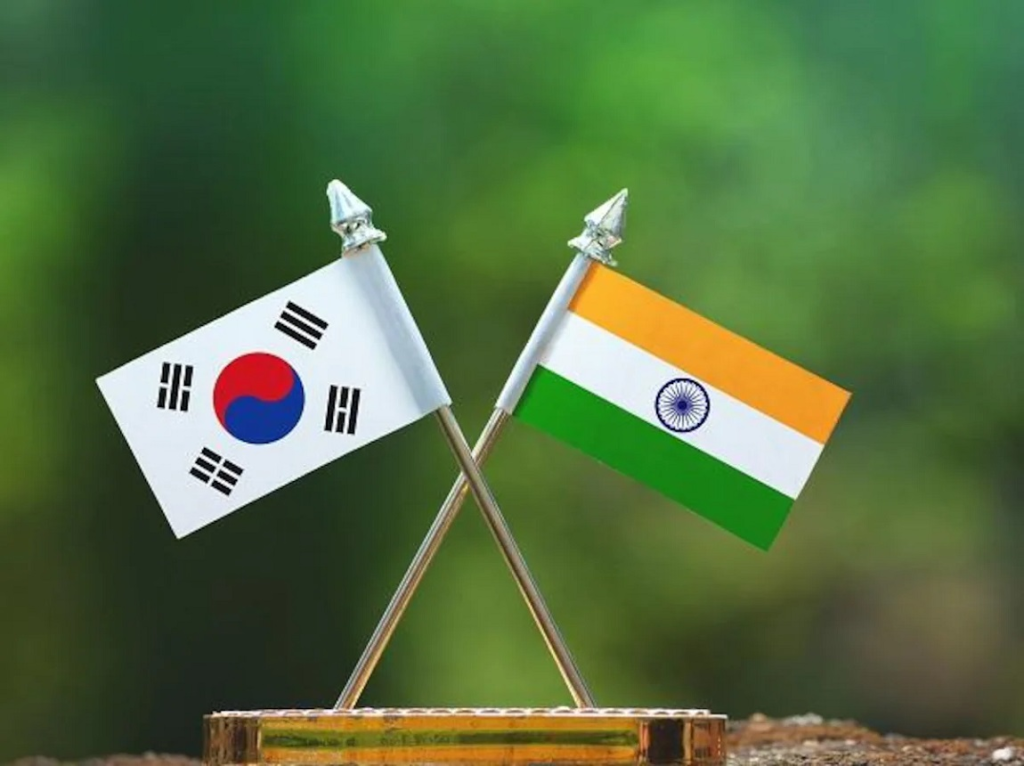
- South Korean President visited India in April 2026; Indian Defence Minister visited Seoul in May 2026. It began as limited defence engagement has evolved into a multidimensional strategic partnership.
Key Project Areas
- Submarine Collaboration: South Korea’s expertise in conventional submarines, lithium-ion battery systems and air-independent propulsion (AIP) technologies through Hanwha Ocean is a key focus.
- Aerospace: KF-21 fighter programme and FA-50 light combat aircraft open avenues for fighter technologies, avionics and missile integration.
- Shipbuilding: South Korea’s leadership in shipbuilding can contribute to India’s Indo-Pacific maritime ambitions through destroyers, logistics vessels and smart shipyards.
- Land Systems: Cooperation progressing in light tanks, utility helicopters, future combat vehicles and military lithium batteries.
- Defence Electronics: Indian and Korean firms pursuing joint ventures and industrial partnerships across multiple sectors.
Innovation-Driven Cooperation
- Partnership is evolving beyond conventional weapons toward innovation-driven collaboration.
- Proposed Korea-India Defence Accelerator (KIND-X) reflects a future-oriented startup-linked approach.
- Both countries are promoting defence innovation ecosystems linking startups, universities, research institutions and investors.
Strategic Complementarity
- For India: South Korea offers advanced technology and manufacturing expertise.
- For South Korea: India provides a large market, strategic geography and long-term industrial opportunities.
- Military exchanges, naval exercises, coast guard cooperation and defence dialogues are strengthening interoperability.
Indo-Pacific Geopolitical Context
- North Korea’s growing nuclear and missile capabilities pose a serious threat to South Korea.
- Russia-North Korea military cooperation is reshaping Northeast Asia’s security architecture significantly.
- China’s naval assertiveness around the Korean Peninsula creates new strategic concerns for Seoul.
- China’s expanding presence in the South China Sea directly impacts South Korea’s energy imports and maritime trade.
- South Korea faces declining demographics and shrinking military recruits, weakening its conventional defence posture.
Need For Strategic Convergence
- Confining partnership solely to defence-industrial ties would be a strategic miscalculation for both nations.
- Next phase must focus on an institutionalised defence road map covering broader Indo-Pacific security.
- Framework must evolve into a multidimensional partnership grounded in shared security concerns and regional resilience.
- India must recognise that South Korea’s security and stability is central to sustaining defence-industrial cooperation.
- Strengthening South Korea’s ability to address its own security challenges must be central to this partnership.
Way Forward
- Develop an institutionalised and forward-looking defence road map covering the wider Indo-Pacific.
- Expand cooperation from defence-industrial ties toward shared security goals and regional stability.
- India must pay closer attention to Korean Peninsula geopolitics to protect its own Indo-Pacific interests.
- KIND-X accelerator must be operationalised to link innovation ecosystems of both countries.
- Deepen naval exercises and coast guard cooperation to build genuine operational interoperability.
Conclusion
- India-South Korea defence partnership has the potential to become one of Asia’s most significant. Moving beyond the K9 Vajra-T model toward a comprehensive strategic partnership is the need of the hour. Shared interests in Indo-Pacific stability, technology and regional resilience make this partnership strategically indispensable.
