
Shigellosis
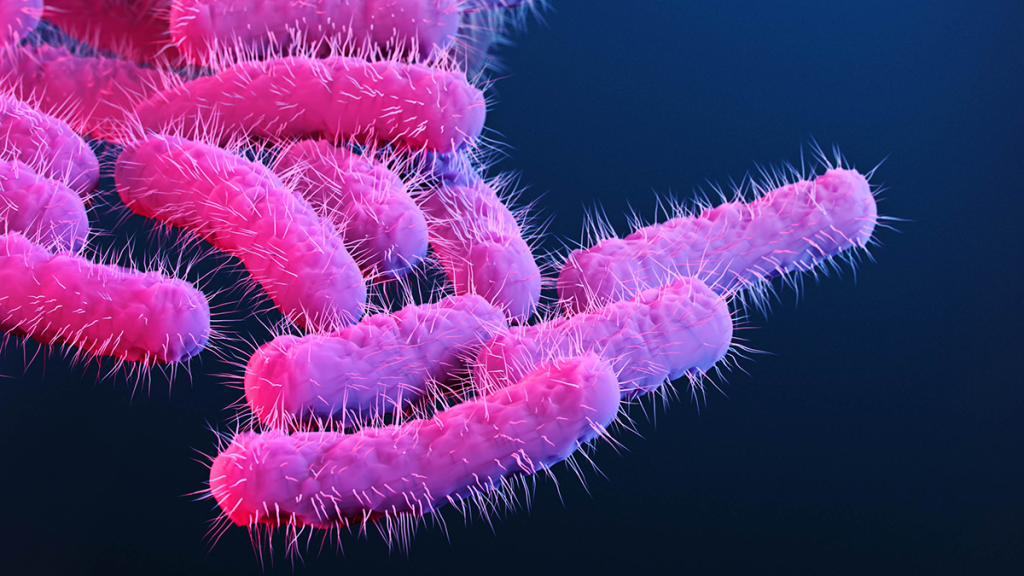
Context: Kerala reported 34 shigellosis cases in June alone, with Kozhikode (11) and Wayanad (8) recording the highest numbers; contaminated well water was identified as a key source.
About Shigellosis
- Shigellosis is a highly contagious bacterial diarrhoeal disease caused by the Shigella bacteria.
- It is one of the leading bacterial causes of diarrhoea worldwide and is also known as bacillary dysentery.
- Ingesting as few as 10 to 100 bacteria is sufficient to cause an infection, making it extremely infectious.
- Humans are the only natural reservoir of the Shigella bacteria.
- Children under five, older adults, immunocompromised individuals, and malnourished persons face the most severe risk.
- Transmission
- The disease spreads primarily through the faecal-oral route via contaminated food, water, and direct contact with infected surfaces or persons.
- It can also spread through sexual contact with an infected individual.
- Symptoms
- Primary symptom is diarrhoea, which may be bloody, mucoid, and prolonged (three or more days).
- Other symptoms include stomach cramps, vomiting, high fever, and intestinal tissue invasion causing severe abdominal pain.
- Treatment
- Most mild cases are self-limiting and resolve without medical intervention.
- Serious infections may require antibiotics as part of treatment.
Disqualification of Rajya Sabha Candidature
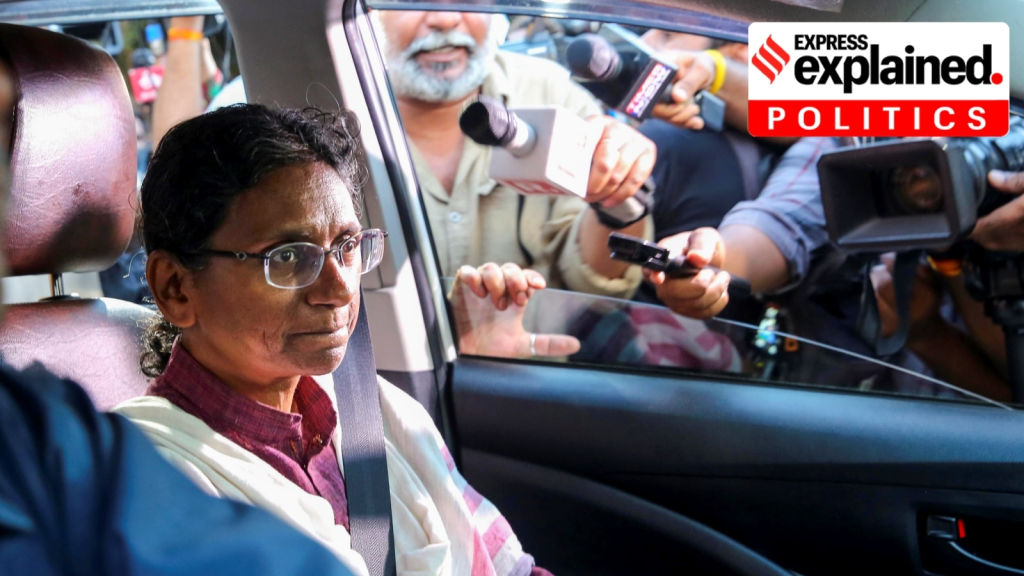
Context: The Rajya Sabha nomination of senior Congress leader Meenakshi Natarajan from Madhya Pradesh was rejected by the Returning Officer during candidate scrutiny.
Constitutional and Legal Framework
- Article 102 outlines primary grounds for disqualifying a member from either House of Parliament, including holding an Office of Profit, being declared of unsound mind, or being an undischarged insolvent.
- Representation of the People Act, 1951 (RPA) provides detailed statutory rules for disqualification under Chapter III.
- Conduct of Elections Rules, 1961 (Form 26) mandates every candidate to submit an affidavit covering criminal antecedents, assets, liabilities, educational qualifications, and income tax filing status.
- The Returning Officer (RO) holds administrative authority to scrutinise and reject nomination papers containing misrepresentations or incomplete information.
Grounds for Disqualification under RPA, 1951
- Section 8(1): Conviction for bribery, rape, corruption, promoting communal hatred, or insulting the National Flag leads to immediate disqualification.
- Section 8(2): Conviction for hoarding, profiteering, or food and drug adulteration with imprisonment of six months or more attracts disqualification.
- Section 8(3): Any conviction with imprisonment of two years or more causes disqualification during imprisonment and for six years after release.
- Section 8A: Corrupt electoral practices such as bribery, booth capturing, or voter intimidation may lead to disqualification for up to six years.
- Section 9: A government employee dismissed for corruption or disloyalty is barred from contesting elections for five years.
- Section 9A: Persons holding active government contracts for supply of goods or execution of works are disqualified to prevent conflict of interest.
- Section 10: Holding key managerial posts in government-controlled companies can attract disqualification.
- Section 10A: Failure to submit a correct account of election expenses within the prescribed period leads to disqualification for three years.
Total Fertility Rate (TFR)
About TFR
- TFR is the average number of children a woman is expected to give birth to during her reproductive years (ages 15 to 49), assuming current fertility rates remain constant.
- It is one of the most important indicators used by demographers to understand population growth, stability, or decline.
Replacement Level Fertility
- The global replacement level is approximately 2.1 children per woman.
- The extra 0.1 accounts for child mortality and people who do not reproduce.
- TFR above 2.1 means population tends to grow; TFR around 2.1 means population remains stable; TFR below 2.1 signals potential ageing and decline.
India’s Fertility Trend
- As per NFHS-5, India’s overall TFR has declined to 2.0, placing the country below replacement level fertility.
- Southern states (Kerala, Tamil Nadu, Andhra Pradesh, Karnataka) record very low TFRs of 1.4 to 1.7.
- Northern states (Bihar, Uttar Pradesh) still record relatively higher TFRs, often above 2.5 in some regions.
- When TFR falls too low, nations face ageing populations, labour shortages, and rising pension burdens.
Tribes of Andaman and Nicobar Islands
Overview
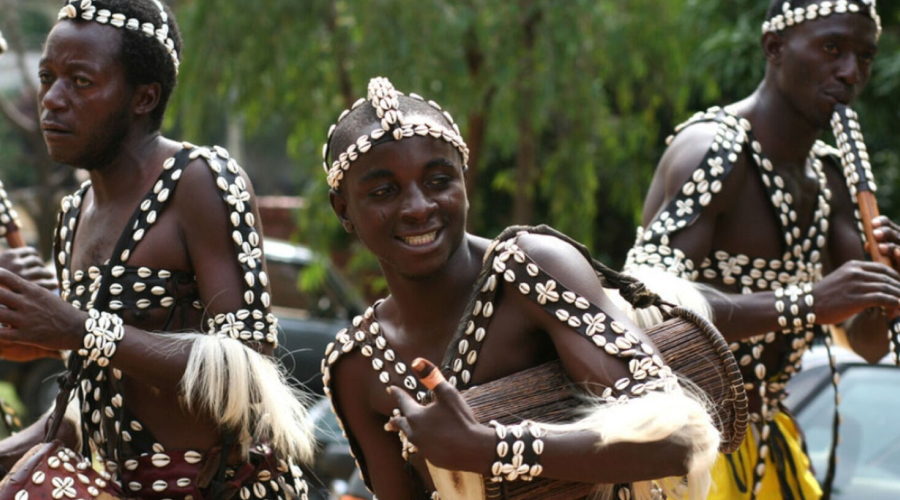
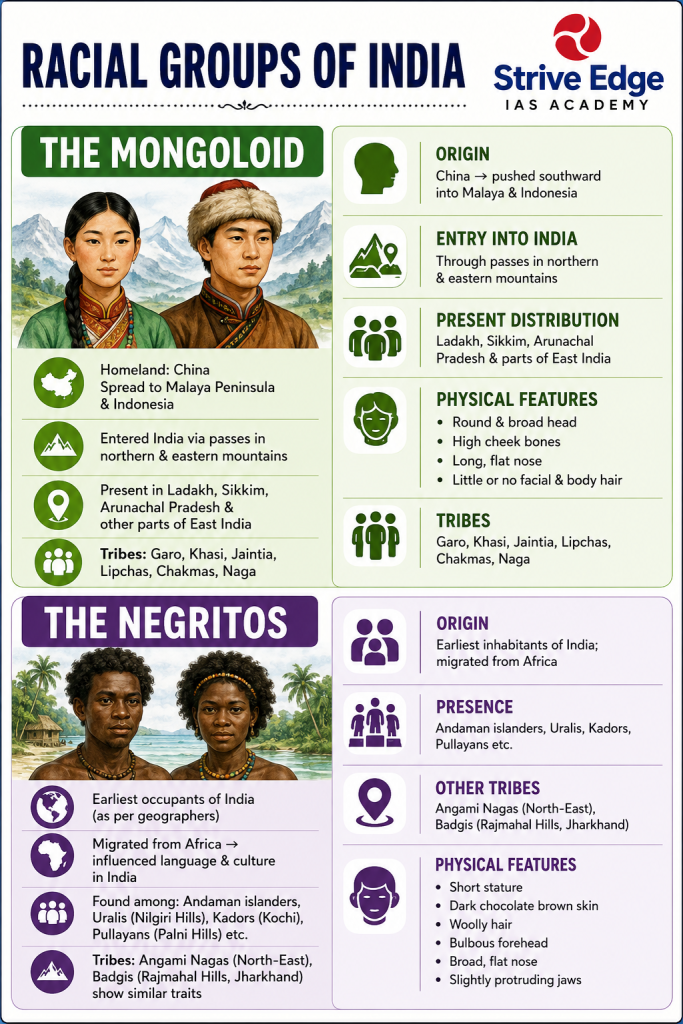
- The Andaman and Nicobar Islands are home to six indigenous tribes, classified based on racial and geographical distinctions.
- All tribes except the Nicobarese are classified as Particularly Vulnerable Tribal Groups (PVTGs).
Tribal Classification
| Region | Tribe | Race |
| Andaman Islands | Great Andamanese | Negrito |
| Andaman Islands | Onge | Negrito |
| Andaman Islands | Jarawa | Negrito |
| Andaman Islands | Sentinelese | Negrito |
| Nicobar Islands | Nicobarese | Mongoloid |
| Nicobar Islands | Shompen | Mongoloid |
Key Features of Each Tribe
- Great Andamanese: Once populous, significantly reduced by colonisation; now confined to Strait Island.
- Onge: Hunter-gatherers inhabiting Little Andaman, preserving their traditional lifestyle.
- Jarawa: Inhabit South and Middle Andaman and largely resist outside contact.
- Sentinelese: World’s most isolated tribe, inhabiting North Sentinel Island, fiercely rejecting all outside contact.
- Nicobarese: The most populous tribe in the islands, practising agriculture, fishing, and hunting; the only tribe not classified as a PVTG.
- Shompen: Reside in the interior of Great Nicobar, are hunter-gatherers, and have shown some openness to contact.
Important Facts
- Negrito tribes: Great Andamanese, Onge, Jarawa, and Sentinelese.
- Mongoloid tribes: Nicobarese and Shompen.
- Shompen is the only Mongoloid PVTG in the islands.
Motor Vehicles Act, 1988

Context: The Supreme Court ruled that unpaid domestic work by homemakers must be monetised at a minimum of ₹30,000 per month while calculating compensation for deaths in road accidents.
More in News
- A Division Bench of Justice Sanjay Karol and Justice N.K. Singh recognised homemakers as “nation builders” whose contribution extends beyond the household.
- The court introduced “loss of domestic care” as an additional head of damages in motor accident compensation claims.
About Motor Vehicles Act, 1988
- The Motor Vehicles Act, 1988 replaced the earlier Motor Vehicles Act, 1939 and came into force on 1st July 1989.
- It covers all aspects of road transport including registration, licensing, regulation, and accident compensation.
- It was amended in 2019 and 2022, both dealing with third-party insurance and claims management.
- The government in 2018 amended compensation amounts: ₹5 lakh for death and a minimum of ₹50,000 for permanent disability under third-party claims.
Motor Accident Claims Tribunal (MACT)
- MACT was created by the Motor Vehicles Act, 1988 to provide speedier remedy to accident victims.
- There is no time limit for filing motor vehicle accident claims before the Tribunal.
- A State Government can constitute one or more MACTs within its jurisdiction.
- Civil Courts do not have jurisdiction in matters before the MACT.
- Appeals against MACT decisions lie before the High Court and must be filed within 90 days of the Tribunal’s award.
Solomon Islands
About Solomon Islands
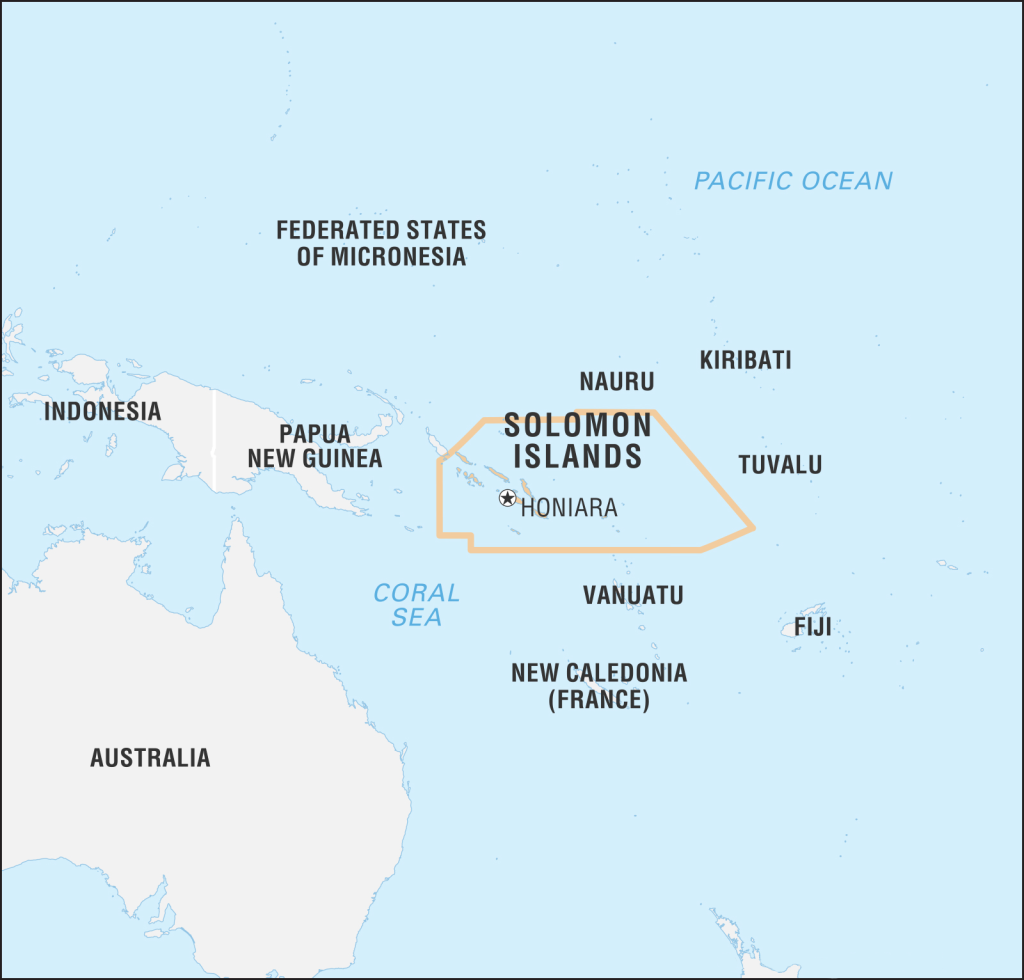
- Solomon Islands is located in the south-western Pacific Ocean, consisting of two parallel chains of volcanic islands and small coral atolls.
- It is situated southeast of Papua New Guinea and northwest of Vanuatu.
- Once a British protectorate, the Solomon Islands achieved independence as a republic in 1978.
- Capital is Honiara, located on Guadalcanal, the largest island.
Geographical Features
- The Solomon Islands consists of nearly 1,000 islands i.e. 6 large main islands and over 900 smaller islands, of which 147 are inhabited.
- The terrain is mainly mountainous and forested, with some extensive plains.
Ethnic Composition: Melanesian 93%, Polynesian 4%, Micronesian 1.5%, and others 1.5%.
International Atomic Energy Agency (IAEA)

About IAEA
- IAEA was established in 1957 as the world’s central intergovernmental forum for scientific and technical cooperation in the nuclear field.
- It works for the safe, secure, and peaceful uses of nuclear science and technology.
- It contributes to international peace and security and the UN’s Sustainable Development Goals.
- Headquarters are located in Vienna, Austria.
- IAEA was awarded the Nobel Peace Prize in 2005.
Governance Structure
- Policy-making bodies comprise the General Conference of all member states and the 35-member Board of Governors.
Context: The Ministry of Coal held a Roadshow on Coal and Lignite Gasification Projects in Hyderabad, showcasing investment opportunities and policy support mechanisms.
India’s Coal Resource Base
- India possesses nearly 400 billion tonnes of coal reserves, the fifth largest in the world.
- India is the world’s second-largest producer and consumer of coal.
- Nearly 70% of India’s electricity generation is dependent on coal.
About the Scheme
- The Union Cabinet approved the Scheme for Promotion of Surface Coal and Lignite Gasification Projects.
- The scheme aims to produce fuels, fertilizers, chemicals, and industrial inputs from domestic coal, reducing import dependence.
- India currently imports methanol, ammonia, fertilizer feedstocks, and critical industrial chemicals, resulting in substantial foreign exchange outflow.
Strategic Significance
- Coal gasification converts domestic coal into syngas, which can produce chemicals, fertilisers, fuels, and hydrogen.
- The initiative aligns with the Atmanirbhar Bharat vision and aims to strengthen India’s energy security and industrial resilience.