

New Labour Codes in India
Background and Objective
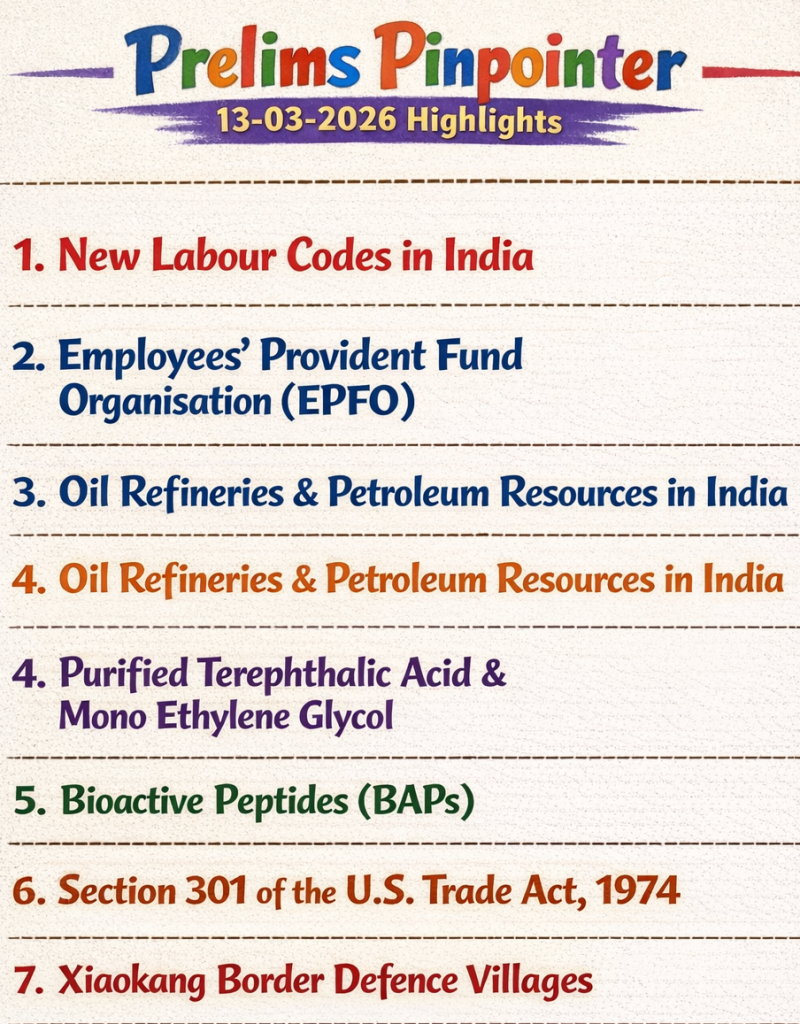
- India has introduced four new Labour Codes to modernise its labour governance framework.
- These codes consolidate 29 existing labour laws into a simplified structure.
- The reforms aim to improve worker protection, social security coverage, and ease of compliance for industries.
- Implementation of the new framework began on 21 November 2025.
- The reforms support the vision of Aatmanirbhar Bharat by strengthening rights of women, youth, gig workers, migrant and unorganised workers.
The Four Labour Codes
| Labour Code | Focus Area | Key Objective |
| Code on Wages, 2019 | Wages and minimum wages | Ensures statutory minimum wages for all workers |
| Industrial Relations Code, 2020 | Hiring, layoffs, trade unions and dispute resolution | Enables faster dispute settlement and employment flexibility |
| Code on Social Security, 2020 | PF, ESIC, maternity benefits and gig workers | Expands social security coverage |
| Occupational Safety, Health and Working Conditions Code, 2020 | Workplace safety and working conditions | Ensures safe workplaces across industries |
Why Labour Reforms Were Needed
- India’s labour laws were largely framed between the 1930s and 1950s, when the nature of work was very different.
- Over time, the system became complex and fragmented across 29 different Acts.
- Several challenges emerged:
- Lack of legal recognition for gig and platform workers.
- Slow labour dispute resolution mechanisms.
- Limited social security coverage, especially for informal workers.
- Restrictions on women working night shifts in many sectors.
Major Changes Introduced
| Area | Earlier System | New Labour Codes |
| Formalisation | No mandatory appointment letters | Mandatory appointment letters for workers |
| Minimum wages | Applicable only to certain sectors | Minimum wage for all workers |
| Social security | Limited coverage | Universal PF, ESIC and insurance |
| Healthcare | No mandatory check-ups | Annual health check-up for workers above 40 |
| Wage payment | Weak enforcement | Mandatory timely wage payments |
| Women employment | Restrictions in night shifts | Night work allowed with safety provisions |
| ESIC coverage | Limited to notified areas | Expanded coverage across India |
| Compliance | Multiple licences and returns | Single registration and return system |
Key Benefits for Workers
- Fixed-term employees: Equal wages and benefits with gratuity after one year.
- Gig and platform workers: Legal recognition and portable Aadhaar-linked welfare benefits.
- Contract workers: Equal benefits and health check-ups.
- Women workers: Equal pay, safety measures and night-shift opportunities.
- Youth workers: Assured minimum wages and formal employment documentation.
- MSME employees: Social security coverage and standard working hours.
- Hazardous sector workers: National safety standards and health monitoring.
Employees’ Provident Fund Organisation (EPFO)
What is EPFO?
- The Employees’ Provident Fund Organisation (EPFO) is a statutory body established under the Employees’ Provident Funds and Miscellaneous Provisions Act, 1952.
- It functions under the Ministry of Labour and Employment.
- EPFO administers social security schemes for workers in the organised sector.
Organisational Structure
- EPFO is governed by a tripartite body known as the Central Board of Trustees.
- The board includes representatives of the Central and State Governments, employers, and employees.
- The board is chaired by the Union Minister of Labour and Employment.
The Central Board of Trustees administers three key social security schemes:
- Employees’ Provident Fund Scheme (1952): Provides retirement savings for employees.
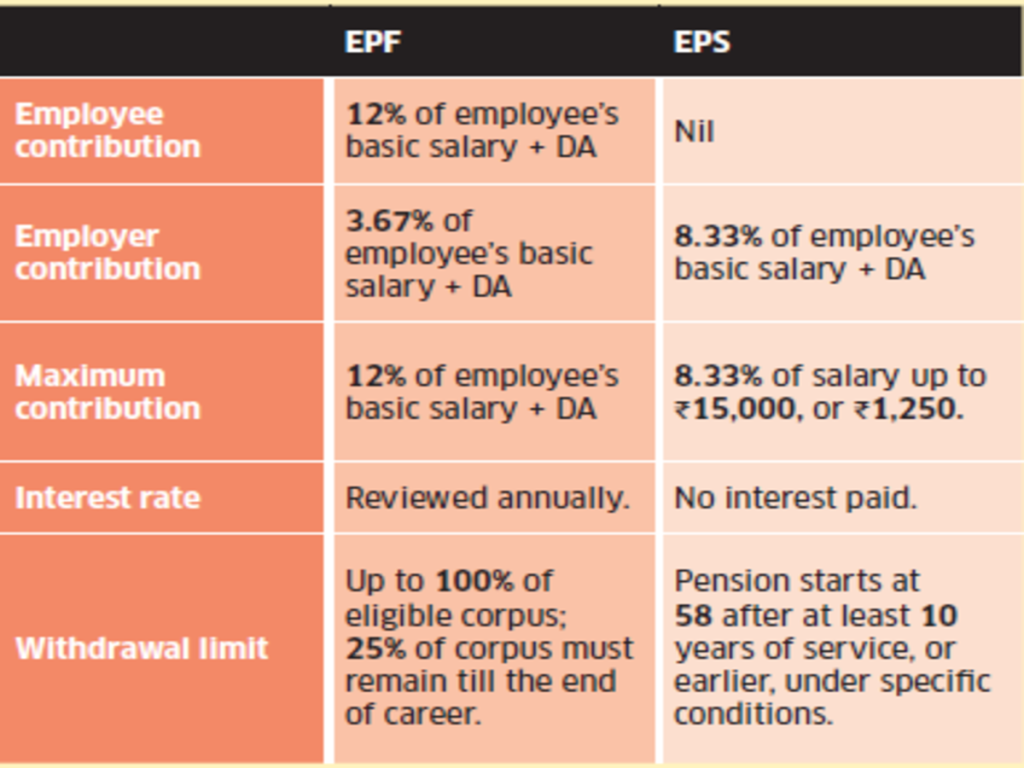
- Under the EPF Scheme, both employer and employee contribute 12% of the employee’s salary.
- The employee’s full contribution goes to the EPF account.
- From the employer’s contribution:
- 8.33% goes to the Employees’ Pension Scheme (EPS).
- 3.67% goes to the EPF account.
- Employees’ Pension Scheme (1995): Provides pension benefits after retirement.
- The EPS provides pension benefits to employees in the organised sector.
- Pension can be claimed after retirement at the age of 58 years.
- An employee must have completed at least 10 years of service to be eligible.
- Employees’ Deposit Linked Insurance Scheme (1976): Provides insurance coverage to employees.
Coverage and International Role
- EPFO schemes cover Indian workers in the organised sector.
- They also apply to international workers from countries that have Bilateral Social Security Agreements with India.
- EPFO acts as the nodal agency for implementing these agreements on a reciprocal basis.
Oil Refineries and Petroleum Resources in India
What are Oil Refineries?
- An oil refinery is an industrial facility where crude oil (petroleum) is processed into useful petroleum products.
- Major products include petrol, diesel, kerosene, LPG, fuel oil, heating oil, asphalt, and petroleum naphtha.
- Refineries are large industrial complexes with extensive pipelines that move fluids between processing units such as distillation columns.
- Their functioning is similar to chemical plants, as both rely on complex chemical processing technologies.
- Historically, Chinese civilizations were among the earliest to refine crude oil.
Oil Exploration: Onshore and Offshore Drilling
- Oil exploration involves extracting petroleum from beneath the earth’s surface or seabed.
- Onshore drilling: Extraction of oil from underground deposits on land.
- Offshore drilling
- Extraction of oil from beneath the ocean floor using floating or fixed drilling platforms.
- Both onshore and offshore drilling are used for oil and natural gas extraction.
Petroleum Industry in India
- India’s oil and gas sector is largely dominated by public sector companies, though private firms also play a major role.
- Major private players include Reliance Industries Limited (RIL), Reliance Petroleum Limited (RPL), and Nayara Energy.
- RIL’s refining capacity: about 34 MMTPA.
- Production and consumption
- Offshore production: about 16.9 million tonnes.
- Onshore production: about 17.3 million tonnes.
- Import dependence
- India imported about 88.3%% of its crude oil in 2024–25, costing around USD 112 billion.
- Consumption
- Total oil consumption reached 212 MMT in 2018–19, making India the third-largest oil consumer after the United States and China.
- Exports
- India exported about 64.7 million metric tonnes (MMT) of petroleum products in FY 2024–25, strengthening its position as a major global refined fuel exporter.
Distribution of Oil-Bearing Areas in India
- Sedimentary rocks, where petroleum is usually found, cover about 1 lakh sq km (42% of India’s area).
- Marine basins of the Mesozoic and Tertiary periods cover about 10 lakh sq km.
- The continental shelf with potential oil-bearing rocks extends over 2 lakh sq km.
- India has about 27 sedimentary basins including onshore and offshore areas.
- Major productive regions
- Mumbai High
- Gulf of Khambhat
- Assam basin
Major Oil-Producing Regions
- Important onshore oil regions include:
- Brahmaputra Valley (Assam)
- Barmer region (Rajasthan)
- Gujarat coast
- Cauvery basin (Tamil Nadu)
- Andhra Pradesh (both onshore and offshore reserves)
- Assam oil fields
- Assam is India’s oldest oil-producing region.
- Oil-bearing strata extend about 320 km along the Brahmaputra Valley.
- Major refineries processing Assam oil:
- Digboi
- Guwahati
- Bongaigaon
- Barauni
- Gujarat oil fields
- Important fields include Ankleshwar, Khambhat (Lunej), Ahmedabad, Kalol, Nawgam, Kosamba, Kathana, Barkol, Mahesana, and Sanand.
- Oil from Ankleshwar is transported to Trombay and Koyali refineries.
- Rajasthan oil fields
- Major discoveries in Barmer district.
- Important fields include Mangala, Saraswati, and Rajeshwari.
- Rajasthan is currently the largest onshore oil-producing state in India.
Offshore Oil Production in India
- Western Offshore Region
- Major offshore fields near Mumbai include:
- Mumbai High (discovered 1974, Miocene rock formations)
- Bassein
- Aliabet in the Gulf of Khambhat.
- Sagar Samrat drilling platform operates south of Mumbai High.
- Major offshore fields near Mumbai include:
- Eastern Offshore Region
- Significant oil and gas potential exists in basins of the Godavari, Krishna, and Cauvery rivers.
- Important fields include:
- Rawa field in the Krishna–Godavari offshore basin.
- Narimanam and Kovilappal fields in the Cauvery basin.
Major Oil Refineries in India
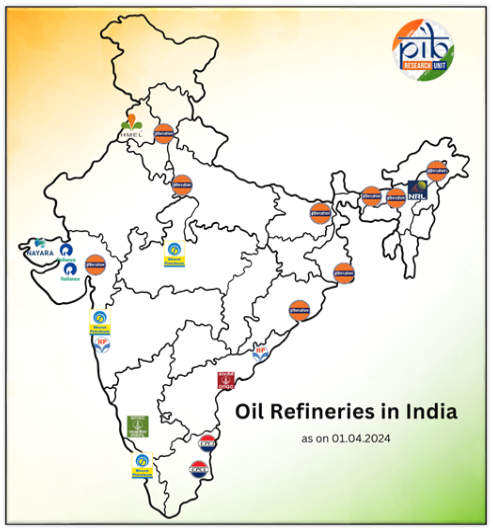
| Refinery | Sector | State |
| Jamnagar | Private | Gujarat |
| Vadinar | Private | Gujarat |
| Kochi | Public | Kerala |
| Mangalore | Public | Karnataka |
| Paradip | Public | Odisha |
| Panipat | Public | Haryana |
| Gujarat (Koyali) | Public | Gujarat |
| Mumbai | Public | Maharashtra |
| Manali | Public | Tamil Nadu |
| Visakhapatnam | Public | Andhra Pradesh |
| Nagapattinam | Public | Tamil Nadu |
| Digboi | Public | Assam |
Purified Terephthalic Acid and Mono Ethylene Glycol
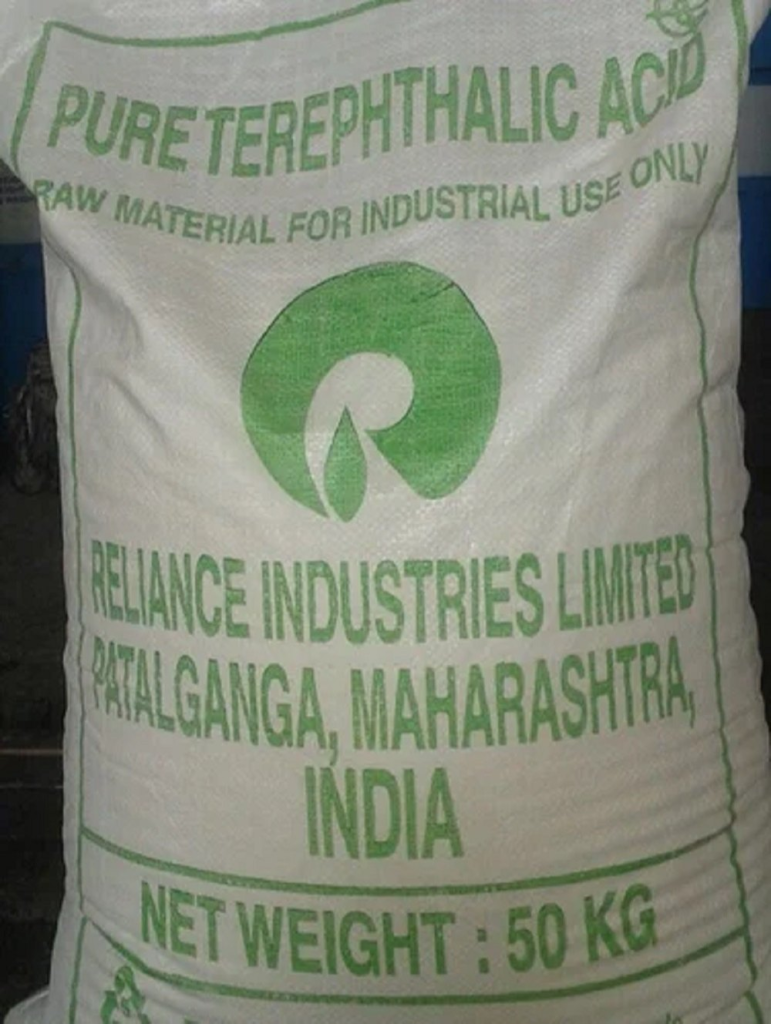
Context: Prices of key textile raw materials Purified Terephthalic Acid (PTA) and Mono Ethylene Glycol (MEG) witnessed sharp volatility amid crude oil fluctuations.
Purified Terephthalic Acid (PTA)
- PTA is a white crystalline powder used as a key raw material for producing polyester fibers, PET bottles, and polyester fabrics.
- It forms about 70–80% of the composition of polyester products, making it one of the most important inputs for the textile and packaging industries.
- Trade Policy Change
- The Union Budget 2020 removed the anti-dumping duty (ADD) on PTA imports.
- Earlier, the duty applied to imports from China, Thailand, South Korea, Indonesia, Malaysia, Taiwan, and Iran.
- Reason for Policy Change
- To increase competitiveness of the Indian textile industry.
- To reduce dependence on a limited number of domestic manufacturers.
- To lower raw material costs for polyester production.
Mono Ethylene Glycol (MEG)
- MEG is a clear, odorless liquid produced by reacting ethylene oxide with water.
- It is widely used in the manufacture of polyester fibers, PET resin, and also as a coolant or antifreeze.
- Industry Scenario
- India remains heavily dependent on imports of MEG to meet domestic demand.
- Major suppliers include Saudi Arabia, Qatar, and Singapore.
- Importance for India’s Textile Sector
- Both PTA and MEG are critical raw materials for the Man-Made Fiber (MMF) industry.
- The MMF sector is being promoted under government initiatives such as:
- PM MITRA scheme (Mega Integrated Textile Region and Apparel Parks)
- PLI scheme for the textile sector.
Bioactive Peptides (BAPs)
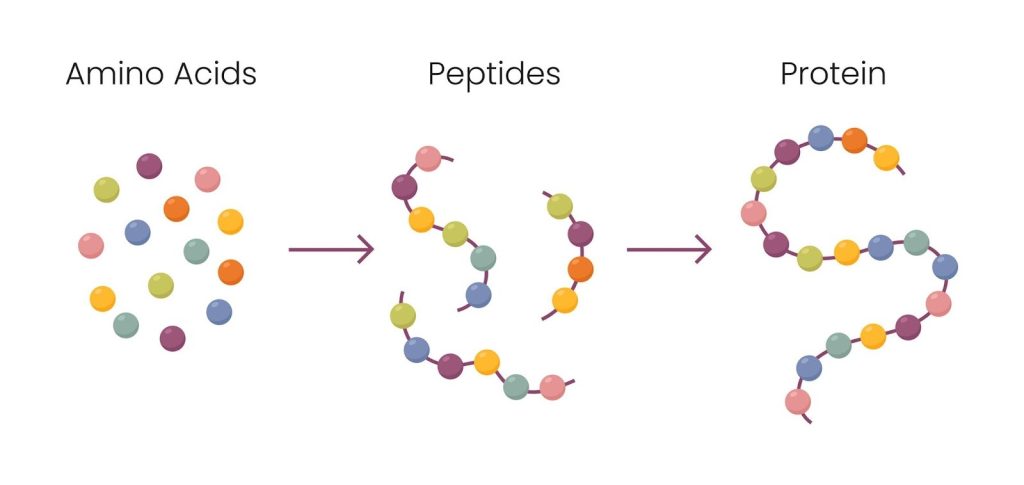
What are Bioactive Peptides (BAPs)?
- Bioactive peptides are short chains of 2–20 amino acids that remain biologically active even after digestion.
- They are usually embedded within larger proteins and remain inactive until the parent protein is broken down.
- These peptides are released when proteins are degraded by enzymes during digestion, fermentation, or food processing.
Structure and Scientific Characteristics
- Both proteins and peptides are made of amino acids linked by peptide bonds.
- The key distinction is length:
- Peptides contain short chains of amino acids.
- Proteins generally contain more than 50 amino acids.
- Bioactive peptides interact with biological molecules through electrostatic forces, hydrogen bonding, and hydrophobic interactions.
Health Benefits of Bioactive Peptides
- BAPs can produce multiple beneficial physiological effects, including:
- Antimicrobial activity
- Antihypertensive effects (blood pressure regulation)
- Antioxidant properties
- Immune-modulatory functions
- They may also help regulate:
- Blood pressure
- Blood sugar levels
- Inflammation
- Cardiovascular and metabolic health.
- Role in Precision Nutrition
- The impact of bioactive peptides varies among individuals due to differences in:
- Genetic makeup
- Gut microbiota
- Dietary patterns
- Overall health status.
- The impact of bioactive peptides varies among individuals due to differences in:
- This variation highlights the potential for precision nutrition, where dietary recommendations are tailored to individual biological characteristics.
- Such an approach is particularly relevant for a diverse population like India, where genetic and dietary diversity is high.
Amino Acids: Building Blocks of Proteins
- Amino acids are organic compounds that form the basic units of proteins and are essential for growth, tissue repair, and normal body functions.
- Types of Amino Acids
- Essential amino acids: Cannot be synthesized by the body and must be obtained from food (e.g., histidine, leucine, lysine).
- Nonessential amino acids: Can be produced naturally by the human body (e.g., alanine, glutamic acid, glycine).
- Conditionally essential amino acids: Normally produced by the body but become essential during stress or illness (e.g., arginine, cysteine, glutamine).
Section 301 of the U.S. Trade Act, 1974

Context: The Trump administration has initiated fresh investigations into alleged “unfair trade practices” by 16 major trading partners, including India, China, and Bangladesh. The move follows a U.S. Supreme Court ruling that declared certain earlier tariffs illegal. The investigations could lead to new tariffs on several economies, including China, the European Union, India, Japan, South Korea, and Mexico.
What is Section 301 of the Trade Act, 1974?
- Section 301 is a provision of the U.S. Trade Act, 1974 used to address unfair trade practices by foreign countries.
- It authorises the United States Trade Representative (USTR) to investigate actions by other governments that are:
- Unjustifiable
- Unreasonable
- Discriminatory
- If such actions are found to burden or restrict U.S. commerce, the U.S. government may impose tariffs or other trade restrictions.
- Under Section 302(b) of the Act, the USTR can initiate investigations independently.
- Scope of a Section 301 Investigation
- A Section 301(b) investigation examines whether a country’s laws, policies, or practices are discriminatory or unreasonable toward U.S. trade.
- The investigation is conducted with guidance from the inter-agency Section 301 Committee and consultations with relevant advisory bodies.
- Procedure After the Investigation Begins
- Once the investigation is launched, the USTR seeks consultations with the concerned countries.
- A public comment process is opened to gather views from stakeholders.
- Written submissions and requests to testify must be filed within the notified deadline.
- The USTR conducts hearings to review evidence and stakeholder feedback.
- Based on the findings, the U.S. may impose tariffs or other trade remedies.
Xiaokang Border Defence Villages
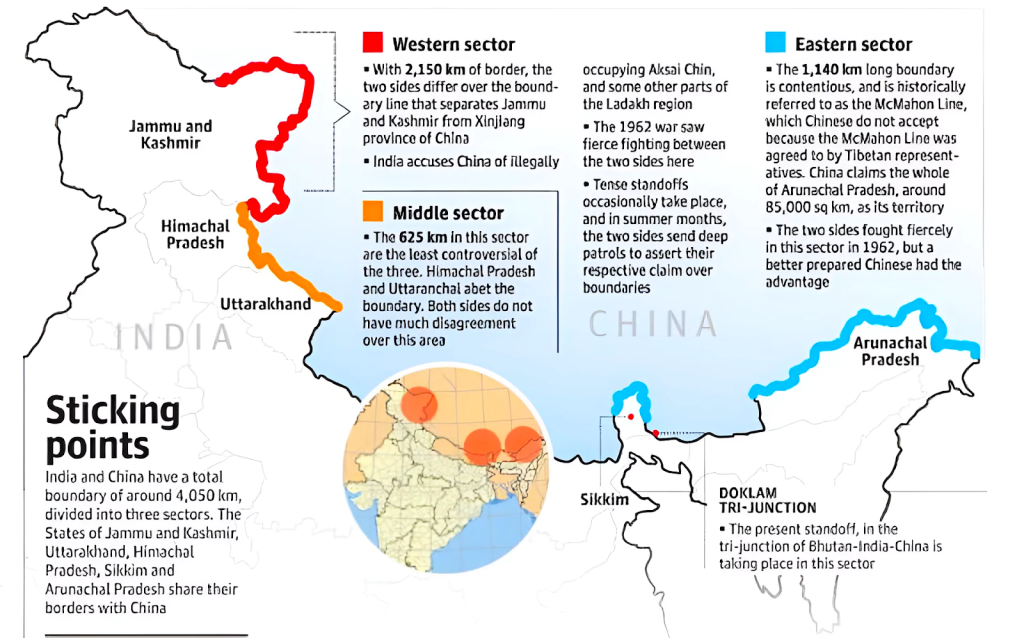
Context: China’s construction of ‘Xiaokang’ border defence villages near the Line of Actual Control (LAC) has raised strategic concerns for India.
What are Xiaokang Villages?
- Xiaokang villages (meaning “well-off villages”) are model settlements built by China along its international borders.
- They are part of a broader strategic infrastructure programme along sensitive frontier regions, including areas near the Line of Actual Control (LAC) with India.
- Several such villages have been constructed opposite India’s Lohit Valley and the Tawang sector of Arunachal Pradesh.
- These settlements are often developed in areas where territorial claims are contested, reinforcing China’s administrative and strategic presence.
Dual-Use Infrastructure
- These villages are designed as dual-use infrastructure, serving both civilian and strategic purposes.
- The settlements provide housing and civic facilities for civilians, while also enabling logistical support and presence for security forces.
- Such development helps China strengthen infrastructure and population presence in border regions.
Concerns for India
- Territorial assertion: China has reportedly built about 628 villages along the border with the Tibet Autonomous Region, signalling an attempt to reinforce territorial claims along the LAC.
- Military implications: The dual-use nature of these settlements raises concerns about possible militarisation of border areas.
- Transparency issues: Limited information about the actual population and purpose of these villages creates uncertainty and suspicion regarding China’s intentions.
India’s Initiatives along the LAC
- Vibrant Villages Programme
- The Vibrant Villages Programme aims to develop 663 border villages located near India’s northern borders.
- 17 villages have been identified for development along the India–China border in regions such as Ladakh, Himachal Pradesh, Uttarakhand, Sikkim, and Arunachal Pradesh.
- The programme focuses on improving infrastructure, connectivity, and local livelihoods.
- Border Infrastructure Development
- Border Roads Organisation (BRO)
- The BRO has completed 90 infrastructure projects along the India–China border, worth about ₹2,941 crore.
- Major strategic highways under development include: Trans-Arunachal Highway; Frontier Highway; East–West Industrial Corridor Highway
- Border Roads Organisation (BRO)
- Border Area Development Programme (BADP)
- The BADP is a centrally sponsored scheme aimed at improving the living conditions of people in remote border areas.
- Funds are used for projects related to infrastructure, livelihoods, education, health, agriculture, and allied sectors.
- Railway Connectivity
- Indian Railways is constructing strategic railway lines in the Northeast to enable faster movement of troops and logistics along the border.
