

Context
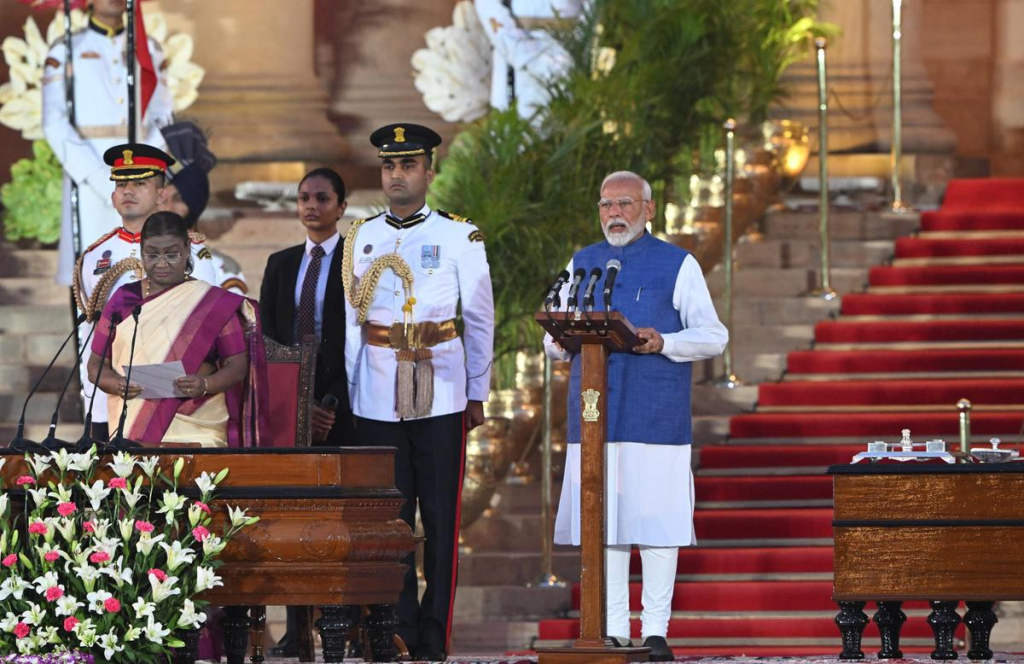
- The debate on executive tenure has intensified after the Prime Minister completed 8,931 days in elected office, combining State and Union leadership roles. This milestone has highlighted the absence of any constitutional limit on the tenure of the Prime Minister in India.
- India presents a unique situation where the office exercising maximum executive power has no formal tenure restriction.
Constitutional Design and Rationale
- The framers of the Constitution deliberately avoided imposing term limits on the Prime Minister.
- B.R. Ambedkar emphasised the idea of “daily accountability”, where the executive remains continuously answerable to Parliament.
- Instruments such as question hour, adjournment motions, and no-confidence motions were designed to ensure constant scrutiny.
- Periodic elections were considered a secondary layer of accountability, complementing parliamentary control.
- The Prime Minister’s tenure was therefore linked to legislative confidence, rather than fixed constitutional limits.
Issues with the Present System
- The introduction of the Tenth Schedule (anti-defection law) has weakened parliamentary accountability mechanisms.
- Legislators risk disqualification if they vote against the party whip, even during confidence motions.
- This has made no-confidence motions largely ineffective when the ruling party enjoys a majority.
- The absence of intra-party democracy further limits leadership challenges within political parties.
- Prolonged incumbency creates structural advantages, including control over appointments, institutions, and policy narratives.
- As a result, electoral accountability alone may not sufficiently check executive dominance.
Comparative Aspect
- Many democracies impose term limits on executive offices to prevent concentration of power.
- The United States adopted the 22nd Amendment (1951) to limit presidential tenure after Franklin Roosevelt’s four terms.
- Countries such as Brazil, South Korea, Colombia, and Indonesia have similar constitutional limits.
- Studies indicate that democratic decline often occurs through gradual institutional weakening, rather than abrupt authoritarian shifts.
- India differs because it lacks formal term limits while facing similar risks of power concentration.
Way Forward
- A key reform would be to exclude confidence motions from the Tenth Schedule, thereby restoring legislative independence.
- This would revive the principle of effective parliamentary accountability envisioned by the framers.
- A constitutional amendment may be considered to introduce term limits for Prime Ministers and Chief Ministers, possibly with a cooling-off period.
- Strengthening intra-party democracy can provide internal checks on leadership concentration.
- Institutional safeguards must be enhanced to ensure a balance between executive authority and democratic accountability.
Conclusion
- India’s constitutional framework relies on parliamentary accountability rather than fixed tenure limits for the executive. However, structural changes have weakened these safeguards, raising concerns about concentration of power. A balanced reform approach is required to preserve democratic accountability while respecting the will of the electorate.
