

Context
- The World Obesity Atlas 2026, released on World Obesity Day (March 4), has highlighted India’s alarming position in global childhood obesity statistics.
- The World Obesity Federation warned that the world is set to miss the 2025 global target to halve the rise in childhood obesity, with the deadline now extended to 2030, though most countries, including India, remain off track.
- Globally, more than one in five children (20.7%) are living with obesity or overweight, up from 14.6% in 2010, with projections suggesting 507 million children will be affected by 2040.
India’s Position: The Scale of the Problem
- Nearly 15 million children aged 5 to 9 and more than 26 million children aged 10 to 19 in India were overweight or obese in 2025.
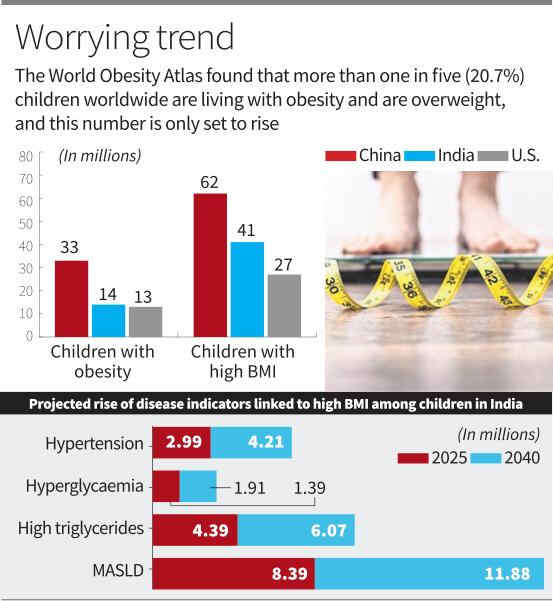
- India ranks second only to China in the number of children with high BMI — with 41 million children with high BMI and 14 million living with obesity.
- China leads with 62 million high BMI and 33 million with obesity, while the US has 27 million high BMI and 13 million with obesity.
- India, China, and the US are among only eight countries projected to have over 10 million children living with obesity by end of 2025.
- The number of children with disease indicators linked to high BMI is projected to rise substantially in India by 2040.
Key Risk Factors Identified in India
- Physical inactivity: 74% of adolescents aged 11 to 17 fail to meet recommended physical activity levels.
- Poor nutrition access: Only 35.5% of school-age children receive school meals, leaving the majority without assured nutritional support.
- Sub-optimal breastfeeding: Nearly 32.6% of infants aged one to five months experience sub-optimal breastfeeding, a critical early-life risk factor for later obesity.
- Maternal health: Among women aged 15 to 49, 13.4% have high BMI and 4.2% live with Type 2 diabetes, creating intergenerational health risks.
- Sugar consumption: Children aged six to ten consume sugary drinks averaging up to 50 ml per day, contributing to excess caloric intake at a formative age.
Consequences of Childhood Obesity
- Childhood obesity significantly increases the risk of non-communicable diseases including Type 2 diabetes, cardiovascular disease, and metabolic disorders in later life.
- The rise in disease indicators linked to high BMI among Indian children points to a future public health burden that will strain India’s healthcare system considerably.
- Obesity in childhood is also associated with poor mental health outcomes, social stigma, and reduced academic performance, compounding its developmental impact.
- The intergenerational dimension is particularly concerning — mothers with high BMI and diabetes are more likely to have children predisposed to metabolic and obesity-related conditions.
Way Forward
- Governments must urgently step up prevention and management efforts for children living with overweight and obesity, ensuring they receive appropriate medical care.
- Taxes on sugar-sweetened beverages should be introduced to reduce consumption among children and adolescents, as recommended by the World Obesity Federation.
- Restrictions on marketing of unhealthy food and beverages to children must be enacted and enforced through regulation.
- The coverage of school meal programmes must be expanded significantly beyond the current 35.5% to ensure nutritional adequacy for all school-age children.
- Breastfeeding promotion programmes must be strengthened to address the 32.6% rate of sub-optimal breastfeeding among infants in India.
- Mandatory physical activity requirements in schools must be enforced to address the 74% of adolescents failing to meet recommended activity levels.
