

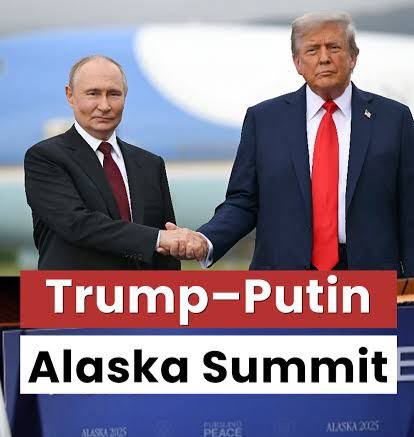
Why in News: The Trump–Putin “Alaska Summit” (Aug 15, 2025) raised hopes of easing U.S. pressure on India over Russian oil imports and trade disputes, but it yielded no relief for New Delhi.
Introduction
- The Trump-Putin “Alaska Moment” (August 15, 2025) signalled a thaw in U.S.-Russia relations and possible forward movement on the Ukraine conflict.
- For India, however, the summit exposed a paradox: high stakes, little agency. Despite expectations of relief on oil sanctions and trade tensions, India found itself still under U.S. pressure, underlining structural challenges in its foreign policy approach.
India’s Expectations vs. Reality
Expectations from the summit:
- Easing of U.S. pressure over Russian oil imports.
- Rollback of 25% secondary sanctions on India.
- Revival of India-U.S. trade talks.
- Revision of reciprocal tariffs.
Reality:
- No rollback of sanctions; U.S. doubled down on “two-pronged” policy to “hit India where it hurts”.
- Mr. Trump’s narrative on Operation Sindoor ceasefire contradicted India’s version, diminishing New Delhi’s diplomatic space.
- U.S. continued with a critical, transactional stance towards India.
Key Lessons for India
1. U.S. Policies Unchanged Despite Rapprochement
- Trump’s warmth with Putin does not soften his approach towards India.
- Sanctions appear political, not principled — U.S. itself trading more with Russia while ignoring China’s larger imports.
2. Summitry vs. Substance
- Indian diplomacy under PM Modi emphasised personal chemistry with leaders (Howdy Modi 2019, Namaste Trump 2020, 18 Modi–Xi meetings).
- Limited substantive gains → e.g., Galwan clashes with China despite bonhomie.
- Need to focus on hard outcomes, not optics.
3. Bipartisanship in Diplomacy
- Personalised ties to be formed with caution.
- Lesson: maintain balanced ties with both U.S. parties and political actors in neighbouring states (Bangladesh, Nepal, Maldives, Sri Lanka).
4. Uphold Strategic Autonomy
- India earlier yielded to U.S. on Iranian and Venezuelan oil (2018), breaking its principle of accepting only UN-mandated sanctions.
- Repeating this weakens India’s position; resisting earns support from Global South and grudging respect from West.
5. Countermeasures Needed
- Prepare responses to U.S. penalties:
- Reciprocal tariffs hurting Indian exports.
- Possible remittance taxes on Indian workers.
- Curtailing U.S. manufacturing leverage in India.
- India must project firmness and resilience to protect its core interests.
Way Forward for India
1. Diversify partnerships – strengthen ties with Japan, China (SCO), South Africa (G-20), and Russia.
2. Focus on Quad Summit – test case for India-U.S. ties; clarity on Trump’s stance.
3. Institutionalise diplomacy – reduce over-reliance on “leader-to-leader chemistry”.
4. Maintain strategic autonomy – balance relations between U.S., Russia, and Global South.
5. Substance over optics – pursue concrete agreements on trade, energy, and technology.
Conclusion
The Alaska Summit underscores that India cannot allow external summitry to dictate its agency. U.S. policies under Trump remain transactional and unpredictable, demanding a more balanced, autonomous, and bipartisan foreign policy strategy from India.
UPSC Relevance
GS Paper 2 (International Relations):
- India–U.S. relations: sanctions, tariffs, trade disputes.
Mains Practice Question
Q. “The Alaska Summit between Trump and Putin underlines the vulnerabilities of India’s diplomacy.” Critically examine in the context of U.S. sanctions and trade pressures. ( – 250 words)
