Syllabus: Environmental pollution and degradation
Context: Anandapur warehouse fire killed 25 people, exposed illegal constructions on Ramsar-listed East Kolkata Wetlands.
More in news:
- Wetlands treat 900 million litres sewage daily, approximately 65% of total metropolitan sewage.
- Experts warn rapid encroachment threatens the natural sewage filter and fish, vegetable production ecosystem.
- Kolkata Mayor claims warehouses existed pre-2006, closure would affect poor people’s livelihoods significantly.
About Wetlands
- Ecological Character of Wetlands
- Wetlands are land areas permanently or seasonally saturated with water supporting specialised hydrophytic vegetation.
- They function as transition zones between terrestrial and aquatic ecosystems, linking land and water systems.
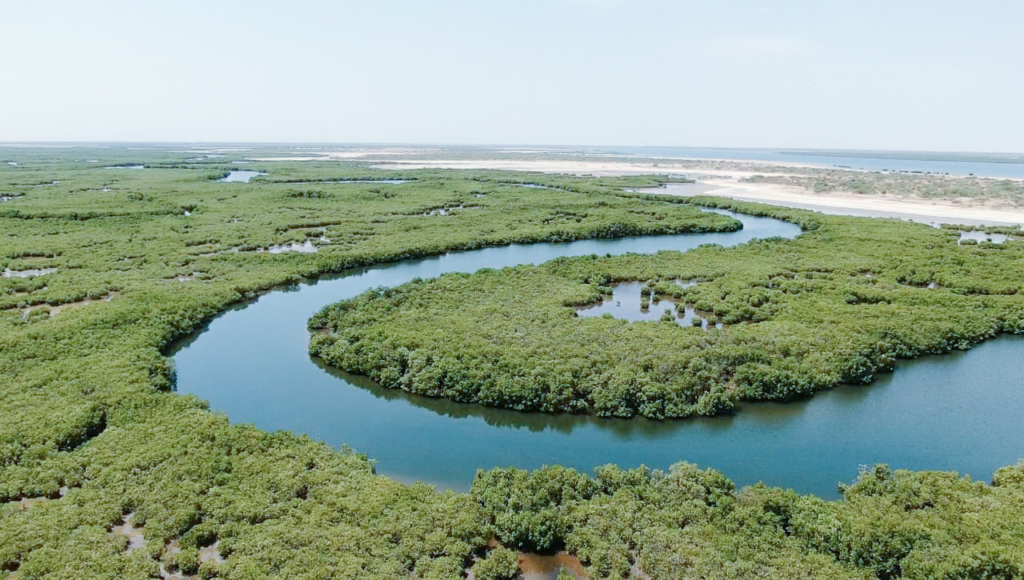
- Examples include mangroves, lake littorals, floodplains, marshes, swamps, and periodically inundated lowlands.
- Environmental and Socio-Economic Importance
- Wetlands act as “nature’s kidneys”, recycling nutrients and removing sediments from surface and groundwater.
- They enhance soil fertility, supporting agricultural productivity in surrounding landscapes.
- These ecosystems recharge groundwater, improve water quality, and regulate hydrological cycles.
- Wetlands function as natural sponges, reducing flood intensity and buffering shoreline erosion.
- Soils around wetlands store carbon for long durations, aiding climate change mitigation.
- They provide habitats for fisheries and threatened wildlife species, sustaining biodiversity.
- Wetlands generate livelihoods, tourism opportunities, research potential, and cultural ecosystem services.
- Ramsar Convention on Wetlands
- The Ramsar Convention is a global intergovernmental treaty for conservation and wise use of wetlands.
- It was adopted in Ramsar, Iran, in 1971 and entered into force in 1975.
- Nearly 90% of United Nations members are Contracting Parties to the Convention.
- It is the only international treaty dedicated to a single ecosystem type.
- Wetlands include lakes, rivers, marshes, peatlands, estuaries, mangroves, coral reefs, and human-made sites.
- The United Kingdom has the most Ramsar sites, while Bolivia holds the largest wetland area.
- India currently has 75 designated Ramsar sites.
- Montreux Record and Indian Sites
- The Montreux Record lists threatened Ramsar sites needing priority conservation attention.
- Chilika Lake was removed after ecological restoration and management improvements.
- Loktak Lake and Keoladeo National Park remain listed due to persistent ecological concerns.
- Wetlands (Conservation and Management) Rules, 2017
- Notified by MoEFCC under the Environment (Protection) Act, 1986, ensuring decentralised management.
- States establish State Wetland Authorities headed by Environment Ministers and technical experts.
- Authorities must identify, notify, digitise, and periodically update comprehensive wetland inventories.
- Prohibitions and Institutional Oversight
- Prohibited activities include encroachment, industrial expansion, hazardous waste disposal, and untreated effluents.
- National Wetland Committee advises the Centre on integrated management and transboundary wetlands.
- World Wetlands Day is observed on 2 February, marking the Ramsar Convention’s adoption.