

Context
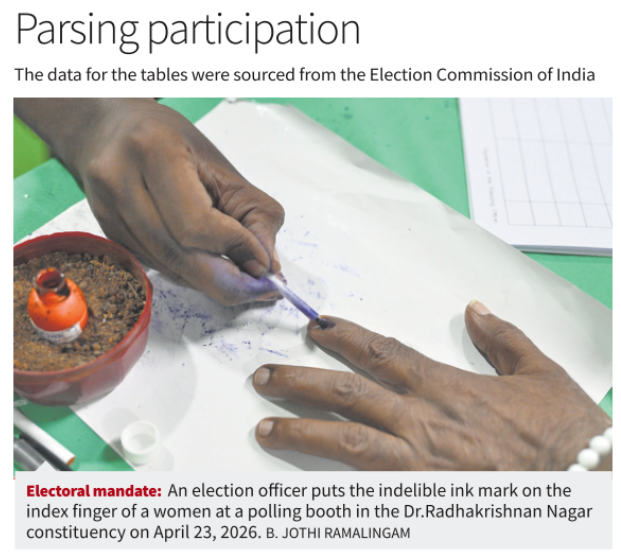
- Electoral participation in India has shown a consistent upward trend across States over the past decade, reflecting a broad-based deepening of democratic engagement. The recent rise in voter turnout is often attributed to administrative measures such as the Special Intensive Revision (SIR); however, evidence suggests that the increase is structural and long-term rather than sudden.
Trend of Rising Voter Participation
- Data across multiple States indicates a steady increase in voter turnout over time, cutting across geography, political competition, and socio-economic diversity.
- Key examples:
- Gujarat: 59.77% (2007) to 64.84% (2022)
- Uttar Pradesh: 45.96% to 61.08%
- Goa: 70.51% to 81.89%
- Other major States also show similar upward trends:
- Karnataka: 64.84% to 73.84%
- Madhya Pradesh: 69.63% to 77.74%
- Rajasthan: 66.49% to 75.33%
Deepening Participation in High-Turnout States
- States with historically high participation have continued to show further improvements, indicating deepening rather than saturation.
- Examples:
- West Bengal: 84.72% (2011) to 92.47% (2026)
- Tamil Nadu: 78.29% to 85.15%
- Kerala: 75.26% to 78.27%
- Arunachal Pradesh: 79.45% → 86.89%
- Puducherry: 86.19% → 89.85%
- Thus, even politically competitive and high-participation States continue to witness incremental gains, reinforcing the structural nature of the trend.
Factors Driving Rising Participation
- Enhanced Political Mobilisation: Greater outreach by political parties and institutions has increased voter engagement.
- Improved Voter Awareness: Expansion of voter education campaigns and media penetration has strengthened civic consciousness.
- Institutional Strengthening: Efforts by the Election Commission have improved electoral accessibility and credibility.
- Changing Voter Attitudes: Growing belief that elections matter has increased citizen participation in democratic processes.
- Democratic Significance
- Rising voter turnout indicates deepening democratic legitimacy and inclusiveness.
- It reflects broader participation across social, regional, and political divides, strengthening representational democracy.
- However, uneven trends suggest the need to address regional disparities and participation gaps.
Way Forward
- Target Low-Participation Regions: Focus on States with declining turnout through targeted outreach and administrative reforms.
- Strengthen Voter Education: Enhance awareness programmes to sustain informed participation.
- Improve Electoral Accessibility: Address logistical barriers for marginalised and migrant populations.
- Ensure Data Transparency: Clear communication on processes like SIR to avoid misinterpretation of turnout trends.
Conclusion
- The rise in voter turnout in India represents a long-term structural deepening of democracy, rather than a temporary or isolated phenomenon. While administrative measures may influence outcomes at the margins, the broader trend reflects growing citizen engagement and faith in electoral processes. The challenge ahead lies in ensuring that this participation translates into meaningful representation, accountability, and inclusive governance.
