

Pradhan Mantri Kaushal Vikas Yojana (PMKVY)
Context: Parliament’s Public Accounts Committee (PAC) pulled up the government over PMKVY, citing a CAG audit report highlighting skilling mismatches.
More in News
- CAG found skilling efforts heavily focused on low-demand sectors such as apparel, electronics, and retail, accounting for 40% of trainees.
- High-demand sectors were severely underrepresented: food processing had only 0.48% and tourism only 3.8% of trainees.
- Only 41% of trainees were placed in jobs after completing skill training.
About PMKVY
- PMKVY is the flagship scheme of the Ministry of Skill Development and Entrepreneurship (MSDE), launched in July 2015.
- It aims to provide industry-relevant skill training to a large number of Indian youth.
- The scheme targets individuals aged 15 to 29 years, with priority given to school dropouts and unemployed persons.
- Eligibility age for training programmes is broadly 14 to 35 years.
- It certifies previously acquired skills through the Recognition of Prior Learning (RPL) programme.
- The scheme aims to train approximately 20 million youth to enhance employability and income.
- State governments serve as the implementing agencies for the scheme.
- Industry experts are regularly consulted to ensure training remains aligned with current industry demands.
- The scheme offers short-term training courses to help people acquire new skills quickly.
- Rozgar Melas are organised under the scheme to provide placement exposure to trained youth.
- Both theoretical and technical knowledge are covered under the training curriculum.
- An Aadhaar card is a mandatory requirement for applying to PMKVY programmes.
Thirukkural
About Thirukkural
- Thirukkural (meaning “Sacred Couplets”) is a classic Tamil text written by Thiruvalluvar.
- Thiruvalluvar is believed to have lived between the 2nd century BCE and the 5th century CE.
- It is a collection of 1,330 couplets (kurals) offering wisdom on ethics, governance, love, and spirituality.
- It is also known simply as Kural and has had an immense influence on Tamil culture and life.
Structure
- Thirukkural is divided into three main sections: Aram (Virtue), Porul (Wealth), and Inbam (Love).
- Aram covers virtues such as righteousness, truth, gratitude, and compassion.
- Porul provides insights into governance, economy, wealth management, and administration.
- Inbam delves into human emotions, love, and family life.
- Couplets are composed in a concise and poetic form, making them easily memorable.
Capital Gains Tax and Withholding Tax
Context: India plans to scrap capital gains tax on foreign portfolio investments in government securities to attract foreign capital.
More in News
- The Indian rupee has weakened more than 5% since the start of the year, squeezed by higher oil prices and FPI outflows in equities.
- Foreign investors currently pay a long-term capital gains tax of 12.5% on listed shares and bonds held longer than 12 months.
- A withholding tax of 20% on interest earned in government bonds may also be removed.
- India’s benchmark bond yield stood at 7.01% at the time of the announcement.
About Capital Gains Tax (CGT)
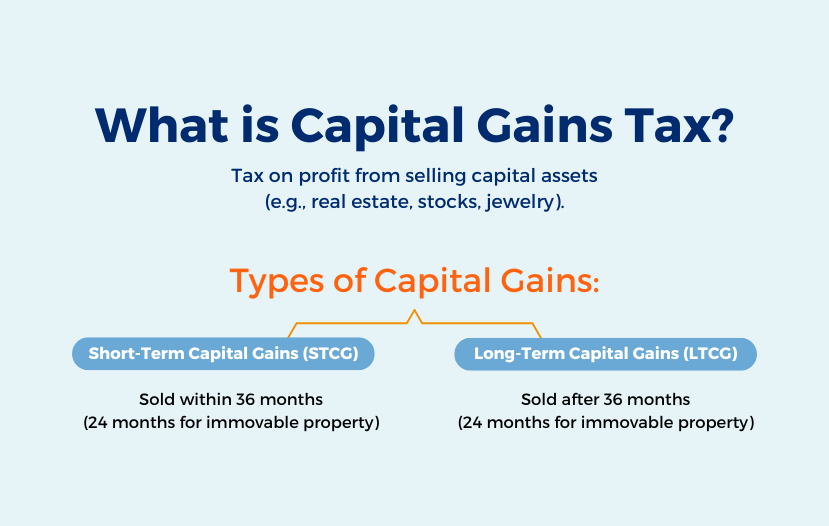
- Capital gains are profits accumulated from the sale of any capital asset.
- Since profits are categorised as income, they are liable for taxation under Capital Gains Tax.
- CGT is levied when an asset is transferred between owners and applies to both individuals and businesses.
- Capital Assets
- Capital assets include land, buildings, house property, vehicles, patents, trademarks, leasehold rights, machinery, and jewellery.
- It also includes rights of management, control, or any other legal right in relation to an Indian company.
- Short-term CGT:
- Any asset held for less than 36 months is termed a short-term capital asset.
- For immovable properties, the short-term duration is 24 months.
- Long-term CGT:
- Any asset held for more than 36 months is termed a long-term capital asset.
- Assets like preference shares, equities, UTI units, securities, equity-based mutual funds, and zero-coupon bonds are considered long-term if held for over one year.
About Withholding Tax
- Withholding tax is a tax collected at the source of income before it reaches the recipient.
- The payer deducts a portion of income and directly deposits it with the government.
- It applies to income from employment, investments, royalties, and other sources.
- In India, it is paid by foreign investors on interest earned on their holdings of Indian bonds.
- Impact on Foreign Portfolio Investors (FPIs)
- It reduces FPIs’ effective yields and post-tax investment returns by deducting tax at source.
- It limits capital available for immediate reinvestment and weakens long-term compounding.
- FPIs face administrative burdens in claiming relief under Double Taxation Avoidance Agreements (DTAAs).
- Higher withholding taxes increase transaction costs and reduce risk-adjusted returns for overseas investors.
- Large global investors may face short-term liquidity constraints until tax credits or refunds are processed.
- Withholding Tax and India
- A high withholding tax acts as a major deterrent for foreign capital inflows into India.
- Lowering it could improve post-tax returns for foreign investors and make Indian debt more attractive.
- Reducing withholding tax could help stabilise India’s forex reserves amid global uncertainty.
Agri Stack

Context: The Agriculture Ministry’s Agri Stack platform won the National Award for e-Governance 2026, recognising its role in providing farmers with data on finance and early warning systems for disasters.
About Agri Stack
- Agri Stack is a digital foundational infrastructure integrating farmer data, land records, and scheme benefits into a centralised platform.
- It is implemented by the Ministry of Agriculture and Farmers Welfare in collaboration with the State Revenue and Agriculture Departments.
- It enables government and private entities to provide farmers with tailored, data-driven services.
Key Building Blocks
- Farmer Registry: A federated registry of all farmers, compiled by states under common standards and cached by the Centre.
- Each farmer is assigned a unique Farmer ID, a functional ID based on Aadhaar as per IndEA 2.0, along with a digitally verifiable credential.
- Unified Farmer Service Interface (UFSI): Enables interoperability across stakeholders, including banks, agri-tech firms, and agriculture value-chain companies.
- Crop Sown Registry: A federated registry of crops sown across the country every season, using smartphone, drone, and satellite imagery for crop surveys.
- Agri Stack Sandbox: Provides a simulated environment with sample data for authorised stakeholders to test applications before full deployment.
- Consent Manager: Enables data-blind sharing of personal farmer data only with entities for whom the farmer has given explicit consent; consent can also be revoked at any time.
Key Objectives
- Provides localised early warning systems for disasters including pest attacks, droughts, and floods.
- Enables quick access to affordable finance and simplifies government scheme benefit delivery for farmers.
- Improves targeting of government benefits by maximising inclusion and minimising exclusion and fraud.
e-Jagriti Platform
Context: The Consumer Affairs Ministry’s e-Jagriti portal won the National Award for e-Governance 2026 for enabling consumers to lodge complaints across sectors like insurance, banking, housing, and medical care.
About e-Jagriti
- e-Jagriti is a unified, AI-enabled digital grievance-redressal platform developed by the Department of Consumer Affairs, Government of India.
- It integrates all consumer dispute-resolution systems into one seamless, paperless portal.
- It aims to provide faster, transparent, and accessible consumer justice across India and abroad.
- Key Features
- It enables e-filing, digital scrutiny, electronic notices, virtual hearings, and role-based dashboards for judges, advocates, and litigants.
- NRIs and Indian citizens abroad can file, track, and participate in hearings remotely through secure OTP login.
- It provides an AI-powered multilingual interface with chatbot assistance, voice-to-text tools, and smart case routing.
- Significance
- It breaks barriers of distance, paperwork, and physical presence, enabling rural and NRI users to access consumer justice.
- Digital workflows and automated notices significantly reduce case pendency in consumer courts.
