

Recent Events
- The recent Noida garment workers’ protest demanding ₹20,000 minimum wages and the Singhitarai thermal plant accident in Chhattisgarh killing 20 workers highlight the everyday realities of labour in India.
- These incidents are not isolated and they reflect deeper tensions between economic reforms and workers’ lived experiences of dignity, safety, and survival.
Structural Transformation
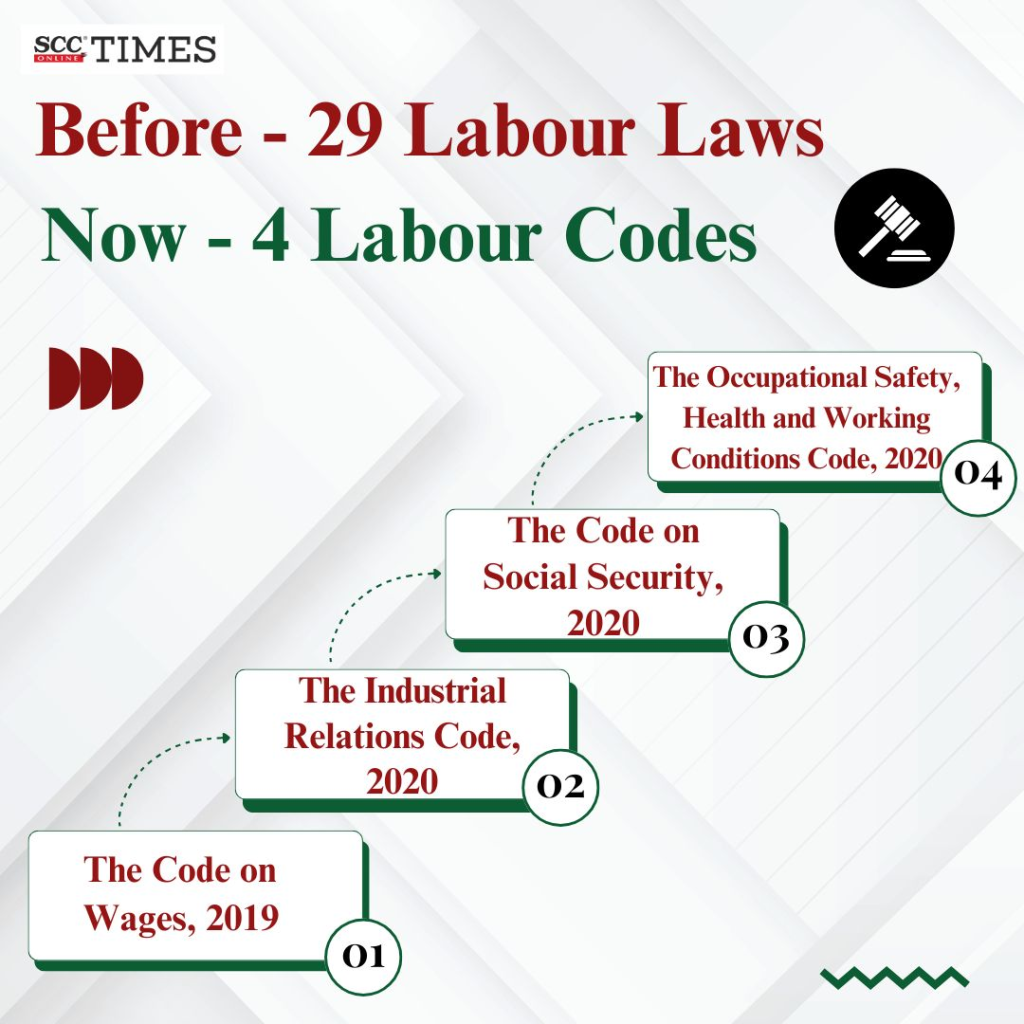
- India consolidated 29 labour laws into four labour codes (2025)—Code on Wages, Industrial Relations Code, Social Security Code, and OSHWC Code—aimed at simplification and formalisation.
- The reform sought to modernise outdated frameworks and improve ease of doing business, but was implemented with limited consultation and no phased transition.
- The shift reflects a broader move from state-led protective regulation to facilitative labour governance.
Changing Nature of Labour Protection
- Higher Thresholds: Layoff approval limits raised from 100 to 300 workers, reducing oversight for most firms.
- Narrowed Coverage: Redefinition of “factory” excludes many small units where informal labour dominates.
- Inspection Reform: Transition to Inspector-cum-Facilitator model and self-certification weakens regulatory scrutiny.
- Constraints on Collective Action: Mandatory 60-day notice for strikes and restrictions on mass leave limit workers’ bargaining capacity.
- Thus, labour protection is increasingly shifting from rights-based safeguards to compliance-light frameworks.
Associated Issues
- Ground Reality
- Wage levels often fall short of basic living costs, as seen in Noida where workers continue to demand a living wage beyond statutory minimums.
- Industrial safety remains weak, with thousands of workplace deaths and minimal convictions, indicating poor enforcement.
- Contract workers face heightened vulnerability, often excluded from direct employer accountability.
- Informalisation
- A large share of India’s workforce operates in informal or small-scale units, now increasingly outside regulatory coverage.
- Growth of contractualisation and gig work shifts risk to workers while reducing employer obligations.
- Informal workers lack social security, legal awareness, and bargaining power, deepening precarity.
- Governance Concerns
- Replacement of inspections with facilitation reduces compliance enforcement and deterrence.
- Decline of institutions like the Indian Labour Conference weakens tripartite dialogue.
- Possible deviation from ILO standards on independent inspections raises global concerns.
- The gap between legal provisions and ground-level implementation remains significant.
- Ethical and Human Dimension
- Labour is fundamentally linked to human dignity, safety, and livelihood security, not merely economic productivity.
- Wage inadequacy reflects a gap between minimum wage and living wage, raising questions of justice.
- Industrial accidents highlight the human cost of growth without adequate safeguards.
Way Forward
- Rebalance Labour Reforms: Align ease of doing business with ease of living for workers.
- Strengthen Enforcement Mechanisms: Restore independent inspections and strict accountability frameworks.
- Expand Social Security Coverage: Ensure inclusion of informal, gig, and contract workers.
- Promote Living Wage Framework: Move beyond minimum wages to dignity-based wage standards.
- Revive Institutional Dialogue: Reinforce tripartite consultations among government, employers, and workers.
- Enhance Workplace Safety: Universal safety standards irrespective of firm size.
Conclusion
- India’s labour codes represent a significant structural reform, but their current trajectory risks diluting worker protection in pursuit of economic efficiency. Sustainable development requires ensuring that workers can earn a dignified livelihood and work in safe conditions, making growth both inclusive and humane.
