

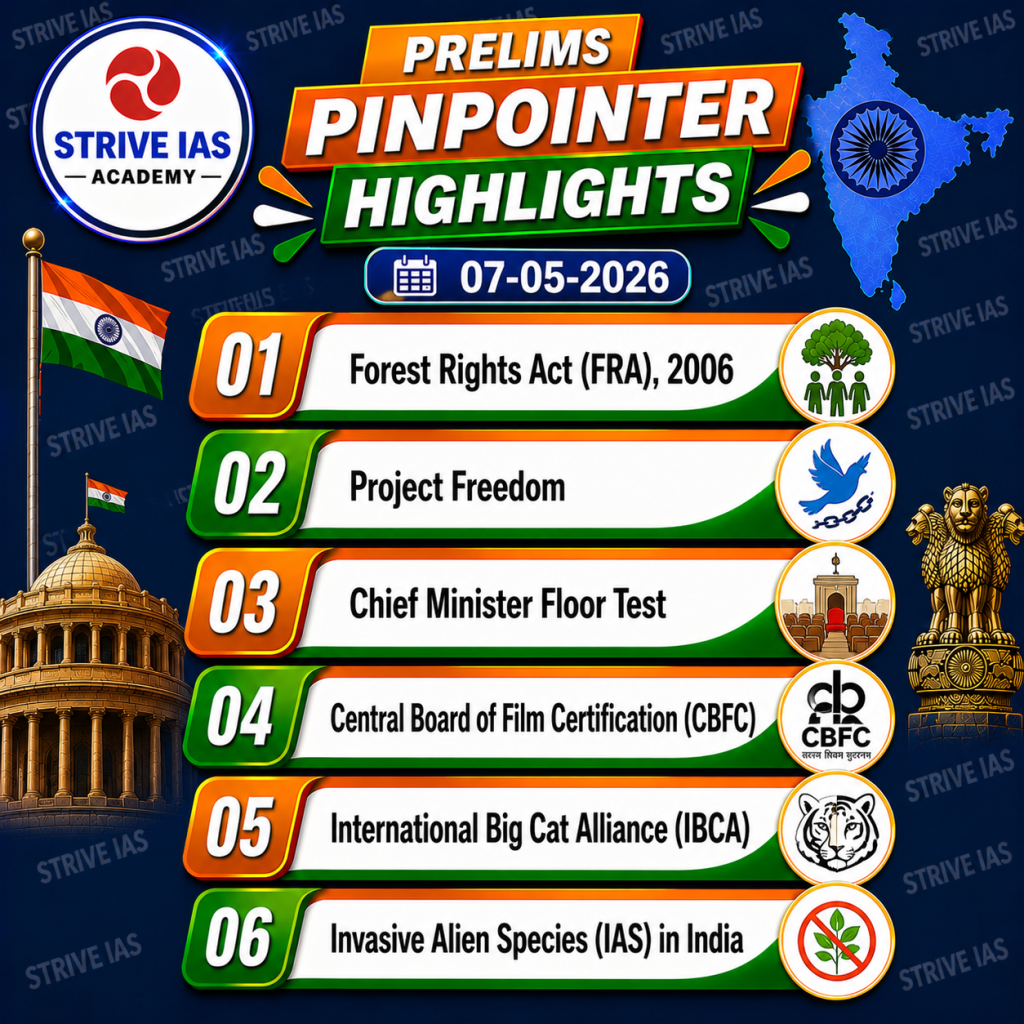
Forest Rights Act (FRA), 2006
Context
- Questions have been raised in the Calcutta High Court over whether the mandatory consent procedures under the Forest Rights Act (FRA), 2006 were properly followed for the ₹92,000-crore Great Nicobar infrastructure project.
- Petitions allege that the required Gram Sabha quorum and tribal consultation mechanisms under FRA were not adequately fulfilled before granting consent for forest land diversion.
About Forest Rights Act (FRA), 2006
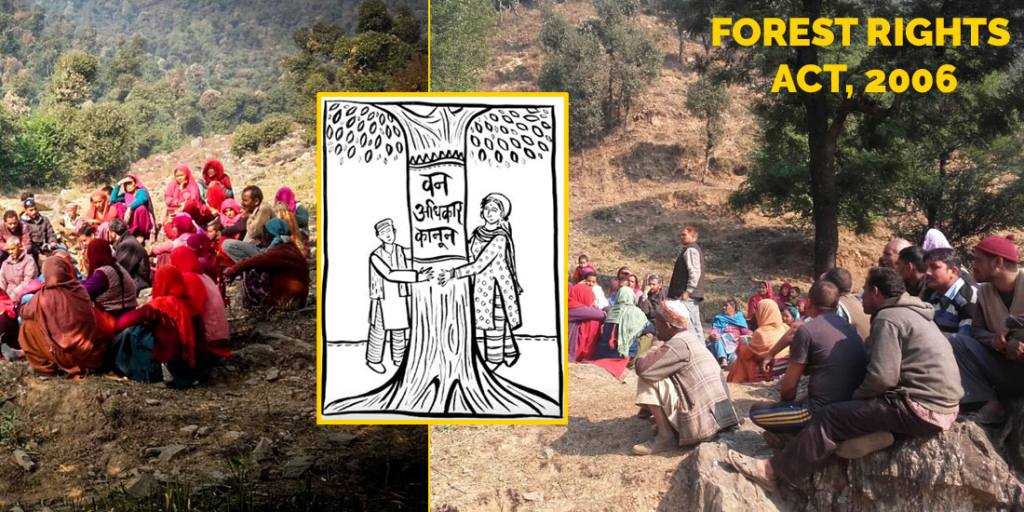
- The Scheduled Tribes and Other Traditional Forest Dwellers (Recognition of Forest Rights) Act, 2006, commonly known as the Forest Rights Act (FRA), seeks to recognise the rights of forest-dwelling communities over forest land and resources.
- The Act was enacted to address the historical injustice faced by tribal and forest-dependent communities whose customary rights were not formally recorded during colonial and post-colonial forest administration.
- Objectives
- Recognise individual and community forest rights.
- Strengthen livelihood security of forest dwellers.
- Empower Gram Sabhas in forest governance and conservation.
- Promote community participation in sustainable forest management.
- The Act applies to:
- Scheduled Tribes (STs) communities residing in forest areas.
- Other Traditional Forest Dwellers (OTFDs) communities residing in forests for at least three generations (75 years) prior to 13 December 2005.
Rights Recognised under FRA
- Individual Forest Rights (IFR)
- Right to live and cultivate forest land for habitation and self-cultivation.
- Land rights limited to a maximum of 4 hectares.
- No provision for fresh encroachments.
- Community Forest Rights (CFR)
- Rights over:
- Minor forest produce (MFP)
- Grazing grounds
- Water bodies
- Non-timber forest produce (NTFP)
- Seasonal resource access
- Rights over:
- Community Forest Resource Rights
- Gram Sabhas can:
- Protect
- Regenerate
- Conserve
- Manage forest resources sustainably
- Gram Sabhas can:
- Other Rights
- Rights of pastoralist and nomadic communities.
- Rights over traditional knowledge and intellectual property.
- Development rights for basic infrastructure with limited forest diversion.
Institutional Framework
- Gram Sabha
- Central authority for:
- Initiating and verifying claims
- Conservation and management of forest resources
- Central authority for:
- Sub-Divisional Level Committee (SDLC)
- Examines and consolidates claims.
- District Level Committee (DLC)
- Final authority for approval or rejection of claims.
Project Freedom

Context
- In response to the prolonged disruption in the Strait of Hormuz, the United States announced “Project Freedom” to facilitate the safe evacuation and movement of stranded commercial vessels.
- The initiative emerged amid heightened tensions following the Iran conflict and concerns over the humanitarian condition of crews trapped at sea.
About Project Freedom
- Project Freedom is a proposed U.S.-led maritime initiative aimed at ensuring the safe transit of stranded commercial vessels through the Strait of Hormuz during the ongoing regional crisis.
- The initiative seeks to protect:
- Merchant shipping
- Energy transportation
- Humanitarian needs of ship crews
- Objectives
- Restore limited maritime movement in a conflict-affected chokepoint.
- Prevent humanitarian distress among stranded seafarers.
- Reduce disruption to global energy and trade supply chains.
- Reassure neutral shipping nations dependent on Gulf maritime routes.
Strategic Importance
- Highlights the centrality of the Strait of Hormuz in global energy security.
- Reflects how maritime chokepoints can influence:
- Oil prices
- International trade
- Geopolitical stability
- Demonstrates the growing use of humanitarian and strategic maritime operations during geopolitical crises.
Chief Minister Floor Test
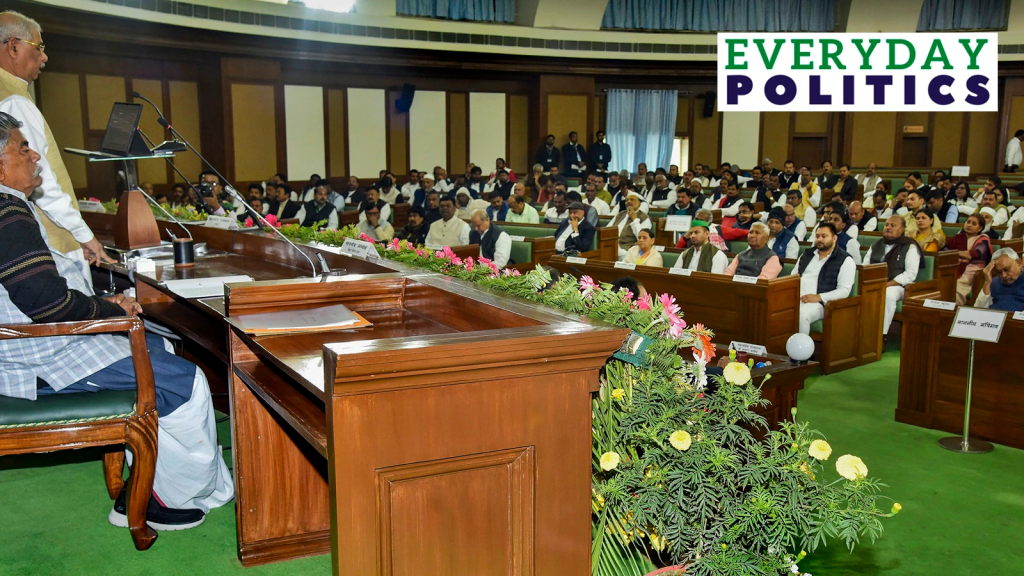
In News:
- West Bengal Chief Minister Mamata Banerjee stated that she would not resign immediately after the election verdict, alleging irregularities in the electoral process.
- The debate brought attention to:
- The constitutional meaning of the phrase “pleasure of the Governor”
- The requirement of a floor test in cases of majority dispute
- The automatic cessation of office after dissolution of the Legislative Assembly
- Experts clarified that under the parliamentary system, a Chief Minister remains in office only as long as he or she enjoys the confidence of the Legislative Assembly.
- The issue also highlighted legal remedies available under the Representation of the People Act, 1951, including election petitions before the High Court.
Constitutional Position of the Chief Minister
- Appointment of Chief Minister
- Under Article 164(1), the Governor appoints the Chief Minister.
- Other ministers are appointed by the Governor on the advice of the Chief Minister.
- “Pleasure of the Governor”
- Article 164 states that ministers hold office “during the pleasure of the Governor”.
- However, in practice, this pleasure is not absolute or discretionary.
- In a parliamentary system, the Council of Ministers continues only so long as it enjoys the confidence of the Legislative Assembly.
- Constituent Assembly Debate
- Constituent Assembly member Mohammad Ismail Khan had proposed replacing the phrase “during pleasure” with “so long as they enjoy the confidence of the Assembly”.
- B. R. Ambedkar clarified that parliamentary conventions inherently require the Council of Ministers to retain majority support in the House.
Governor’s Power & Supreme Court View
- The Governor generally acts on the aid and advice of the Council of Ministers.
- In A.G. Perarivalan v. State Through Superintendent of Police (2022), the Supreme Court observed that the Governor acts as a constitutional head and ordinarily remains bound by ministerial advice.
- Therefore, a Governor cannot arbitrarily dismiss a Chief Minister who enjoys majority support in the Assembly.
What is a Floor Test?
- A floor test is a constitutional mechanism to determine whether the government enjoys the confidence of the Legislative Assembly.
- Required when:
- Majority support of the government is doubtful
- Governor invites another claimant to form government
- Political defections or instability arise
- If the Chief Minister fails to prove majority, resignation becomes necessary.
Dissolution of Legislative Assembly
- Article 172 provides that a State Legislative Assembly normally continues for five years from its first sitting unless dissolved earlier.
- On expiry of the Assembly’s tenure:
- The Assembly stands dissolved automatically
- The Chief Minister and Council of Ministers cease to hold office
- President’s Rule
- If no party or coalition is able to form a stable government, President’s Rule under Article 356 may be imposed as a measure of last resort.
Election Challenges
- Election results can be challenged through an election petition before the High Court under the Representation of the People Act, 1951.
- Grounds include:
- Corrupt practices
- Improper acceptance/rejection of nomination
- Violation of statutory procedures
Central Board of Film Certification (CBFC)
About CBFC
- The Central Board of Film Certification (CBFC) is a statutory body functioning under the Ministry of Information and Broadcasting.
- Commonly referred to as the “Censor Board”, although its primary role is film certification rather than direct censorship.
- The CBFC functions under:
- Cinematograph Act, 1952
- Cinematograph (Certification) Rules, 1983
- Guidelines issued by the Central Government
- Functions of CBFC
- Regulates the public exhibition of films in India.
- Examines films to ensure compliance with legal and certification guidelines.
- No film can be publicly released in India without CBFC certification.
- Structure
- Headed by a Chairperson appointed by the Central Government.
- Includes 12–25 members nominated by the Government.
Advisory Panels
- CBFC is assisted by Advisory Panels comprising members nominated by the Government.
- Members generally serve for a two-year term.
- Panels assist in the examination and review of films.
Categories of Film Certification
- U (Universal): Suitable for all age groups.
- U/A: Suitable for all, but children below 12 require parental guidance.
- A (Adults Only): Restricted to persons aged 18 years and above.
- S (Special Category): Restricted to specialised groups such as doctors, scientists, farmers, etc.
New Age-Based Categories (2023 Amendment)
- To align with international standards, additional sub-categories were introduced:
- UA 7+
- UA 13+
- UA 16+
International Big Cat Alliance (IBCA)

Context
- India will host the first International Big Cat Alliance (IBCA) Summit in New Delhi from 1–3 June, with participation from nearly 95 countries.
- The summit is expected to adopt the ‘Delhi Declaration’, the first global declaration dedicated to big cat conservation and transboundary ecological cooperation.
- The summit will be organised under the theme: “Save Big Cats, Save Humanity, Save Ecosystem.”
About International Big Cat Alliance (IBCA)
- The International Big Cat Alliance (IBCA) is a global coalition of countries committed to the conservation of the world’s seven major big cats and their habitats.
- The alliance was:
- Conceived and piloted by India
- Officially launched in 2023 by Prime Minister Narendra Modi
- The alliance focuses on conservation of seven big cat species:
- Tiger
- Lion
- Leopard
- Snow Leopard
- Cheetah
- Jaguar
- Puma
- Membership: Includes countries that host or support itinerant populations of at least one big cat species.
- Current Composition
- 24 member countries
- 3 observer countries
- Several additional range countries
Invasive Alien Species (IAS) in India

Prosopis juliflora
- Native to Mexico and Central America.
- Introduced in India for afforestation and desertification control.
- Commonly called: Vilayati Keekar / Gando Baval / Seemai Karuvelam.
- Majorly affects Banni Grasslands (Gujarat) by suppressing native grasses.
Lantana camara
- Native to Central and South America.
- Introduced as an ornamental plant.
- Forms dense thickets and restricts growth of native vegetation.
- Widely found in Western Ghats and Central Indian forests.
Senna spectabilis
- Native to Tropical America.
- Introduced as a shade and ornamental tree.
- Rapidly spreading in Wayanad forests of Kerala.
- Threatens native forest biodiversity.
Water Hyacinth (Eichhornia crassipes)
- Native to Amazon Basin (South America).
- Fast-growing aquatic invasive plant.
- Reduces dissolved oxygen in water bodies.
- Affects fisheries, irrigation, and aquatic biodiversity.
Parthenium Hysterophorus
- Commonly known as Congress Grass / Carrot Weed.
- Native to Tropical America.
- Causes allergies and respiratory problems in humans.
- Harmful for agriculture and livestock.
