

US PACOM & India’s Indo-Pacific Strategy: UPSC Mains Notes
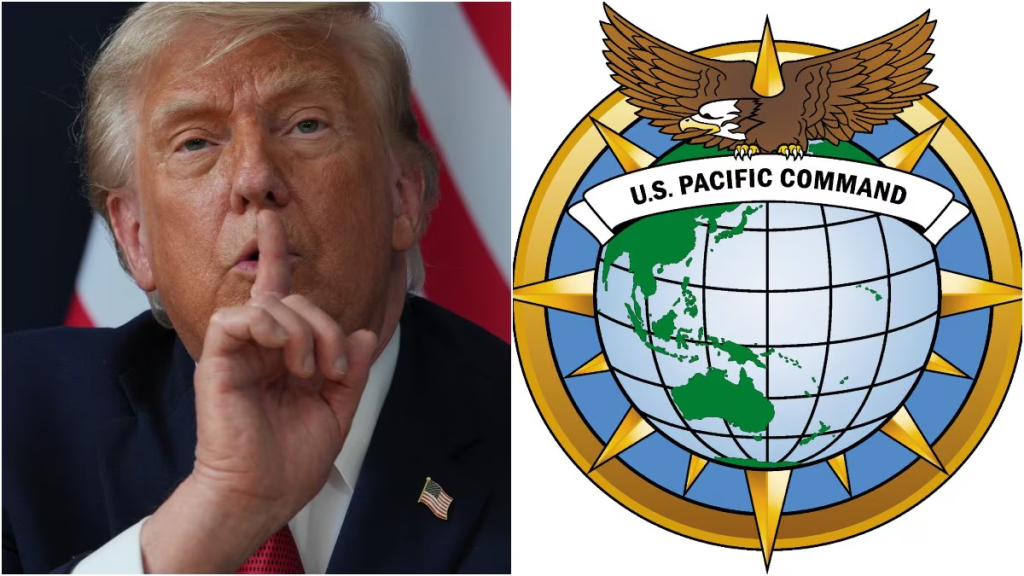
In News: US Drops ‘Indo’ from INDOPACOM
- The US military renamed “US INDOPACOM” back to “US PACOM” reverting to its pre-2018 name. In 2018, US Defence Secretary Jim Mattis renamed it recognising India’s growing strategic significance.
- US Secretary of War Pete Hegseth’s Shangri-La Dialogue speech in 2026 contained zero references to the Indo-Pacific.
- This signals a fundamental shift in US strategic priorities away from the Indo-Pacific framework.
Shift 1: US-China Thaw & a Floundering Quad
- Trump visited Beijing in May 2026 and Xi Jinping is expected in the US on September 24.
- Trump’s references to a “G-2” at the G-7 summit signal plans to recast the world into spheres of influence.
- This implies China as the predominant continental power rather than one pole in a multipolar Asia.
- The US National Defense Strategy of January 2026 does not mention the Quad even once.
- The Quad may be relegated to a Foreign Ministers’ level grouping rather than a leaders’ summit.
Shift 2: US-Iran MoU & West Asia Realignment
- The “Islamabad MoU” commits the US to remove its forces from Iran’s proximity within 30 days.
- Iran and Oman will jointly define the Strait of Hormuz’s future maritime administration.
- The US and regional allies will provide at least $300 billion for Iran’s reconstruction.
- Saudi Arabia is now seeking new security arrangements with Türkiye, Pakistan and Ukraine instead.
- India’s West Asia policy appears tilted towards Israel and UAE and requires rapid revision now.
- New Delhi must urgently reconsider compliance with US sanctions on Iranian oil and Chabahar port.
Shift 3: US Ambitions in South Asia
- Sergio Gor has been appointed both US Ambassador to India and Special Envoy for South and Central Asia.
- The US is entering competition with China for influence in South Asia by side-stepping India.
- SAARC and BIMSTEC remain constrained by India’s political tensions with Islamabad and Dhaka.
- China has already built several cooperation mechanisms with South Asia giving it a significant head start.
Way Forward: Reviving SAARC, BIMSTEC & Maritime Coalitions
- Maritime Coalitions: India must revive the Australia-India-Japan trilateral as an alternative maritime security mechanism urgently.
- Modi’s July Visits: Visits to Indonesia, Australia and New Zealand must advance discussions on alternative maritime cooperation frameworks.
- IORA Leadership: India as chair of the Indian Ocean Rim Association must reassert its regional leadership actively.
- SAARC Revival: A revival of SAARC and other pan-regional initiatives must be seriously considered by India.
- BIMSTEC and SCO: Modi’s attendance at BIMSTEC summit in Bangladesh and SCO summit in Pakistan offers important reassertion opportunities.
- Iran Policy Reset: India must urgently reconsider its compliance with US sanctions on Iranian oil and Chabahar port.
- Strategic Planning: India must plan strategically acknowledging that US policy shifts run far deeper than surface-level rhetoric suggests.
Source: The Hindu
