

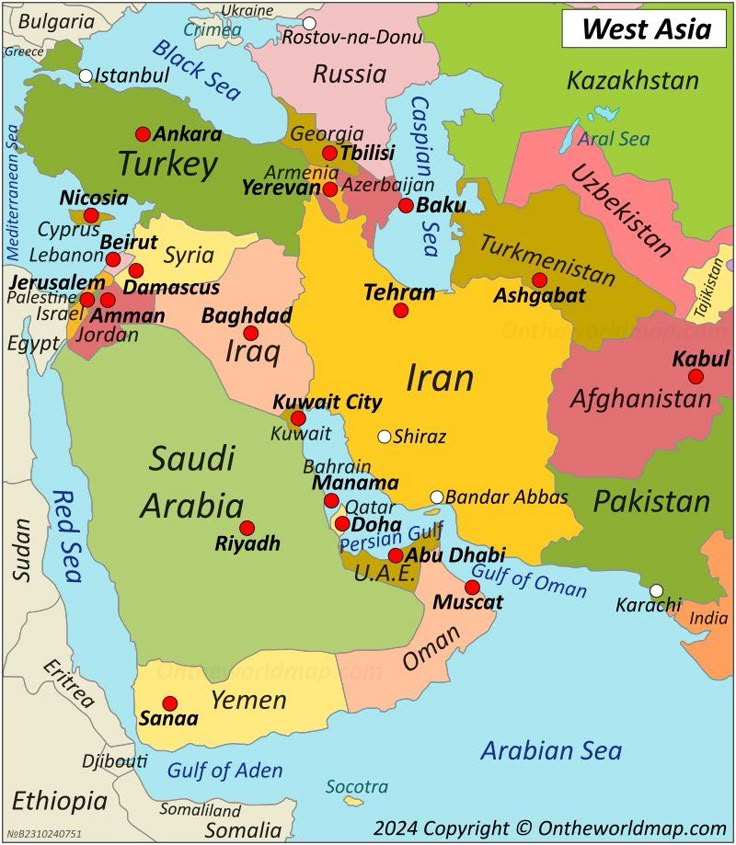
Context
- India’s recent diplomatic engagement in West Asia has sparked debate, especially in the backdrop of the ongoing regional conflict and India’s evolving foreign policy approach.
Significance of West Asia for India
- Economic importance: The GCC region is India’s largest socio-economic partner with over $160 billion in trade.
- Diaspora factor: Nearly 10 million Indians live and work in West Asia, making it crucial for remittances and welfare concerns.
- Energy security: The region remains a major source of oil and gas supplies for India.
- Strategic relevance: West Asia offers opportunities for defence cooperation, connectivity, and geopolitical influence.
- Political gains: India has achieved de-hyphenation from Pakistan, improved ties with Israel and Gulf countries, and enhanced its image as a responsible power.
India’s Stand on the Issue
- India has adopted a more assertive and interest-driven diplomacy, moving away from traditional “please-all” balancing.
- Recent actions include:
- High-level engagement such as Prime Ministerial visits and direct outreach to Gulf leaders.
- Expressing support for regional stability and security concerns of GCC countries.
- The approach reflects:
- Greater strategic clarity and confidence,
- Reduced reliance on third-party positions,
- Emphasis on hard diplomacy over symbolic balancing.
- However, critics argue that India must maintain strategic flexibility, especially regarding Iran and the Palestinian issue.
Other Global Stands
- China: Continued economic engagement with Iran, including large-scale oil imports, while maintaining limited political support.
- Russia: Despite strategic agreements with Iran, its support has been less effective in practice.
- Pakistan: Shifted stance despite earlier strong rhetoric, aligning closer to U.S. interests.
- Arab states: Displayed limited unified response during recent conflicts, reflecting changing regional priorities.
- These positions indicate a fluid and interest-driven geopolitical environment in West Asia.
Opportunities for India
- Shifting security dynamics: The weakening of the traditional “Oil-for-Security” arrangement with the U.S. opens space for India to emerge as a trusted security partner for Gulf countries.
- Economic repositioning: Disruptions in the GCC may encourage a “GCC+1 strategy”, where India can position itself as an alternative hub for investment and talent.
- Strategic diversification: India can strengthen ties with multiple actors, including Iran, GCC states, and Israel, while keeping options open.
- Diplomatic leadership: Platforms like regional cooperation and humanitarian engagement offer India an opportunity to enhance its global credibility.
Conclusion
- India’s West Asia policy is moving towards greater realism and strategic autonomy. The challenge lies in maintaining a careful balance between competing interests, while using emerging opportunities to strengthen India’s position as a reliable and influential regional actor.
