
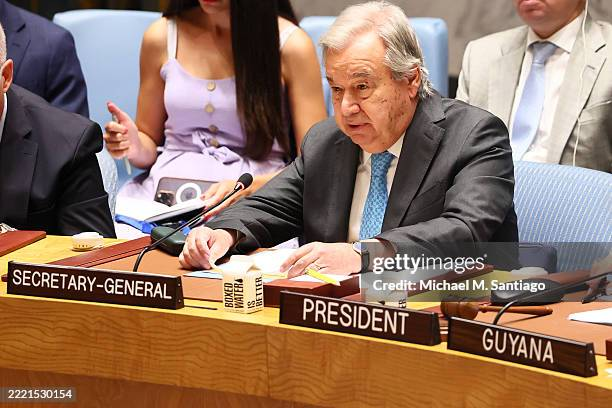
Context
- The process to elect the next UN Secretary-General (2027 term) is underway, with candidates presenting their vision before the UN General Assembly through informal dialogues.
- The election comes at a time when the United Nations faces deep financial, political, and legitimacy challenges, making leadership crucial.
Role of UN Secretary-General
- The Secretary-General is the Chief Administrative Officer of the UN, responsible for overseeing the Secretariat and executing mandates of key UN organs.
- Acts as the “world’s chief diplomat”, representing global conscience on issues like peace, climate change, inequality, and humanitarian crises.
- Holds the authority to bring threats to international peace and security to the UN Security Council.
- Can appoint special envoys to manage complex global conflicts (e.g., West Asia).
Election Process and Institutional Dynamics
- The Secretary-General is appointed by the UN General Assembly on the recommendation of the UN Security Council.
- The Permanent Members (P5): U.S., U.K., France, Russia, China plays a decisive role due to their veto power.
- The process includes:
- Informal dialogues with candidates
- Closed-door deliberations and “straw polls” in the Security Council
- Final approval by the General Assembly
- By convention:
- The position rotates among regional groups
- Candidates usually serve two terms (informal norm since 1981)
Why This Election Matters
- Crisis of Multilateralism
- The UN is facing a financial crisis due to delayed and partial contributions by member states.
- Security Council paralysis due to frequent vetoes has weakened its ability to respond to conflicts.
- Rising Global Conflicts
- Conflicts in Gaza, Ukraine, Sudan, Lebanon, and Iran have raised concerns about the UN’s effectiveness in conflict prevention.
- The organisation’s core mandate is about maintaining global peace which is atpresent under strain.
- Development and Humanitarian Challenges
- Only 18% of Sustainable Development Goals (SDGs) are on track for 2030.
- Increasing humanitarian crises due to conflicts, disasters, and weakening international law frameworks.
- Need for Institutional Rejuvenation
- The next Secretary-General must not only manage but also reform and revitalise the UN system.