

Samagra Shiksha Scheme
About the Scheme
- Launched in 2018 as a centrally sponsored scheme.
- Integrates three earlier schemes:
- Sarva Shiksha Abhiyan (SSA)
- Rashtriya Madhyamik Shiksha Abhiyan (RMSA)
- Teacher Education (TE)
- Envisions a holistic, continuum-based approach to education across all school stages.
- Core Objective
- To ensure inclusive, equitable, and quality education for all children, aligned with SDG-4 (Quality Education).
Key Interventions
- Universal Access: Expansion and strengthening of school infrastructure.
- Foundational Literacy and Numeracy (FLN): Focus on early learning outcomes.
- Teacher Support: Salaries, training, and professional development.
- Equity Measures: Free textbooks, uniforms, and RTE entitlements.
- Digital & Vocational Education: ICT labs, smart classrooms, skill development.
- Sports and Holistic Development: Integration of co-curricular learning.
Alignment with NEP 2020
- Foundational Learning
- Emphasises FLN through NIPUN Bharat Mission, targeting universal basic learning by Grade 3.
- Early Childhood Care and Education (ECCE)
- Strengthens pre-primary education through Anganwadi integration.
- Supports NEP’s 5+3+3+4 curricular structure.
- Holistic Education
- Promotes activity-based, multidisciplinary learning.
- Ensures inclusion of Children with Special Needs (CWSN).
- Teacher Development
- Strengthens institutional framework through:
- SCERTs (State level)
- DIETs (District level)
- Strengthens institutional framework through:
- Digital Education
- Supports ICT-enabled learning infrastructure, including smart classrooms.
UDGAM Portal: Unclaimed Deposits & DEA Fund
Context
- The Reserve Bank of India informed the Supreme Court that 30 banks have been integrated with the UDGAM portal, covering nearly 90% of unclaimed deposits in the Depositor Education and Awareness (DEA) Fund.
- The platform aims to assist depositors and legal heirs in tracing unclaimed deposits across banks.
About UDGAM Portal
- UDGAM (Unclaimed Deposits – Gateway to Access inforMation) is a centralised web portal developed by the Reserve Bank of India.
- It enables users to search unclaimed deposits/accounts across multiple banks on a single platform.
- Key Features
- Covers 30 banks, accounting for ~90% of unclaimed deposits (by value) in the Depositor Education and Awareness Fund (DEA Fund).
- Includes deposits from both individual and non-individual account holders.
- Provides information on claim procedures for respective banks.
- Depositor Education and Awareness Fund (DEA Fund)
- Established by RBI in 2014.
- Holds unclaimed deposits transferred by banks after a specified inactivity period.
- Working Mechanism
- Users register on the portal and search using relevant details.
- Upon successful search, a Unique Unclaimed Deposit Reference Number (UDRN) is generated.
- UDRN ensures data privacy and secure identification of deposits.
- Claimants must approach the concerned bank branch for settlement.
Sudan: Nile, Sahel & Red Sea Geography
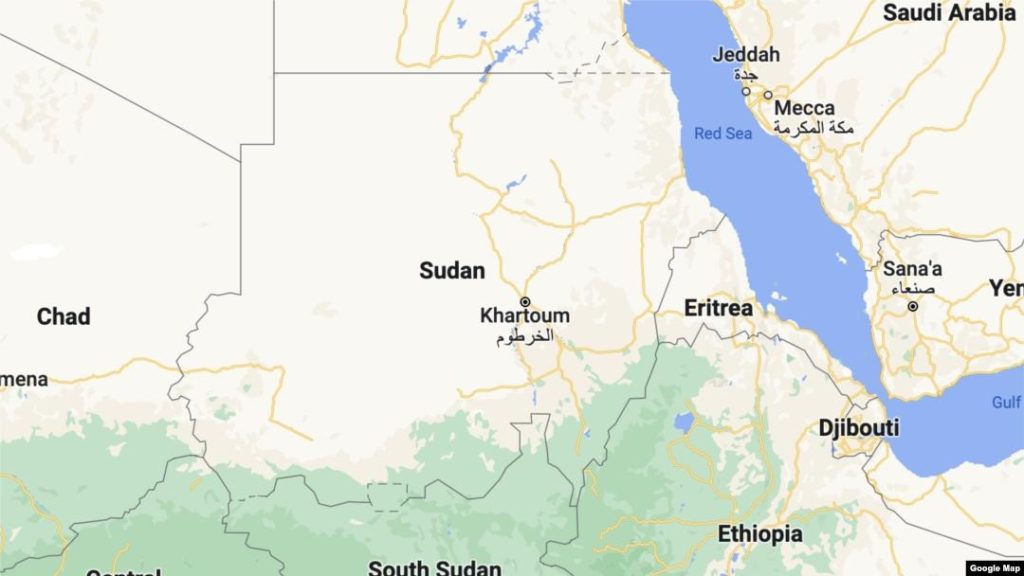
Location & Political Geography
- Sudan is a country in Northeast Africa, strategically located between Arab North Africa and Sub-Saharan Africa.
- Capital: Khartoum, situated at the confluence of the Blue Nile and White Nile.
- Shares borders with:
- Egypt (north)
- Libya (northwest)
- Chad (west)
- Central African Republic (southwest)
- South Sudan (south)
- Ethiopia and Eritrea (east)
- Has a coastline along the Red Sea, enhancing its maritime significance.
Physical Features
- Dominated by extensive plains and plateaus, forming part of the Sahel and Sudanian regions.
- The terrain is largely low-lying with occasional highland zones.
River System
- The Nile River system is the most significant geographical feature.
- Formed by the confluence of:
- White Nile
- Blue Nile (meet at Khartoum)
- The river flows south to north, draining most of the country.
Climate
- Exhibits a north–south climatic gradient:
- Northern Sudan: Desert (Sahara influence)
- Central Sudan: Semi-arid (Sahel region)
- Southern Sudan: Tropical savannah
Important Physical Features
- Highest Peak: Jabal Marrah (located in Darfur region).
- Region influenced by Sahel belt, prone to droughts and desertification.
Natural Resources
- Rich in:
- Petroleum (major export)
- Gold and other minerals
- Also possesses hydropower potential from the Nile system.
ECLGS: MSME Credit Guarantee Scheme

About ECLGS
- Objective
- To mitigate economic distress caused by the pandemic by ensuring access to timely and affordable credit.
- Implementing Agency
- Operated through the National Credit Guarantee Trustee Company Ltd.
- Key Features
- Nature of Loan: Term loan with 100% government guarantee.
- Total Credit Outlay: Up to ₹3 lakh crore.
- Tenure: 4 years (48 months).
- Moratorium: First year limited to interest payment only.
- Coverage: MSMEs, business enterprises, trusts, and eligible individuals.
- Eligibility Conditions
- Borrower must be registered under GST (where applicable).
- Loan account should be standard (not NPA or SMA-2) as on reference date.
- Existing borrowers with active credit history prior to pandemic period were prioritised.
Teesta River: Origin, Tributaries & Water Dispute
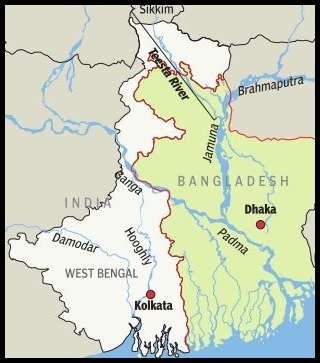
Location & Course
- The Teesta River is an important transboundary river of the eastern Himalayas.
- It flows through Sikkim and West Bengal, before entering Bangladesh.
- In Bangladesh, it joins the Jamuna River (main channel of the Brahmaputra).
Origin
- Originates as Chhombo Chhu from a glacial lake (Khangchung Chho) in Sikkim.
- The lake lies at the snout of the Teesta Khangse Glacier, descending from Pauhunri Peak.
Tributaries
- Left-bank Tributaries
- Lachung Chhu
- Rangpo Chhu
- Chakung Chhu
- Right-bank Tributaries
- Rangeet River (largest tributary)
Nature of River
- A glacier-fed Himalayan river, characterised by:
- High seasonal discharge variation
- Strong dependence on snowmelt and monsoon rainfall
Teesta Water Sharing Issue
- A draft agreement (2011) proposed:
- India: 42.5% share
- Bangladesh: 37.5% share (dry season flow)
- The agreement remains unimplemented due to objections from West Bengal.
Dr. Shyama Prasad Mukherjee
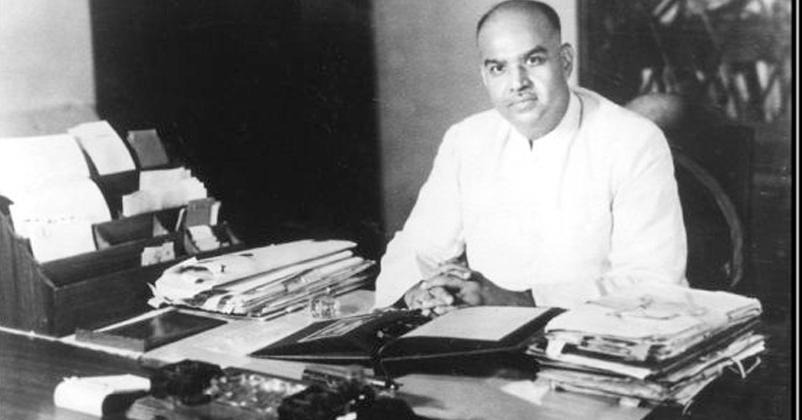
Early Life & Background
- Born on 6 July 1901 in Calcutta (Kolkata).
- A distinguished academician, barrister, and politician.
- Became the youngest Vice-Chancellor of Calcutta University at the age of 33 (1934).
Contributions in Education
- Promoted Indian languages in higher education, including introduction of vernacular subjects.
- Facilitated Rabindranath Tagore’s convocation address in Bengali, marking a cultural shift in academia.
Political Career
- Served as Minister for Industry and Supply in the first cabinet of Prime Minister Jawaharlal Nehru.
- Advocated the partition of Bengal (1946) to safeguard Hindu-majority areas.
- Opposed the proposal for a united independent Bengal.
- Founder of Bharatiya Jana Sangh
- Founded the Bharatiya Jana Sangh (BJS) in 1951, which later evolved into the Bharatiya Janata Party (BJP).
Kashmir Issue & Death
- Strongly opposed the special status granted to Jammu & Kashmir.
- In 1953, entered Kashmir without permit as a protest.
- Was arrested and later died in detention under controversial circumstances.
Smart Meter National Programme: Why important
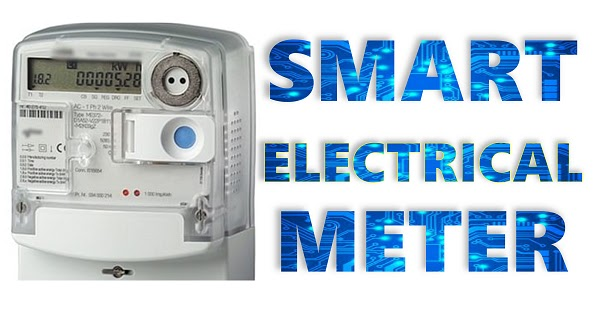
What is a Smart Meter?
- A smart meter is an advanced electricity meter that records power consumption along with voltage levels.
- It transmits real-time or periodic data (every 15 minutes/hour) to utility providers.
- Enables two-way communication between consumers and utilities through digital networks.
- Key Features
- Real-time monitoring of electricity consumption.
- Automated data transmission for accurate billing.
- Provides usage information to consumers, promoting informed consumption.
- Reduces manual meter reading and billing errors.
Smart Meter National Programme (SMNP)
- A nationwide initiative by the Government of India to replace conventional electricity meters with smart meters.
- Objective
- To enhance billing efficiency and revenue collection of power distribution companies (DISCOMs).
- To reduce Aggregate Technical and Commercial (AT&C) losses.
- Implementation
- Implemented by Energy Efficiency Services Limited.
- EESL is a joint venture of:
- NTPC Limited
- Power Finance Corporation (PFC)
- Rural Electrification Corporation (REC)
- POWERGRID
- Operates under the Ministry of Power.
- Scale & Model
- Target: Replacement of 25 crore conventional meters.
- Implemented under BOOT (Build–Own–Operate–Transfer) model:
- No upfront cost for states/utilities
- Cost recovered through efficiency gains and reduced losses
Ecocide: International Environmental Crime Push
Context
- The concept of “ecocide” has gained prominence amid allegations of large-scale environmental destruction during armed conflicts.
- There are increasing global demands to recognise ecocide as an international crime under global legal frameworks.
What is Ecocide?
- Ecocide refers to widespread, long-term, and severe damage to the environment caused by human activities.
- It typically involves large-scale destruction of ecosystems, affecting biodiversity and ecological balance.
- The term was first coined in the 1970s during debates on environmental damage in the Vietnam War.
Legal Status under International Law
- Currently, ecocide is not explicitly recognised as an independent international crime.
- Under the Rome Statute of the International Criminal Court:
- Environmental damage is covered only within the category of war crimes.
- Applicable only during armed conflict, not in peacetime.
Existing Legal Provisions
- Geneva Conventions: Prohibit warfare methods causing widespread, long-term, and severe environmental damage.
- Environmental Modification Convention (ENMOD), 1976:
- Bans deliberate manipulation of natural processes for hostile purposes.
- These frameworks protect environment indirectly, not as an independent legal entity.
Key Limitation in Current Framework
- International law remains anthropocentric (human-centred).
- Focus is on human harm rather than intrinsic environmental damage.
- Environmental destruction is prosecutable only under limited circumstances (mainly wartime).
Global Developments
- The International Union for Conservation of Nature has called for:
- Recognition of ecocide as an international crime.
- The Council of Europe (2025 Convention) has taken steps to:
- Criminalise severe environmental destruction at an international level.
Hantavirus: Zoonotic Outbreak & Rodent Transmission
Context
- A suspected outbreak of Hantavirus infection has been reported aboard a cruise ship near Cape Verde (West Africa).
- The incident highlights concerns regarding zoonotic diseases and global health surveillance.
What is Hantavirus?
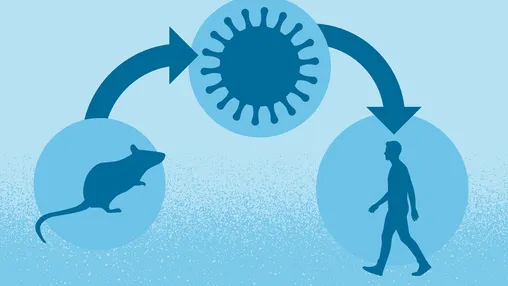
- Hantavirus is a group of zoonotic viruses transmitted primarily by rodents.
- Causes severe human diseases such as:
- Hantavirus Pulmonary Syndrome (HPS) → acute respiratory distress
- Hemorrhagic Fever with Renal Syndrome (HFRS) → kidney failure and bleeding
Transmission
- Spread mainly through aerosolised particles from rodent excreta (urine, droppings, saliva).
- Infection occurs during activities like cleaning, sweeping, or handling contaminated materials.
- Human-to-human transmission is extremely rare, except in specific strains (e.g., Andes virus).
- Reservoir (Vector Source)
- Carried by specific rodent species, including:
- Deer mice
- White-footed mice
- Cotton rats
- Carried by specific rodent species, including:
- Diagnosed using PCR-based testing, similar to viral detection methods used for diseases like COVID-19.
- Treatment
- No specific antiviral treatment or vaccine available.
- Management is supportive, including:
- Oxygen therapy
- Mechanical ventilation in severe cases
