


Constitution (131st Amendment) Bill, 2026
Context
- The Union Government has proposed the Constitution (131st Amendment) Bill, 2026 along with a Delimitation Bill, aiming to increase Lok Sabha strength and enable women’s reservation.
Key Proposals of the Bills
- Expansion of Lok Sabha
- The Bills propose to increase Lok Sabha strength from 543 to a maximum of 850 seats:
- 815 seats for States
- 35 seats for Union Territories
- The Bills propose to increase Lok Sabha strength from 543 to a maximum of 850 seats:
- Inter-State Redistribution of Seats
- Seats will be reallocated among States based on the latest available Census (currently 2011 Census).
- This marks a shift from the earlier system where:
- Inter-State allocation was based on the 1971 Census
- Intra-State delimitation was based on the 2001 Census
- Removal of Constitutional Freeze
- The amendment proposes to remove the constitutional provision delaying delimitation until post-2026 Census.
- This allows immediate delimitation based on existing data (2011 Census).
- Women’s Reservation Linkage
- The Bills aim to implement 33% reservation for women in Lok Sabha and State Assemblies immediately.
- It amends Article 334A to remove the delay linked to post-2026 delimitation.
- Reserved seats for women will be rotated across constituencies.
About Delimitation Commission
- Composition
- Chairperson: Serving/Retired Supreme Court Judge
- Members: Chief Election Commissioner + State Election Commissioners
- Associate Members: 5 MPs and 5 MLAs per State (without voting rights)
- Powers and Nature
- Responsible for:
- Redrawing constituency boundaries
- Reallocating seats among States
- Decisions:
- Have force of law
- Cannot be challenged in any court (judicial immunity)
- Responsible for:
Regional Impact of Delimitation
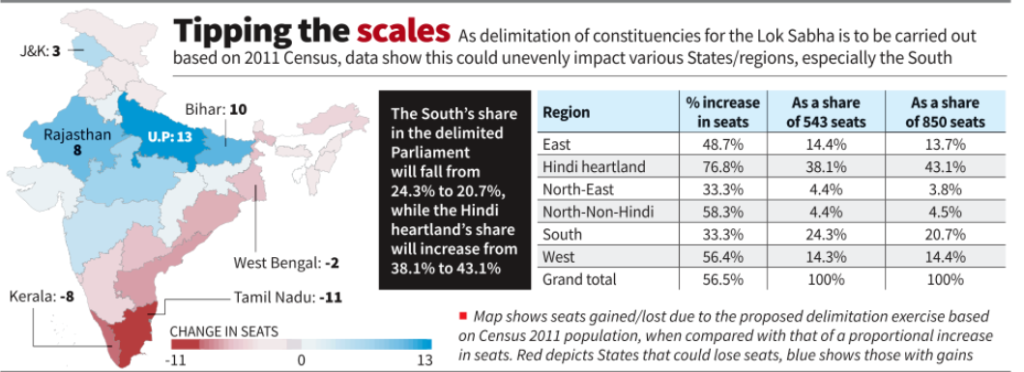
- The Hindi heartland is projected to increase its share from 38.1% to 43.1%.
- The Southern States may see a decline from 24.3% to 20.7% in seat share.
- The North-East may reduce from 4.4% to 3.8%, while eastern States see a marginal decline.
- States like Uttar Pradesh and Bihar gain significantly, while Tamil Nadu and Kerala see reduced share despite seat increase.
Significance of the Reform
- The reform aligns representation with current population realities.
- It improves the representation ratio (population per MP).
- It enables early implementation of women reservation, strengthening inclusivity.
- It modernises the legal framework for delimitation.
Red Sea
Context
- Iran has warned that the ceasefire is at risk and threatened to disrupt Red Sea traffic if the U.S. naval blockade continues. The threat includes blocking trade routes across the Red Sea, highlighting its critical geopolitical importance.
About Red Sea
- Location and Connectivity
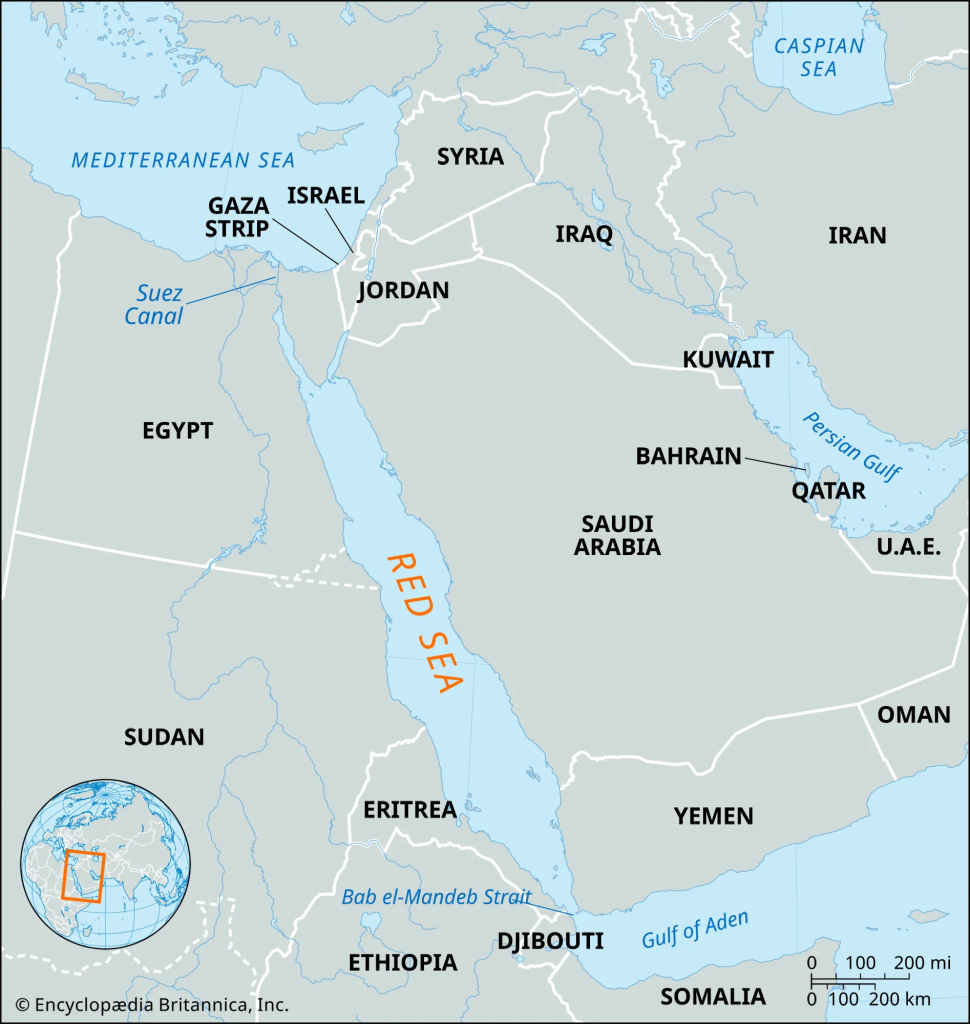
- The Red Sea is a semi-enclosed inlet of the Indian Ocean located between Africa and Asia.
- It connects to the Indian Ocean via the Gulf of Aden and the Bab el Mandeb Strait.
- In the north, it splits into:
- Gulf of Aqaba
- Gulf of Suez
- The Suez Canal links it to the Mediterranean Sea, making it a key global maritime corridor.
- Physical and Geological Features
- The Red Sea is known for its high salinity and warm waters.
- Its distinct colour variations are caused by algal blooms.
- Geologically, it lies in a fault depression between the Arabian Plate and the North African Plate.
- Strategic and Economic Significance
- The Red Sea is a major maritime route connecting Europe and Asia, facilitating global trade.
- It is crucial for energy transportation and commercial shipping between continents.
- Disruptions in this region can significantly affect global supply chains and trade flows.
- The Red Sea is bordered by: Egypt, Saudi Arabia, Yemen, Sudan, Eritrea, Djibouti
- Important Islands
- Tiran Island → Located near the Gulf of Aqaba
- Shadwan Island → Located near the Gulf of Suez
Maritime Chokepoints

Maritime Chokepoint: Concept
- A maritime chokepoint is a narrow sea passage through which a large share of global trade must pass.
- These routes act as geographical bottlenecks, leaving ships with limited alternatives.
- Nearly 70–80% oil trade moves by sea, making these chokepoints highly strategically sensitive.
- Even minor disruptions can cause price volatility, supply shocks, and broader economic instability.
Major Global Chokepoints
- The Strait of Malacca connects the Indian Ocean with the South China Sea, serving as a key trade route.
- The Bab el-Mandeb Strait links the Arabian Sea to the Red Sea, acting as a crucial gateway route.
- The Suez Canal connects the Red Sea with the Mediterranean, reducing the need for Africa circumnavigation.
- The Panama Canal links the Atlantic and Pacific Oceans, facilitating efficient intercontinental trade.
Legal Framework (UNCLOS)
- Maritime chokepoints are governed by the UNCLOS framework, which regulates international navigation.
- It guarantees transit passage, ensuring unobstructed movement of ships and aircraft.
- Coastal states may regulate for safety concerns and environmental protection, but cannot block navigation.
- In practice, enforcement depends on naval strength and prevailing geopolitical conditions.
Gerrymandering
Context: Recent debates around delimitation proposals have raised concerns regarding possible gerrymandering allegations in electoral boundary restructuring.
What is Gerrymandering
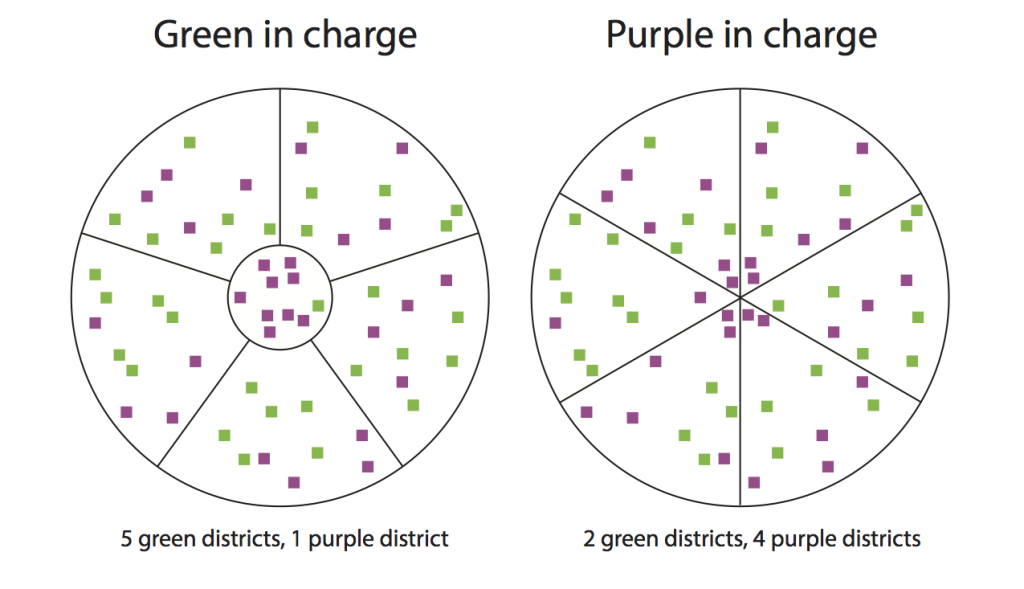
- Gerrymandering refers to the deliberate manipulation of electoral boundaries to secure political advantage for a party or group.
- It is commonly associated with the United States, where it influences legislative elections.
- The term originated in 1812, linked to Governor Elbridge Gerry, who approved a biased redistricting plan.
- It is typically carried out during the redistricting process, which follows the decennial census.
- The practice is controversial as it affects voter representation and the balance of political power.
Types of Gerrymandering
- Cracking technique involves spreading opposition voters across multiple constituencies to dilute influence.
- Packing strategy concentrates opposition voters into a few constituencies to limit impact elsewhere.
- Hijacking method redraws boundaries to place rival leaders in the same constituency.
- Kidnapping tactic shifts a leader’s voter base into an area of weaker support.
Effects on Democracy
- Gerrymandering distorts democratic representation by altering constituency composition.
- It weakens electoral competition, often favouring one political party.
- It can lead to voter disenfranchisement, reducing the effective voice of citizens.
- It results in skewed legislative outcomes, where representation may not reflect public preferences.
Unemployment

Context: India’s unemployment rate rose slightly to 5.1% in March, driven mainly by urban joblessness.
More in News
- Overall unemployment rate (UR) increased by 0.2 percentage points from February, indicating labour market stress.
- Rural unemployment stood at 4.3%, while urban unemployment was higher at 6.8%.
- Female unemployment remained elevated at 9% in urban areas, reflecting gender disparity.
- Female Labour Force Participation Rate (LFPR) declined to 34.4%, while WPR stood at 52.6% in March.
Meaning of Unemployment
- Unemployment refers to a situation where individuals actively seek work but are unable to find jobs.
- It is a key indicator of a country’s economic health and labour market performance.
- As per ILO definition, a person must be jobless, available, and searching to be considered unemployed.
- Individuals not seeking jobs despite being jobless are not counted as unemployed.
Types of Unemployment
- Structural unemployment arises due to skill mismatch caused by technological or economic changes.
- Cyclical unemployment occurs during economic downturns, when demand and jobs decline.
- Frictional unemployment is temporary, arising during job transitions between employments.
- Seasonal unemployment affects workers in industries with periodic demand fluctuations.
- Disguised unemployment exists where excess labour leads to zero marginal productivity.
- Voluntary unemployment occurs when individuals choose not to work despite job availability.
- Involuntary unemployment refers to people willing to work but unable due to lack of opportunities.
Measuring Unemployment
- Unemployment rate is calculated as unemployed persons ÷ total labour force.
- India uses multiple agencies like NSSO, CSO, Labour Bureau to capture labour data.
- Measurement reflects both formal and informal sectors, making it complex.
- Key indicators include UR, LFPR, and WPR, providing a comprehensive labour picture.
About Periodic Labour Force Survey (PLFS)
- PLFS is conducted by National Statistical Office (NSO) under Ministry of Statistics and Programme Implementation (MoSPI) since 2017–18 to measure employment indicators.
- It estimates Unemployment Rate (UR), LFPR, and Worker Population Ratio (WPR) using standard methodologies.
- Uses Usual Status (UPSS) for long-term trends and Current Weekly Status (CWS) for short-term trends.
- Since 2025, PLFS provides monthly estimates at national level for better policy insights.
Inflation
Context: India’s CPI inflation rose to 3.4% in March, with a sharper increase in food inflation.
More in News
- Headline inflation increased from 3.21% to 3.4%, indicating a moderate rise in prices.
- Food inflation rose faster to 3.87%, showing pressure on essential goods.
- Impact of West Asia conflict remained limited to select sectors.
- Inflation data released by MoSPI, guiding economic and policy decisions.
Meaning of Inflation
- Inflation refers to increase in prices, leading to decline in purchasing power of money.
- It reflects changes in cost of living over time.
- Higher inflation reduces real income, especially for fixed-income groups.
- Real interest rate = Nominal rate – inflation rate, hence higher inflation lowers real returns.
Consumer Price Index (CPI)
- CPI measures retail price changes faced by consumers.
- It is the key indicator for RBI monetary policy decisions.
- Compiled by MoSPI, reflecting household consumption patterns.
- Base year updated to 2024, replacing earlier 2012 series.
- CPI basket expanded to 358 items, improving coverage and accuracy.
- Classification includes 12 divisions, 43 groups, 92 classes, ensuring detailed analysis.
- Includes rural house rent, improving rural representation.
Wholesale Price Index (WPI)
- WPI measures price changes at wholesale level, before retail stage.
- Compiled by DPIIT, Ministry of Commerce and Industry.
- Base year is 2011–12, covering 697 items.
- Divided into three components:
- Primary Articles (22.62%)
- Fuel & Power (13.15%)
- Manufactured Products (64.23%)
- Does not include services, unlike CPI.
- Weights are not based on final consumption, but broader market transactions.
Key Differences Between CPI and WPI
- CPI captures retail + services, while WPI captures only wholesale goods.
- CPI reflects consumer experience, WPI reflects producer-level trends.
- CPI is used for interest rate decisions, WPI is not directly used by RBI.
- Rise in services increases CPI only, not WPI.
The Cinematograph Act, 1952

Context: The leak of Tamil film Jana Nayagan has highlighted stricter anti-piracy provisions under the 2023 amendments.
About the Act
- The Cinematograph Act, 1952 is the primary law regulating film certification and exhibition in India.
- It led to the establishment of the CBFC (Central Board of Film Certification).
- It ensures films are suitable for public viewing based on content guidelines and age suitability.
- Objectives of the Act
- To regulate film exhibition in line with public order and morality standards.
- To provide an age-based classification system for viewers.
- To curb film piracy and unauthorized recording in theatres.
- Certification Categories
- U (Universal): Suitable for all age groups.
- UA (Parental guidance): Sub-categorised into UA 7+, UA 13+, UA 16+.
- A (Adults only): Restricted to individuals 18 years and above.
- S (Special category): Restricted to specific professionals like doctors or scientists.
2023 Amendments
- Introduction of age-based UA subcategories, improving parental guidance.
- Film certificates now have perpetual validity, replacing earlier 10-year limit.
- Removal of Centre’s revisional powers, strengthening CBFC independence.
- Mandatory separate certification for television and other media platforms.
- Anti-Piracy Provisions
- Strict prohibition on unauthorised recording inside theatres.
- Even attempt to record a film is treated as a punishable offence.
- Unauthorized exhibition of pirated content is also penalised.
- Penalties
- Imprisonment ranging from 3 months to 3 years.
- Fine ranging from ₹3 lakh to up to 5% of production cost.
- Linking fine with production budget creates a strong economic deterrent.
- Other Important Provisions
- ‘A’ and ‘S’ category films require re-certification before TV broadcast.
- Act allows fair use exemptions under Copyright Act, 1957.
- Supports balance between creative freedom and regulatory oversight.
International Monetary Fund (IMF)
Overview
- IMF is a Bretton Woods institution promoting global monetary cooperation and financial stability.
- It acts as the central institution of the international monetary system.
- It facilitates cooperation among member countries on monetary issues.
Establishment and Background
- Established in 1944 at Bretton Woods Conference in New Hampshire, USA.
- Began operations in 1945.
- Created after Great Depression and World War II to prevent financial instability.
- Aimed to avoid competitive devaluations and economic disruptions.
Membership and Headquarters
- IMF has 190 member countries.
- Headquarters located in Washington, D.C.
- Each country is represented in the Board of Governors.
Objectives
- Promote monetary cooperation among nations.
- Ensure exchange rate stability and prevent currency wars.
- Facilitate balanced growth of international trade.
- Provide temporary assistance for balance of payments crises.
- Support macroeconomic stability and sustainable growth.
Core Functions
- Surveillance
- Monitors global and national economies regularly.
- Conducts Article IV consultations with member countries.
- Financial Assistance
- Provides loans for balance of payments problems.
- Focuses on restoring economic stability, not long-term development.
- Capacity Development
- Provides training in fiscal policy, taxation, banking, and statistics.
- Offers technical support to improve economic governance.
IMF Lending Instruments
- SBA (Stand-By Arrangement): Short- to medium-term support.
- EFF (Extended Fund Facility): Long-term structural assistance.
- RFI (Rapid Financing Instrument): Emergency funding without full programme.
- PRGT (Poverty Reduction and Growth Trust): Concessional loans for low-income countries.
Quota System
- Each country is assigned a quota based on its economic size.
- Quotas determine:
- Financial contribution to IMF.
- Voting power of the country.
- Access to IMF financing.
- Larger economies have greater decision-making influence.
Governance Structure
- Board of Governors: One representative per country (top decision-making body).
- Executive Board: 24 Directors handling day-to-day operations.
- Managing Director: Chief executive and head of Executive Board.
IMF and India
- India is a founding member of IMF.
- IMF supported India during 1991 balance of payments crisis.
- Conducts regular Article IV consultations on India’s economy.
Andaman Sea
Location and Extent
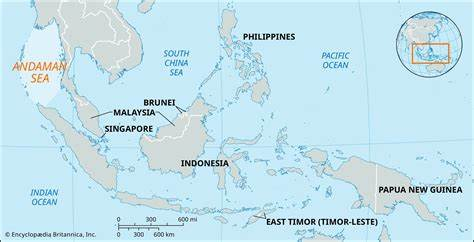
- Andaman Sea is a marginal sea of the eastern Indian Ocean, located southeast of the Bay of Bengal.
- It lies between South Asia and Southeast Asia, forming an important maritime zone.
Boundaries and Surroundings
- Bounded by Andaman & Nicobar Islands (India) on the west.
- Myanmar lies to the north and northeast.
- Thailand borders it on the east, while Malaysia lies to the southeast.
- Includes island groups like Mergui Archipelago (Myanmar).
- These islands act as a natural barrier separating it from the Bay of Bengal.
Geological and Physical Features
- Located on the Sunda Plate, between Indian and Australian Plates.
- Region is seismically active, prone to earthquakes and tsunamis.
- Plate interactions make it a tectonically dynamic zone.
Ecological Significance
- Rich in coral reefs, mangroves, and seagrass ecosystems.
- Provides habitat for diverse marine biodiversity.
- These ecosystems support coastal livelihoods and environmental balance.
