

Industrial Output Slowdown
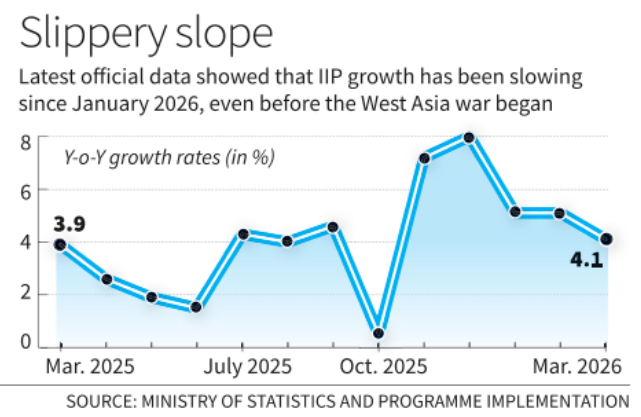
Context: India’s industrial growth, as measured by the Index of Industrial Production (IIP), slowed to a five-month low of 4.1% in March 2026. The trend of moderation had already begun from January 2026, suggesting both cyclical and geopolitical factors at play.
Data & Key Findings
- Sectoral Performance:
- Manufacturing: Slowed to 4.3% (5-month low)
- Capital Goods: Rose sharply to 14.6% (29-month high)
- Infrastructure/Construction: Moderated to 6.7% (9-month low)
- Consumer Non-Durables: Weak growth at 1.1%
Why the Slowdown?
- West Asia Crisis
- Rising geopolitical tensions led to higher energy prices and supply disruptions.
- Increased cost of petroleum and gas has adversely impacted manufacturing activity.
- Weak Consumer Demand
- Muted growth in consumer non-durables reflects softening consumption demand.
- Indicates stress in mass consumption segments, affecting overall industrial momentum.
- Sectoral Divergence
- While investment-led sectors (capital goods, infrastructure) remain resilient,
- Consumer-driven sectors are underperforming, leading to uneven growth.
- Input Constraints & Uncertainty
- Costlier inputs and tighter supply chains have affected production cycles.
- Business sentiment remains cautious, delaying expansion decisions.
- Lagged Impact of Crisis
- Current data captures only partial impact of the geopolitical shock.
- Deeper slowdown may emerge in subsequent months, especially in Q1 of next fiscal.
About Index of Industrial Production (IIP)
- IIP is a composite index measuring short-term changes in industrial output.
- Released monthly by the Ministry of Statistics and Programme Implementation (MoSPI).
- Components:
- Manufacturing (Highest weight ~77%)
- Mining
- Electricity
- Base Year: 2011–12
UAE Exit OPEC
Context
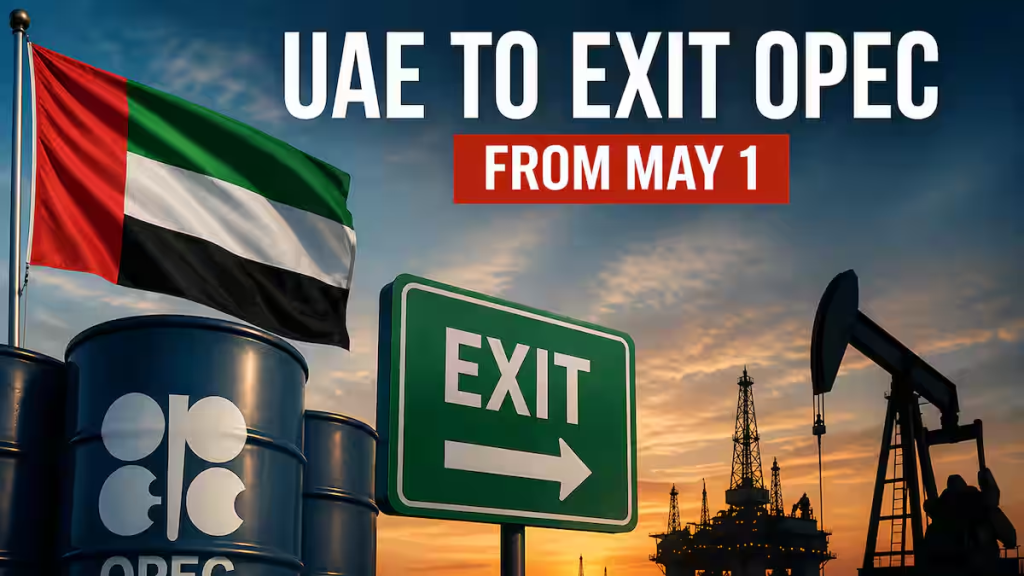
- United Arab Emirates announced exit from OPEC/OPEC+ framework. The exit is linked to disagreement over production quotas imposed by OPEC. UAE aims to increase oil production independently in line with market demand.
About OPEC
- Established: 1960 (Baghdad Conference).
- Founding Members: Iran, Iraq, Kuwait, Saudi Arabia, Venezuela.
- Headquarters: Vienna, Austria.
- Holds around 80% of world’s proven crude oil reserves.
- Publishes World Oil Outlook report.
- Membership
- Algeria, Congo, Gabon, Equatorial Guinea, Iran, Iraq, Kuwait, Libya, Nigeria, Saudi Arabia, UAE, Venezuela.
- Gabon rejoined in 2016.
- Key Features
- Permanent intergovernmental organisation of oil-exporting countries.
- Works on “one member, one vote” principle.
- Decisions require unanimity.
- Objectives
- Ensure stable petroleum prices.
- Provide regular supply to consuming nations.
- Secure fair returns for producers and investors.
- OPEC Fund for International Development (OFID)
- Established in 1976.
- A multilateral development finance institution.
- Provides financial assistance from OPEC members to non-member countries.
About OPEC+
- Formed in 2016.
- Also called Vienna Group.
- Composition: OPEC members + 10 non-OPEC oil-producing countries.
- Non-OPEC Members: Azerbaijan, Bahrain, Brunei, Kazakhstan, Malaysia, Mexico, Oman, Russia, South Sudan, Sudan.
- Key Features
- Accounts for around 40% of global crude oil production.
- Operates through Declaration of Cooperation.
- Focus: Production adjustment to stabilise oil markets.
International Labour Organization (ILO)
About International Labour Organization (ILO)
- A specialized agency of the United Nations focused on improving labour conditions worldwide.
- Unique for its tripartite structure, representing governments, employers, and workers.
- Membership includes 187 countries (186 UN members + Cook Islands).
- Awarded the Nobel Peace Prize (1969) for advancing social justice and labour rights.
- Headquarters located in Geneva, Switzerland.
- Key Institutional Feature
- Only UN body with tripartite representation, ensuring balanced labour governance.
Historical Evolution
- Established in 1919 under the Treaty of Versailles after World War I.
- Became a UN specialized agency in 1946.
- Member of the United Nations Development Group (UNDG) supporting SDG implementation.
Operation Global Hunt
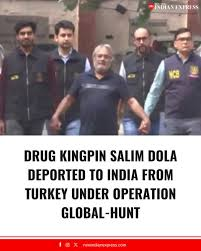
Context: A drug trafficking suspect was deported from Türkiye to India under “Operation Global Hunt”. The case highlights growing international cooperation in combating transnational organised crime.
Key International Mechanisms Involved
- Interpol Red Notice
- Issued by INTERPOL at India’s request (2024).
- A global alert to locate and provisionally arrest a wanted individual.
- Facilitates extradition or deportation based on national laws.
- Not an arrest warrant, but widely acted upon by member countries.
About Narcotics Control Bureau (NCB)
- Apex drug law enforcement agency under Ministry of Home Affairs.
- Established in 1986 under the Narcotic Drugs and Psychotropic Substances (NDPS) Act, 1985.
- Key Functions
- Coordinates actions against drug trafficking and abuse in India.
- Implements provisions of NDPS Act.
- Works with international agencies for cross-border drug control.
Shanghai Cooperation Organisation (SCO)
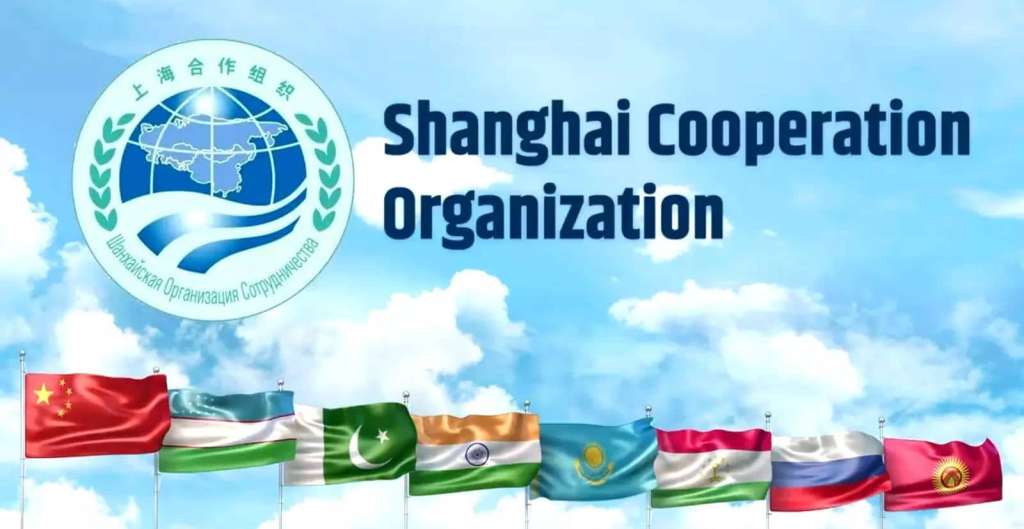
Context: At the SCO Defence Ministers’ meeting, India emphasised zero tolerance against terrorism and the need for collective action. The focus was on tackling the “three evils” i.e. terrorism, separatism, and extremism.
About SCO
- The Shanghai Cooperation Organisation (SCO) is a permanent intergovernmental organisation.
- Established in 2001 at Shanghai.
- Origins: Evolved from Shanghai Five (1996) mechanism.
- Headquarters: Beijing, China.
- Member States (9): China, Russia, India, Pakistan, Kazakhstan, Kyrgyzstan, Tajikistan, Uzbekistan, Iran.
- Observer States: Afghanistan, Belarus, Mongolia.
Important Institutional Mechanism
- RATS (Regional Anti-Terrorist Structure)
- SCO’s key body for counter-terrorism cooperation.
- Facilitates intelligence sharing and joint actions against terror networks.
- Headquarters: Tashkent, Uzbekistan.
- Important Declarations: Tianjin Declaration reflects SCO’s commitment to collective action against terrorism.
Rooppur Nuclear Power Plant (Bangladesh)
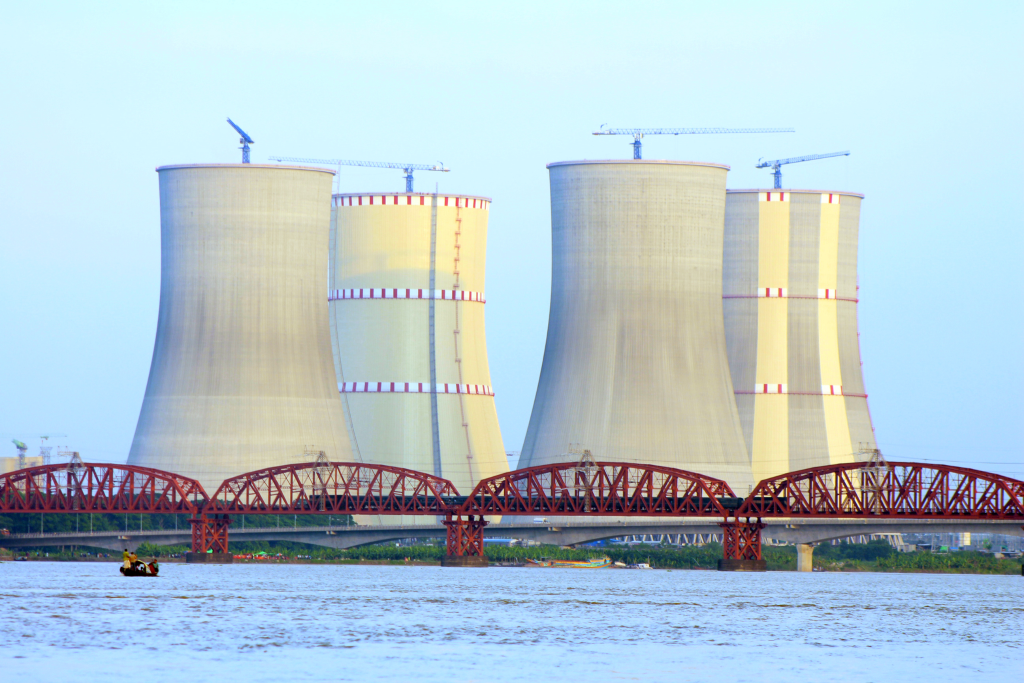
Context: The Rooppur Nuclear Power Plant is under construction as Bangladesh’s first nuclear energy project. It reflects growing nuclear energy adoption in South Asia for energy security.
Location & Ownership
- Located in Ishwardi, Pabna District, Rajshahi Division, Bangladesh.
- Situated about 160 km northwest of Dhaka.
- Owned by Bangladesh Atomic Energy Commission (BAEC).
Technical Features
- Comprises two VVER-1200 reactors.
- VVER: Water-Water Energetic Reactor (pressurised water reactor type).
- Reactors are water-cooled and water-moderated.
- Technology supplied by Rosatom (Russia).
