


Constitutional Amendment Procedure (Article 368): Simple Majority, Special Majority, State Ratification
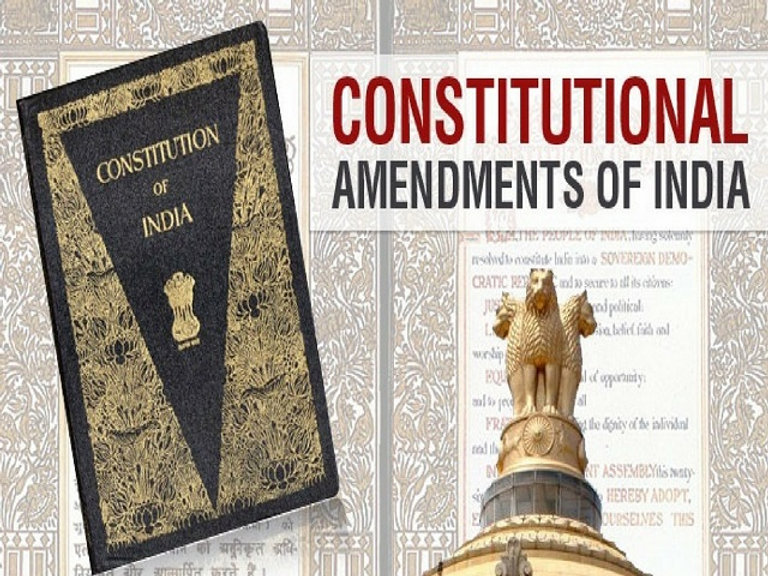
Context: Constitution (131st Amendment) Bill, 2026 failed to pass, as it did not secure the required special majority in Lok Sabha.
More in News
- Bill received 298 votes in favour and 230 against, falling short of the required 2/3rd majority (352 votes).
- It aimed to enable delimitation based on 2011 Census and expedite women’s reservation.
- Following defeat, government withdrew Delimitation Bill and UT Laws Amendment Bill.
- Debate highlighted issues of representation imbalance and linkage with women’s reservation.
What is Constitutional Amendment
- It refers to the process of making changes to the Constitution of India.
- Procedure reflects a balance between flexibility and rigidity, unlike UK and USA models.
- Governed primarily by Article 368, empowering Parliament to amend provisions.
- Parliament cannot alter the Basic Structure doctrine, as held in Kesavananda Bharati (1973).
Types of Amendment Methods
- Simple Majority
- Requires more than 50% members present and voting.
- Used for provisions outside Article 368, treated as ordinary law.
- Examples include citizenship, elections, Fifth Schedule.
- Special Majority
- Requires majority of total membership + 2/3rd present and voting.
- Applicable to key provisions like Fundamental Rights and DPSP.
- Special Majority + State Ratification
- Requires special majority plus approval by half of State Legislatures.
- Applies to federal features like President’s election, Seventh Schedule, Article 368.
Procedure of Amendment
- Amendment Bill can be introduced in either House of Parliament.
- It can be introduced by a minister or private member, without prior Presidential permission.
- Must be passed separately in each House by special majority.
- No provision of joint sitting in case of disagreement.
- Requires State ratification where federal provisions are involved.
- President must give assent mandatorily, cannot return or withhold the Bill.
- After assent, it becomes a Constitutional Amendment Act.
Tea in India: Darjeeling GI, Tea Board of India, Black Tea Production
About Tea
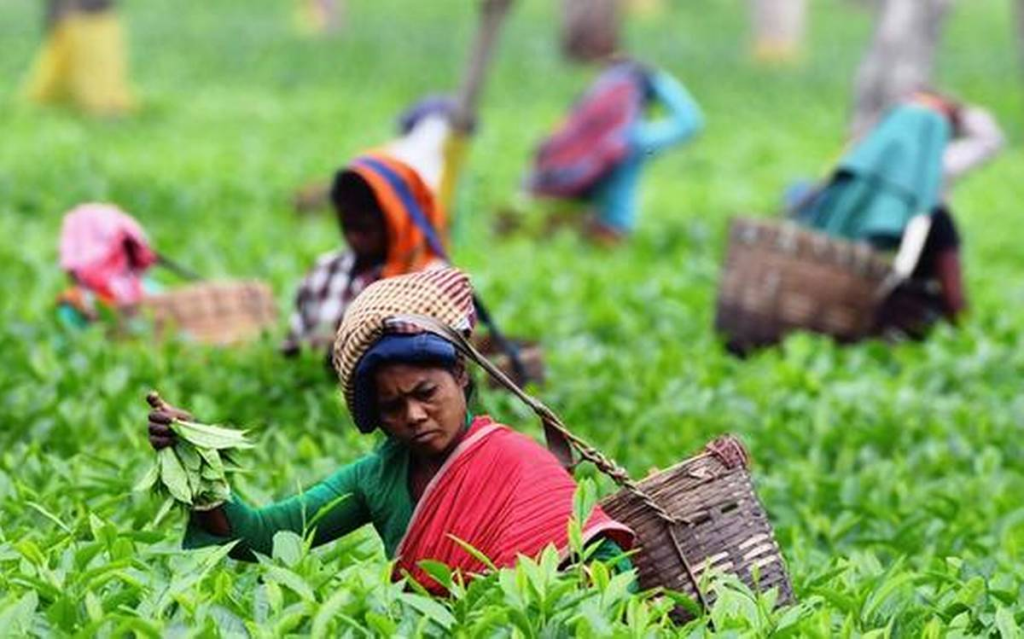
- Tea is a beverage prepared by infusing leaves of Camellia sinensis in hot water.
- It is the second most consumed drink globally after water.
- Tea is believed to have originated in China, India, Myanmar regions.
- Agro-Climatic Conditions
- Tea requires temperature between 16–32°C for optimal growth.
- Annual rainfall needed is about 150–300 cm.
- Relative humidity should remain around 80%, never below 40%.
- Frost conditions are harmful to tea cultivation.
- Soil must be acidic (pH ~5) with good drainage.
- Production and Consumption
- India is the second largest producer of tea globally after China.
- It is the largest producer of black tea in the world.
- Major production comes from Assam and West Bengal.
- Around 80% production is consumed domestically in India.
- GI Tag and Special Variety
- Darjeeling Tea was the first Indian product to receive GI status.
- It is popularly known as the “Champagne of Teas”.
Tea Board of India
- It is a statutory body under the Tea Act, 1953.
- Constituted on 1 April 1954.
- Functions under the Ministry of Commerce.
- Head office located in Kolkata.
- Overseas offices in Dubai and Moscow.
- Functions
- Provides financial and technical support for tea cultivation.
- Promotes export and marketing of Indian tea.
- Supports research and development for quality improvement.
- Works towards production enhancement and global competitiveness.
National Chambal Sanctuary
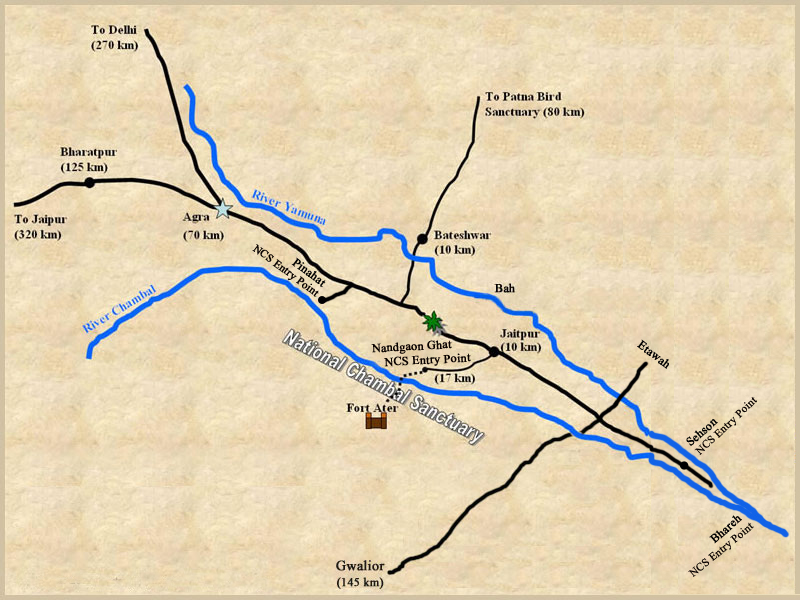
Context: Supreme Court flagged illegal sand mining in Chambal Sanctuary, threatening fragile ecosystems and gharial habitat.
About Chambal Sanctuary
- It is a tri-state sanctuary spanning Madhya Pradesh, Uttar Pradesh, and Rajasthan.
- Covers around 5,400 sq km along 425 km stretch of Chambal River.
- Located at the tri-junction area of the three states.
- Conservation Importance
- Established primarily to protect critically endangered gharial.
- Also conserves Ganges dolphin and red-crowned roof turtle.
- Hosts the largest population of gharials in the wild.
- Ecological Features
- Declared an Important Bird Area (IBA).
- Characterised by ravines, sandy banks, and rugged terrain.
- Falls under dry deciduous forest (Kathiar-Gir ecoregion).
- Biodiversity
- Includes species like mugger crocodile, smooth-coated otter, striped hyena, Indian wolf.
- River supports rare turtle species like narrow-headed softshell turtle.
- Mammals include sambhar, nilgai, gazelle, langur, mongoose, Bengal fox.
- River Significance
- Chambal River sustains aquatic biodiversity and ecological balance.
- Provides clean habitat for endangered species.
Deputy Chairman of Rajya Sabha: Election, Removal, Powers, and Functions
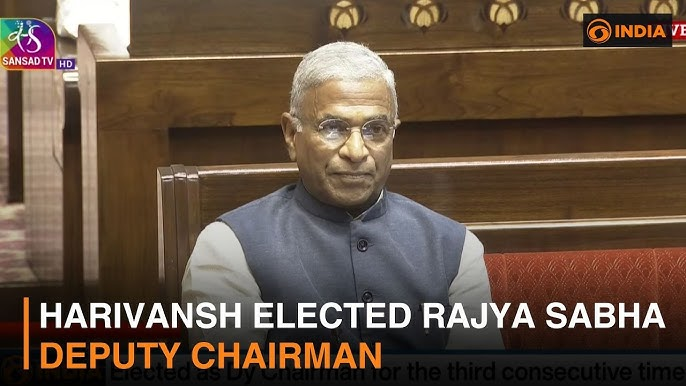
Context: Harivansh was elected unopposed for a third term as Deputy Chairman, marking a historic development.
About Deputy Chairman
- Constitutional Position
- The Deputy Chairman is the second presiding authority of the Rajya Sabha.
- Functions as the acting Chairman in the absence of the Chairman.
- Holds an independent status, being accountable only to the Rajya Sabha.
- Election Process
- Elected by the Rajya Sabha itself from among its members.
- Requires a simple majority of members present and voting.
- The election is conducted under the Chairman’s authority.
- Oath and Status
- No separate oath is prescribed; MP oath suffices for the office.
- Continues to function as a member first, and presiding officer when required.
- Tenure and Vacancy
- Tenure is co-terminus with membership of the Rajya Sabha.
- Office is vacated if:
- Membership is lost,
- Resignation is submitted to Chairman,
- Removed by an effective majority.
- Any vacancy is filled through a fresh election by the House.
- Removal Procedure
- Removal requires a resolution passed by an effective majority.
- A 14-day notice is mandatory before moving the motion.
- The Deputy Chairman cannot preside during removal consideration.
- Roles and Functions
- Presides over proceedings in absence of the Chairman.
- Discharges duties when:
- Chairman’s office is vacant,
- Vice President acts as President.
- Ensures orderly conduct and smooth functioning of the House.
- May preside over a joint sitting in absence of Speaker and Deputy Speaker.
- Salary and Allowances
- Salary is determined by Parliament.
- Charged on the Consolidated Fund of India.
- Not subject to annual voting by Parliament.
Petroleum and Natural Gas Regulatory Board (PNGRB): Composition, Powers, LPG Pipeline Plans
Context: PNGRB is finalising bids for four LPG pipelines to enhance infrastructure and reduce road transport risks.
More in News
- Four LPG pipelines spanning about 2,500 km with ₹12,500 crore investment are under process.
- Part of a broader plan to eliminate bulk LPG transport by road by 2030.
- Nine pipeline projects have been identified under suo motu initiative of PNGRB.
- Proposed routes include Cherlapally–Nagpur, Shikrapur–Goa, Paradip–Raipur, and Jhansi–Sitaraganj.
About PNGRB
- It is a statutory body established under the PNGRB Act, 2006.
- Functions under the Ministry of Petroleum and Natural Gas.
- Headquarters located in New Delhi.
- Objectives
- Protect interests of consumers and entities in petroleum sector.
- Promote competitive markets in petroleum and natural gas.
- Ensure adequate supply across all regions.
- Regulatory Scope
- Regulates refining, processing, storage, transportation and distribution.
- Covers petroleum products and natural gas, excluding production.
- Ensures uninterrupted supply of hydrocarbons.
- Composition
- Consists of Chairperson and members including one Legal member.
- Total strength includes 5 members (1 Chairperson + 4 members).
- Powers of PNGRB
- Adjudicates disputes between entities and stakeholders.
- Can conduct inquiry and investigation into violations.
- Ensures compliance with retail and marketing obligations.
- Orders are binding and enforceable like civil court decisions.
United Nations High Commissioner for Refugees (UNHCR)

About UNHCR
- UNHCR is the UN agency established in 1950 to assist displaced persons.
- Headquartered in Geneva, with presence in 137 countries.
- Established by the UN General Assembly for refugee protection.
- Guided by the 1951 Convention and 1967 Protocol forming international refugee law.
Refugee Definition and Core Principles
- Refugee is a person facing persecution risk outside their home country.
- Grounds include race, religion, nationality, political opinion, or social group.
- Principle of non-refoulement prohibits forced return to danger.
- Ensures rights to education, work, housing, and legal protection.
- Excludes persons involved in serious crimes.
- Refugees must follow host laws of the country.
Functions and Mandate of UNHCR
- Provides protection and aid to refugees globally.
- Promotes durable solutions like repatriation, resettlement, and asylum.
- Assists countries in designing refugee policies.
- Ensures adherence to international standards.
India and Refugee Framework
- India is not a signatory to the Convention or Protocol.
- Refugees governed under domestic laws (immigration framework).
- Has hosted groups like Tibetans, Rohingyas, Sri Lankan Tamils, and Afghans.
- Cooperates with UNHCR on humanitarian grounds.
Nationalisation of Banks
Meaning and Evolution
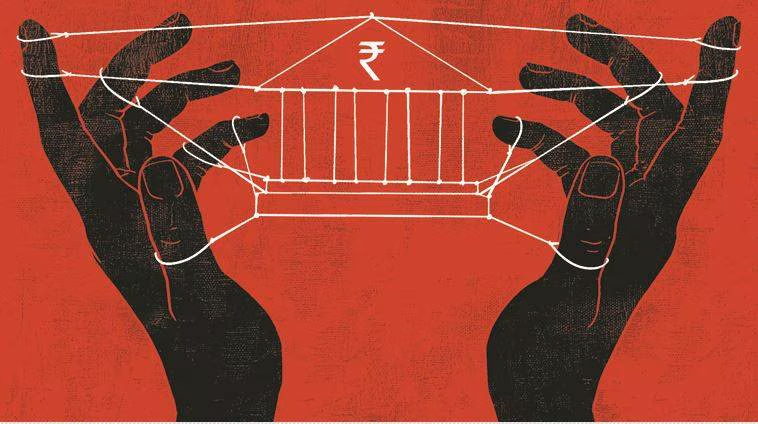
- Nationalisation refers to transfer of ownership control of private banks to government.
- Banks become public sector entities with government as majority shareholder.
- First step taken in 1955 through formation of State Bank of India.
- SBI created by merging Imperial Banks, marking partial nationalisation.
Phases of Nationalisation
- Phase I (1969): 14 banks with deposits above ₹50 crore nationalised.
- Phase II (1980): 6 banks with deposits above ₹200 crore nationalised.
- Carried out through Banking Companies Act (1969, 1980).
- Shifted banking from private control to state-led system.
Reasons for Nationalisation
- Needed for planned development aligned with Five-Year Plans.
- Agriculture received very low credit share, despite Green Revolution.
- Private banks focused on urban elites, neglecting rural areas.
- Rising credit inequality between industry and rural sectors.
- Economic shocks like wars and droughts required state intervention.
- Aimed to promote financial inclusion and reduce regional imbalance.
Outcomes and Significance
- Rapid expansion of banks in rural areas improving access.
- Significant rise in bank branches and deposit mobilisation.
- Introduction of priority sector lending for agriculture and MSMEs.
- Increased public trust and banking habits among citizens.
- Strengthened role of banking in economic development and welfare.
