

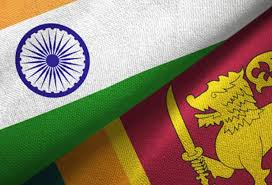
Context: The recent visit of India’s Vice-President to Sri Lanka highlights a renewed push towards diaspora engagement, development cooperation, and strategic alignment under the Neighbourhood First policy.
Key Highlights of the Visit
- Diaspora engagement deepened: Extension of OCI eligibility up to the 6th generation of Indian-origin Tamils strengthens long-term cultural and identity linkages.
- Diaspora as a strategic bridge: Indian-origin communities act as connectors for education, mobility, and economic integration, reinforcing soft power.
- Welfare-oriented development approach: Initiatives such as housing projects and education support for estate Tamils reflect India’s people-centric diplomacy.
- Targeted development cooperation: Infrastructure support, including healthcare facilities and post-disaster assistance, enhances India’s credibility as a reliable partner.
- Reinforcing first responder role: India’s assistance during Sri Lanka’s 2022 economic crisis and disasters strengthens its image as a net security provider in the IOR.
Historical Foundations
- Ancient connect: Shared Buddhist heritage and Ashokan missions laid the foundation for cultural and civilisational ties.
- Colonial legacy and migration: Movement of Indian-origin Tamils created enduring demographic and socio-political linkages.
- Post-independence complexities: Agreements like the Sirima-Shastri Pact (1964) attempted to resolve citizenship issues.
- Conflict phase engagement: India’s involvement through the Indo-Sri Lanka Accord (1987) and IPKF reflects security concerns.
Present Status: Multi-Dimensional Engagement
- Political relations: Regular high-level interactions indicate institutionalised diplomatic engagement.
- Economic partnership: Bilateral trade of about USD 5.5 billion, with India as a key investor and trading partner.
- Development cooperation: Over USD 7 billion in assistance, focusing on infrastructure, housing, and social sectors.
- Connectivity expansion: Initiatives in ferry services, UPI integration, and energy connectivity enhance integration.
Key Areas of Cooperation
- Economic integration: India-Sri Lanka Free Trade Agreement (ISFTA) operational since 2000, with ongoing negotiations for Economic and Technology Cooperation Agreement (ETCA) to deepen economic ties.
- Development partnership: Projects such as housing, railways, and renewable energy reflect a focus on inclusive growth.
- Strategic and defence cooperation: Joint exercises like SLINEX and Mitra Shakti, along with maritime security collaboration.
- Connectivity initiatives: Expansion of energy grids, pipelines, and transport networks to enhance regional integration.
- Cultural diplomacy: Shared heritage, scholarships, and capacity-building programmes strengthen people-to-people ties.
Key Challenges in the Relationship
- Fishermen dispute: Recurring arrests and ecological concerns due to bottom trawling in the Palk Strait.
- Tamil issue sensitivity: Implementation of the 13th Amendment and political reconciliation remains unresolved.
- Strategic competition: Growing Chinese presence (e.g., Hambantota Port) raises concerns about geopolitical influence in Indian Ocean Region (IOR).
- Economic fragility of Sri Lanka: Debt crisis impacts bilateral stability and project sustainability.
- Trade imbalance concerns: India’s trade surplus creates perceptions of asymmetric economic gains.
Way Forward
- Economic integration with sensitivity: Conclude ETCA while addressing concerns of equitable benefits.
- Resolving fishermen dispute: Promote deep-sea fishing and institutional dialogue mechanisms.
- Strengthening connectivity: Accelerate projects in energy, maritime, and digital sectors.
- Enhancing strategic cooperation: Expand maritime collaboration through platforms like the Colombo Security Conclave.
- Addressing Tamil concerns: Support inclusive reconciliation while continuing development assistance in affected regions.
- Countering external influence: Offer transparent, sustainable alternatives to external investments.
Conclusion
- India-Sri Lanka relations are increasingly shaped by a mix of historical ties, developmental cooperation, and strategic considerations. Sustaining this partnership will require balancing regional security interests with sensitivity to local concerns and equitable growth.
