

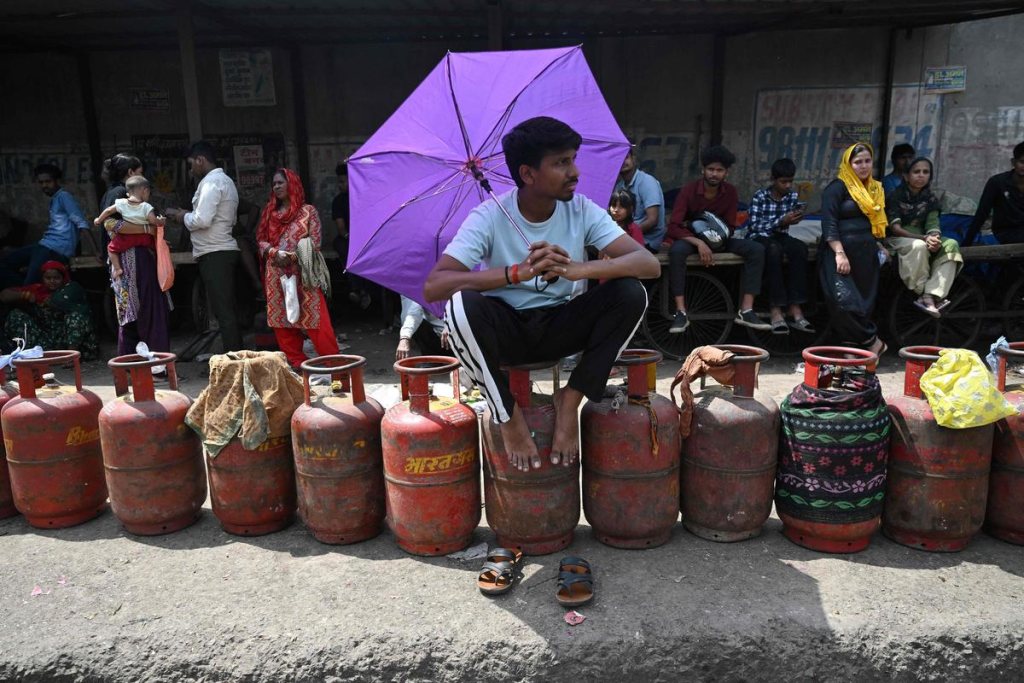
Context: India’s LPG sector reflects a structural mismatch between domestic production and rising household consumption, making it a critical concern for long-term energy security.
India’s Dependence on LPG Imports
- High import reliance: Domestic production meets only about 40% of demand, with nearly 60% fulfilled through imports.
- Rising consumption levels: Total LPG demand has expanded significantly, reaching nearly 2.5 times domestic production capacity.
- Household-centric usage pattern: LPG is primarily used for domestic cooking, with commercial use accounting for a marginal share.
- Inelastic demand structure: Consumption is largely non-substitutable in the short run, making dependence more critical.
Exposure of India Toward Risks
- Geographical concentration of imports: Around 90% of LPG imports pass through the Strait of Hormuz, creating a single-point vulnerability.
- Geopolitical sensitivity: Disruptions in West Asia can directly affect household fuel availability.
- Limited flexibility in sourcing: Global LPG supply is constrained and pre-committed, reducing India’s ability to diversify quickly.
- Household dependency risk: Since LPG is essential for cooking, supply shocks have immediate socio-economic implications.
Associated Challenges
- Inadequate strategic reserves: Deep storage capacity remains extremely limited, covering only about 1.5 days of national demand.
- Lack of energy diversification: Alternatives such as electricity and PNG are not uniformly accessible across regions.
- Asymmetric dependence: Essential household consumption is heavily dependent on externally sourced fuel.
- Supply-demand rigidity: While supply is vulnerable to disruptions, demand remains rigid and non-adjustable.
- Competing sectoral demand: Domestic LPG is also used in petrochemicals, creating allocation pressures.
Policy Changes Required
- Prioritisation of domestic LPG for households: Domestic production and refinery outputs should be reserved primarily for cooking needs.
- Segregation of industrial demand: Petrochemical sectors should rely on separate import channels, reducing pressure on domestic supply.
- Expansion of strategic storage: Develop reserves covering at least 2-3 weeks of national demand to enhance resilience.
- Diversification of household energy mix: Promote electric cooking and PNG infrastructure to reduce overdependence on LPG.
- Long-term demand rationalisation: Encourage a shift towards multi-fuel usage patterns at the household level.
ConclusionIndia’s LPG challenge is not a temporary imbalance but a structural vulnerability rooted in high dependence and limited flexibility. Ensuring energy security will require a shift towards diversification, strategic buffering, and resilient system design.
