

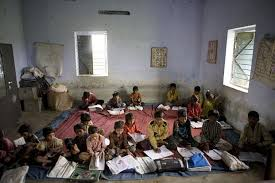
Context: Despite policy focus and improved enrolment, India continues to face a learning crisis marked by poor foundational literacy and numeracy (FLN), with limited urgency at the ground level.
Understanding the Core Issue
- Salience deficit: Reforms succeed not just through policy or funding, but when stakeholders recognise learning as a priority requiring immediate action.
- Policy-practice gap: Even with initiatives like NEP 2020 and NIPUN Bharat, field-level urgency remains weak.
- Vietnam example: Improved outcomes were driven by a shared societal commitment thus learning improved because the system “wanted to improve”.
- Thus, the crisis is not of intent, but of collective prioritisation.
Why the Crisis Remains Invisible
- Intangible nature of learning: Unlike visible deficits, poor learning is difficult to observe and often misunderstood.
- Illusion of progress: Activities like copying from the board create a false sense of learning achievement.
- Low awareness of FLN concepts: Concepts such as oral reading fluency are not widely understood among stakeholders.
Structural Factors Weakening Accountability
- Power asymmetry: Children and parents lack voice, while teachers and administrators hold greater institutional authority.
- Weak local accountability: School management structures have limited influence over teaching quality and outcomes.
- Middle-class exit: Reduced engagement of middle-class families weakens bottom-up pressure for quality education.
- Thus, the accountability remains top-down rather than community-driven.
Deeper Systemic Challenges
- Underestimation of crisis scale: Even improvements mask the reality that a significant proportion of children still cannot read basic texts.
- Misplaced responsibility perception: Learning is often attributed to child or family factors rather than systemic design.
- Institutional discomfort: Acknowledging failure in learning outcomes is politically and administratively difficult to accept.
- Policy fatigue and fatalism: Long-standing issues create a belief that change is difficult or unlikely.
Way Forward
- Make learning visible: Conduct local assessments so that gaps become tangible and undeniable for stakeholders.
- Strengthen community engagement: Empower parents and local bodies to demand accountability in learning outcomes.
- Adopt proven pedagogical models: Approaches like Teaching at the Right Level and structured pedagogy have shown scalable success.
- Shift focus from inputs to outcomes: Move beyond infrastructure to prioritise actual learning achievements.
- Build system-level accountability: Ensure that administrators and teachers are aligned towards measurable learning goals.
Conclusion
- India’s learning crisis is not due to lack of policy or resources, but due to a lack of urgency and collective ownership. Transforming education outcomes will require making learning visible, measurable, and non-negotiable at every level of the system.
