

State Legislative Council – Constitutional Provisions (Articles 169, 171, 172), Composition, Powers
Context: Election Commission announced MLC elections in Maharashtra for nine seats to be held on May 12.
About Legislative Council
- Constitutional Framework
- Legislative Council is governed by Articles 169, 171, 172 of the Constitution.
- Parliament can create/abolish Council based on State Assembly resolution.
- Resolution requires special majority in Assembly, but is not binding on Parliament.
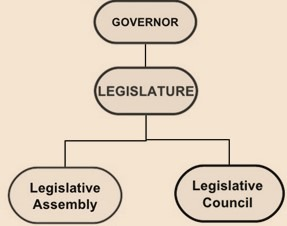
- It is the Upper House of State Legislature (bicameral states only).
- Composition
- Maximum strength is 1/3rd of Assembly, minimum is 40 members.
- Members elect Chairman and Deputy Chairman from among themselves.
- Ensures representation of diverse sections like teachers, graduates, and experts.
- Manner of Election
- Members are indirectly elected or nominated.
- 1/3rd elected by local bodies like municipalities and district boards.
- 1/3rd elected by MLAs from non-members of Assembly.
- 1/12th elected by graduates with minimum three years’ standing.
- 1/12th elected by teachers with three years’ experience.
- 1/6th nominated by Governor for expertise in specific fields.
- Eligibility
- Must be a citizen of India.
- Minimum age required is 30 years.
- Must be an elector in State.
- Additional qualifications prescribed under law (RPA, 1951).
- Tenure
- Tenure of members is 6 years.
- 1/3rd members retire every two years ensuring continuity.
Powers of Legislative Council
- Legislative Powers
- Can introduce and discuss ordinary bills, but Assembly has final say.
- Can delay bills up to 4 months, not permanently block them.
- Financial Powers
- Cannot introduce Money Bills.
- Can only give recommendations, must return within 14 days.
- Executive Control
- Cannot pass no-confidence motion against government.
- Can discuss policies and hold limited accountability.
- Other Powers
- Participates in discussion of budget and reports.
- Does not participate in President or Rajya Sabha elections.
Niyamgiri Hills – Ecological Significance, Dongria Kondh PVTG, Bauxite Mining Controversy
Location and Geography
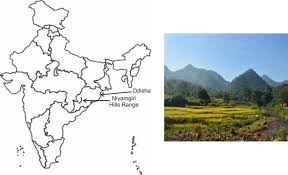
- Niyamgiri Hills are located in Odisha, mainly in Kalahandi and Rayagada districts.
- They form part of the Eastern Ghats mountain range.
- Ecological Features
- Region is rich in biodiversity, including dense forests and rare species.
- Presence of medicinal plants enhances ecological value.
- Plays a key role in maintaining regional ecology and climate balance.
- Hydrological Importance
- Acts as a source for rivers like Vamsadhara and Nagavali.
- Functions as an important water catchment area in the region.
- Tribal and Cultural Significance
- Inhabited by Dongria Kondh, a Particularly Vulnerable Tribal Group (PVTG).
- Hills are considered sacred landscape by the tribe.
- Worship of Niyam Raja (supreme deity) is central to their belief system.
- Economic and Environmental Aspects
- Contains significant bauxite deposits, making it economically important.
- Supports traditional livelihoods like podu cultivation, hunting, and gathering.
- Recognised as an ecologically sensitive zone, requiring conservation focus.
About Dongria Kondh Tribe
- Identity and Classification
- Dongria Kondh are an indigenous tribe, classified as a Particularly Vulnerable Tribal Group (PVTG).
- Known for strong environmental stewardship and resistance to bauxite mining.
- Habitat and Distribution
- Inhabit Niyamgiri Hills across Rayagada and Kalahandi districts of Odisha.
- Live in scattered hamlets within forested hill terrain.
- Region is both ecologically rich and spiritually sacred.
- Language and Script
- Speak Kui language, belonging to the Dravidian family.
- Kui is primarily an oral language with no independent script.
- Sometimes written using the Odia script.
- Livelihood and Practices
- Practice podu cultivation (shifting agriculture).
- Grow crops like millets, turmeric, and pineapples.
- Depend on forests for subsistence and resources.
Zambia – Geography, Neighboring Countries, Zambezi River, Victoria Falls
Location and Boundaries
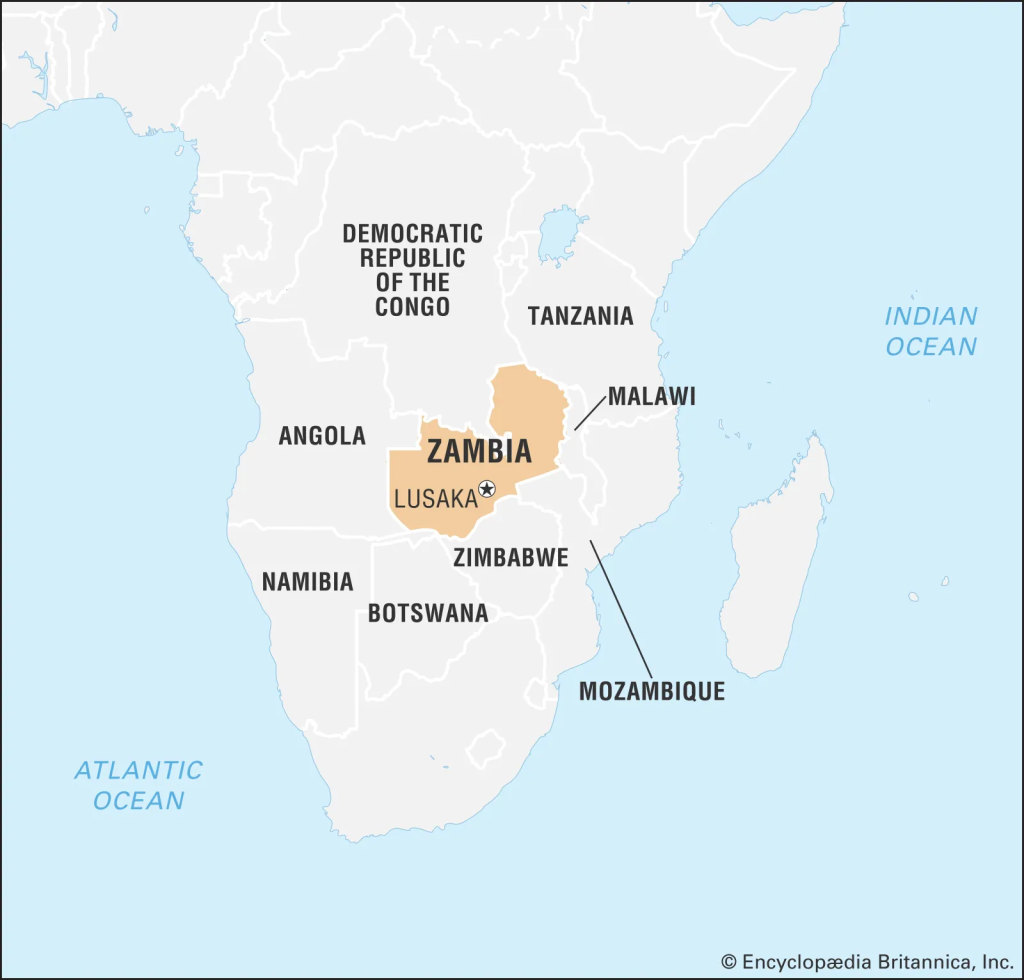
- Zambia is a landlocked country located in Africa.
- Lies between the Equator and Tropic of Capricorn in Southern Hemisphere.
- Located in the Eastern Hemisphere longitudinally.
- Capital city is Lusaka.
- Languages include English, Nyanja, Bemba.
Neighbouring Countries
- Zambia shares borders with eight countries.
- North → DR Congo, Tanzania
- East → Malawi, Mozambique
- South → Zimbabwe, Botswana
- West → Namibia, Angola
Valleys and Landforms
- Zambezi Valley (south): Lower altitude, rich wildlife.
- Luangwa Valley (east): Biodiversity hotspot shaped by river erosion.
Rivers and Lakes
- Zambezi River: Largest river, originates in Zambia.
- Victoria Falls located on Zambezi (border with Zimbabwe).
- Kafue and Luangwa rivers important for hydropower and irrigation.
- Major lakes include Tanganyika, Bangweulu, Kariba.
- Lake Tanganyika is second deepest freshwater lake.
Carbon Border Adjustment Mechanism (CBAM) – EU Tariff, Carbon Leakage, Impact on India
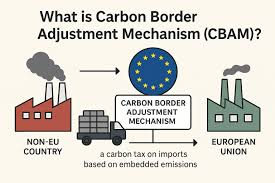
What is CBAM?
- CBAM is a EU tariff on carbon-intensive imports entering the European Union.
- It aims to prevent carbon leakage, i.e., shifting production to low-regulation countries.
- It ensures imported goods face equivalent carbon cost as EU-produced goods.
Objectives
- To assign a fair carbon price on imported goods.
- To encourage cleaner production practices in non-EU countries.
- To protect EU industries from unfair competition.
- To support EU’s climate goals and emission reduction commitments.
Key Features
- Applies to all imports into EU, including online goods and gifts.
- Designed to be WTO compatible, ensuring global trade compliance.
- Ensures carbon cost parity between domestic and imported goods.
- Carbon Certificates Mechanism
- Importers must purchase carbon certificates based on emissions.
- Certificate price linked to EU carbon market prices.
- Number of certificates depends on embedded emissions in goods.
- Importers must annually declare emissions and surrender certificates.
- If carbon price already paid abroad, deduction allowed.
- Countries with equivalent carbon pricing may avoid CBAM cost.
Implementation Timeline
- Transitional phase → 2023–2025 (only reporting obligations).
- Started from 1 October 2023.
- Full implementation from 2026, with financial obligations.
Sectoral Coverage
- Targets carbon-intensive sectors prone to leakage.
- Includes:
- Iron & steel (including downstream products)
- Cement
- Fertilisers
- Aluminium
- Electricity
- Hydrogen
Parkinson’s Disease – Pathophysiology, Symptoms, Risk Factors, and Treatment
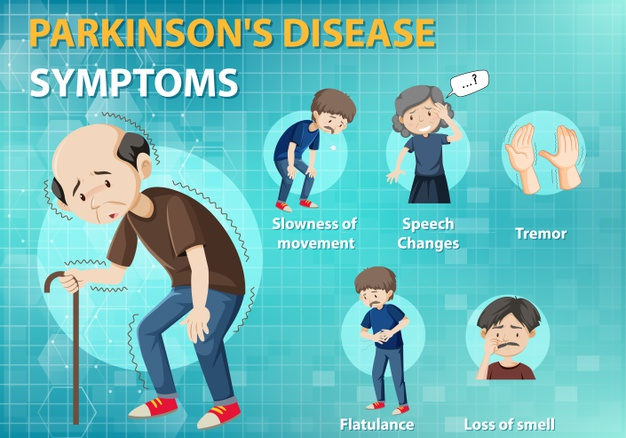
What is Parkinson’s Disease?
- Parkinson’s Disease is a degenerative disorder of the nervous system.
- It primarily affects movement control and worsens over time.
- Classified as a progressive disease, meaning symptoms gradually intensify.
Pathophysiology
- Caused by loss of dopaminergic neurons in the brain.
- Leads to reduced levels of dopamine neurotransmitter.
- Affected neurons contain abnormal protein aggregates called Lewy bodies.
- Major protein involved is SNCA (alpha-synuclein).
Causes and Risk Factors
- Exact cause remains unknown.
- Higher risk in individuals with family history.
- Environmental exposure to pollution, pesticides, solvents may increase risk.
- More common in older age group.
- Occurs more frequently in men than women.
Symptoms
- Characterised by tremors, rigidity, and slow movement.
- Includes involuntary movements and reduced motor coordination.
- Non-motor symptoms include dementia, sleep disorders, and cognitive impairment.
- Symptoms usually begin on one side of the body.
- Eventually affects both sides, though asymmetry may persist.
Key Features
- Parkinson’s is not contagious.
- Currently, there is no cure, only symptomatic management.
- Disease progression leads to increasing disability over time.
Halman Apricot – Ladakh’s Premium Variety, Horticulture, Export Potential
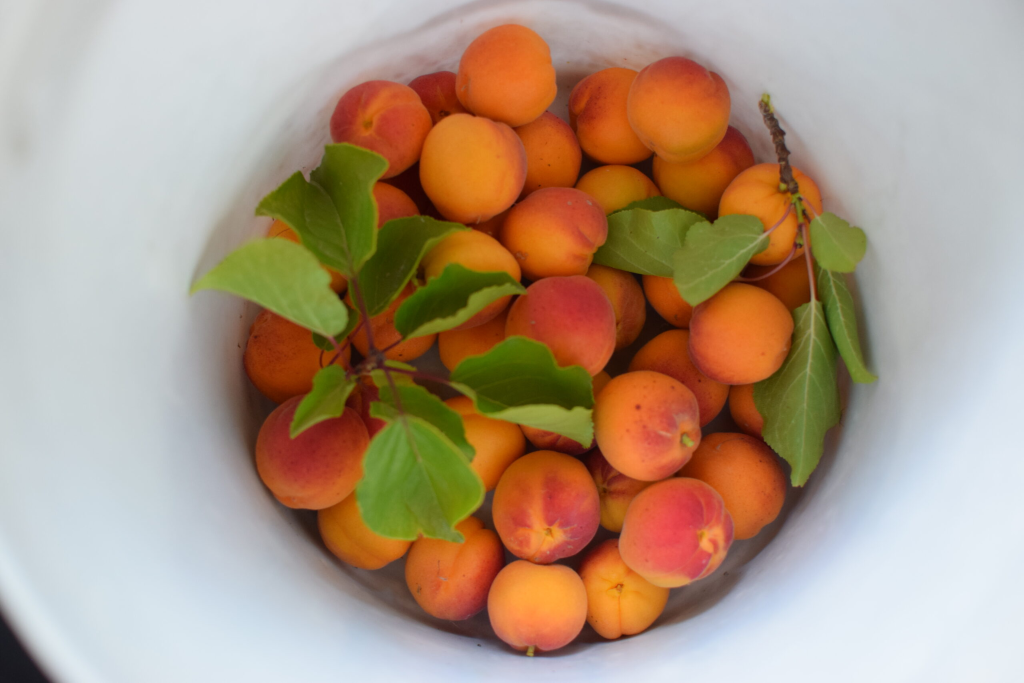
Context: Ladakh signed an MoU to export Halman apricots to global markets, boosting horticulture and value addition.
About Halman Apricot
- Halman is a premium variety of apricot (Prunus armeniaca).
- Found mainly in Ladakh region, especially western (Sham) areas.
- Considered among the finest apricots globally due to quality and taste.
- Origin and Distribution
- Introduced over a century ago from China or Central Asia.
- Widely grown in villages like Dha-Hanu, Garkhon, Skurbuchan, Khaltse.
- Particularly abundant in Sham region of Ladakh.
- Economic and Cultural Importance
- Integral to Ladakhi agriculture and rural livelihoods.
- Used in local cuisine, traditional medicine, and festivals.
- Provides opportunities for export, value addition, and income generation.
- Nutritional Value
- Rich in Vitamin C and E.
- Contains essential minerals like potassium, magnesium, iron.
- Good source of dietary fiber and antioxidants.
