

Context
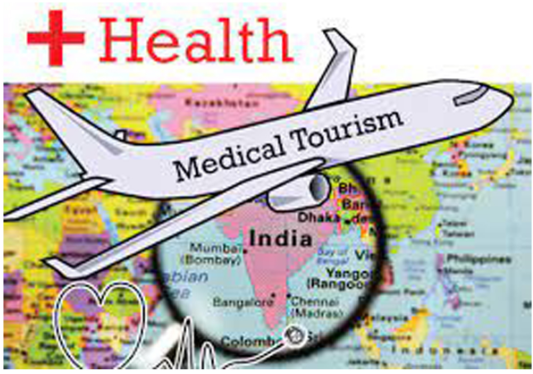
- Medical tourism refers to travelling to another country for treatment or health services. India has emerged as a major destination, with the sector valued at around $9 billion and attracting about 6.6 lakh patients in 2023 (≈ 33% growth).
Drivers of Growth
- Affordable treatment: Procedures in India cost significantly less than in Western countries.
- Quality healthcare: Presence of accredited hospitals and skilled doctors across major cities like Delhi, Mumbai, Chennai, Bengaluru, and Hyderabad.
- Advanced technology: Availability of modern facilities in fields like cardiology, oncology and orthopedics.
- Short waiting time: Faster access to treatment compared to many developed countries.
- Policy support: Government initiatives such as medical visas and international promotion have boosted the sector.
Significance for India
- Economic benefits: Generates revenue and supports allied sectors like hospitality and transport.
- Better infrastructure: Investments in hospitals improve facilities for both foreign and domestic patients.
- Global image: Strengthens India’s position as a healthcare hub.
- Technological progress: Encourages adoption of advanced medical practices.
- Human resource development: Enhances skills of healthcare professionals through global exposure.
- Soft power: Promotes cultural exchange and goodwill, strengthening international relations.
Challenges
- Global competition: Countries like Thailand, Malaysia and Singapore offer strong alternatives.
- Insurance gaps: Limited insurance coverage reduces affordability for many patients.
- Unregulated intermediaries: Presence of unorganised facilitators leads to exploitation of patients.
- Weak regulatory framework: Lack of comprehensive regulation affects quality assurance.
- Limited branding: Absence of a unified national campaign for Medical Value Travel (MVT).
- Accreditation issues: Lower global awareness of NABH compared to international standards like JCI.
Way Forward
- Strengthen regulation: Establish clear standards and oversight for facilitators and services.
- Promote India globally: Develop a strong national branding strategy for medical tourism.
- Enhance accreditation awareness: Increase global recognition of NABH standards.
- Expand insurance support: Improve coverage for international patients.
- Leverage AYUSH sector: Promote wellness tourism and alternative medicine, where India has a natural advantage.
- Integrated approach: Combine healthcare, tourism and policy support to build a holistic ecosystem.
Conclusion
- Medical tourism offers India a unique opportunity to combine economic growth with global healthcare leadership.
- With better regulation, branding and integration of traditional systems like AYUSH, India can further strengthen its position as a trusted and accessible healthcare destination.
