World Bank India Development Update – Key Findings, GDP Forecast, and External Shock

Context: The World Bank released the India Development Update Report and revised India’s FY27 GDP growth to 6.6% (from 7.2%) citing external shocks. It is a biannual publication analysing India’s growth trends, macroeconomic indicators, and risks.
Key Findings
- Growth Trends
- Growth moderated to 6.6% in FY27 due to external headwinds.
- Earlier estimate reflected strong FY26 performance and reform momentum.
- Drivers of Slowdown
- West Asia conflict disrupting global energy supply.
- Resultant rise in energy prices affecting: Consumption demand and Industrial output
- Sectoral Assessment
- Industrial growth projected at 7.5% (down from 8.8%).
- Manufacturing (electronics, automobiles) continues to support growth.
- Constraints:
- Elevated input costs
- Weak export demand from Gulf economies
- Services impacted by:
- Global slowdown (business services)
- Higher LPG costs (hospitality sector)
Qatar – Geography, Natural Gas Reserves, and India-Qatar Relations
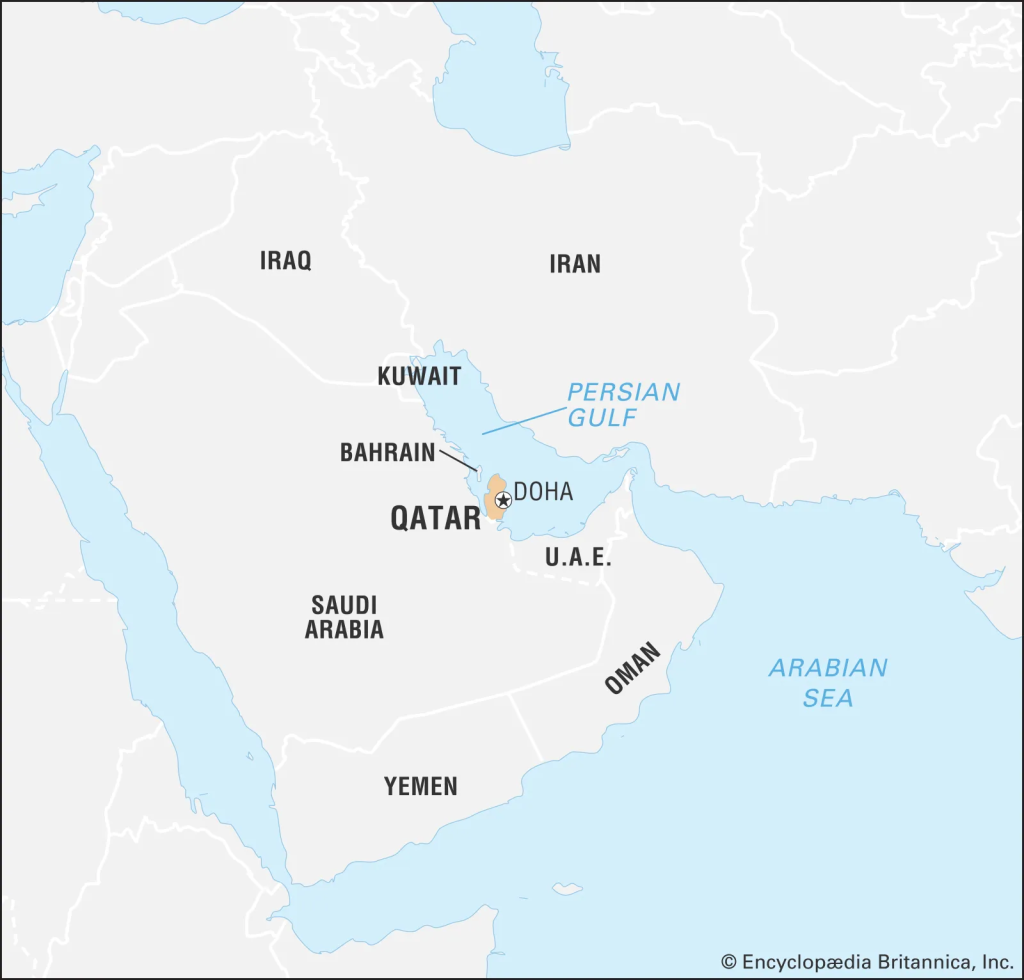
Context: Amid tensions in West Asia affecting global fuel supplies, India’s Petroleum Minister is visiting Qatar. India expressed concern over attacks in Doha and condemned the violation of Qatar’s sovereignty.
About Qatar
- Political Features
- Qatar is located in West Asia on the northeastern coast of the Arabian Peninsula.
- Capital: Doha.
- Bordering country: Saudi Arabia.
- Bordering water bodies: Persian Gulf and Gulf of Bahrain.
- Geographical Features
- Dominated by sand dunes and salt flats (Sabkhahs).
- Economic Feature
- Possesses the world’s third-largest natural gas reserves.
- Among the world’s largest exporters of natural gas.
Vinayak Damodar Savarkar – Role in Freedom Struggle, Writings, and Political Ideology
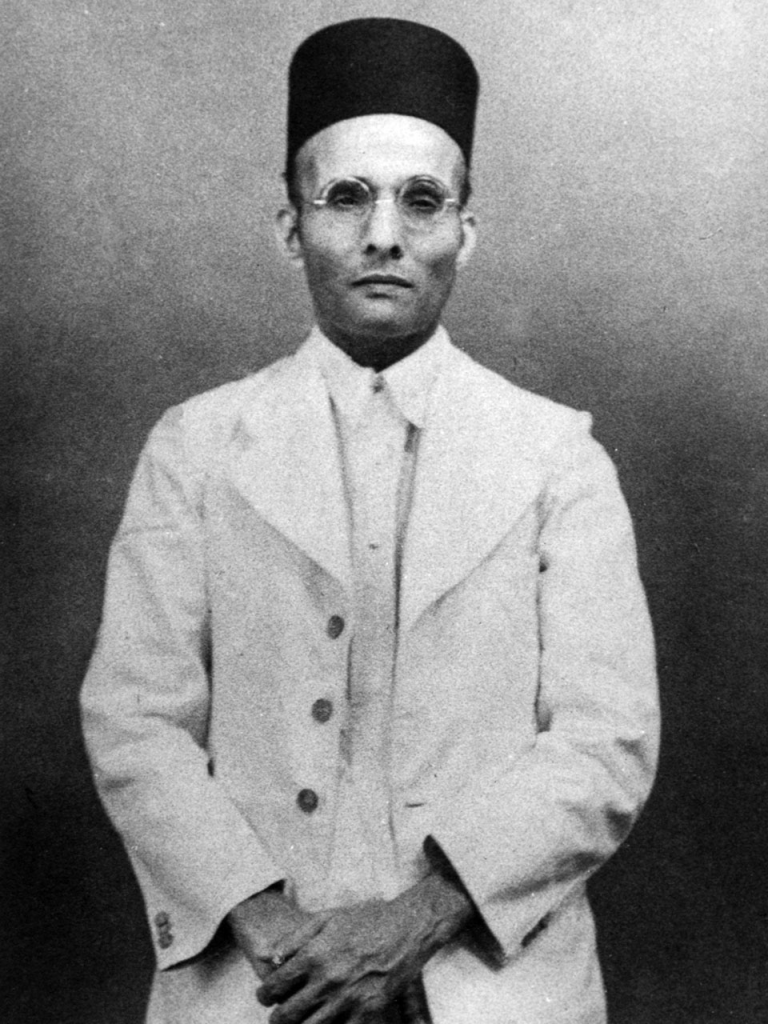
Context: A court testimony clarified that the title ‘Swatantryaveer’ was not conferred by any government on Vinayak Damodar Savarkar. It was attributed to a biography written by Sadashiv Ranade, and not through any official recognition.
About Vinayak Damodar Savarkar
- Born in 1883 near Nasik, Maharashtra.
- Popularly known as Veer Savarkar.
- Recognised as a freedom fighter.
- Role in Freedom Struggle
- Described the Revolt of 1857 as the First War of Independence.
- Stayed in London for studies for four years during British rule.
- Wrote several books and articles, some published under pseudonyms to avoid British attention.
- Organisations and Associations
- Founded: Abhinav Bharat Society and Free India Society
- Associated with India House.
- Served as President of Hindu Mahasabha (not its founder).
- Political Position: Opposed the Quit India Movement (1942), terming it as “Quit India but keep your army”.
- Authored:
- Joseph Mazzini – Biography and Politics
- The Indian War of Independence (on 1857 revolt)
Quantum Reference Facility – India’s Quantum Mission, Amaravati Valley, and Global Hubs
Context
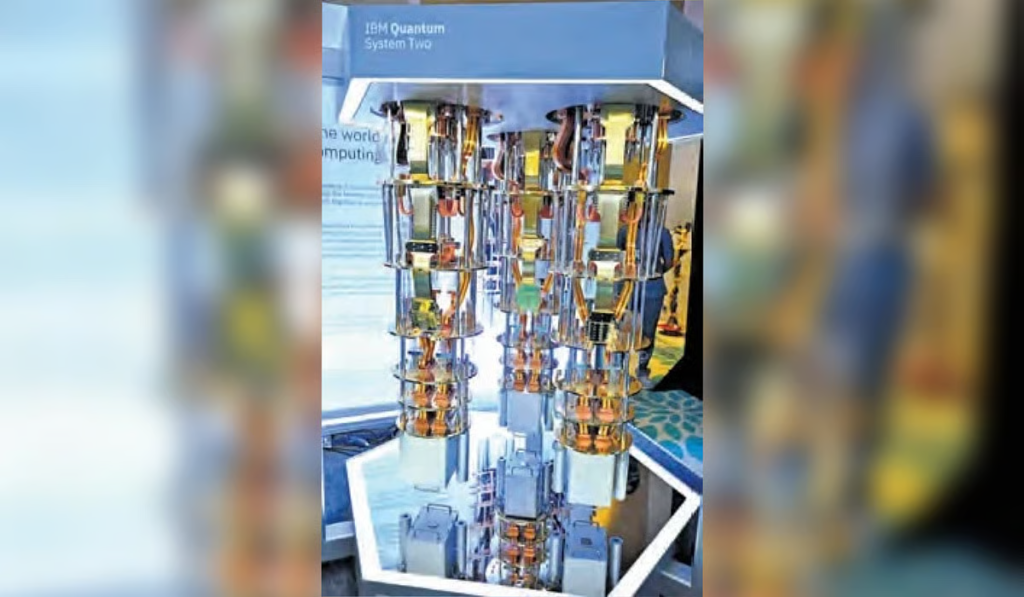
- India’s first Quantum Reference Facility (QRF) is set to be launched in Andhra Pradesh on April 14 (World Quantum Day). The facility is being developed under the Amaravati Quantum Valley programme at SRM University, A.P.
About Quantum Reference Facility
- The Quantum Reference Facility consists of quantum computing testing beds.
- It is designed to act as a reference system to test components of the quantum computing ecosystem.
- Institutional Ecosystem
- Around 50 researchers, scientists, and students are involved in building the ecosystem.
- Represents an effort to develop indigenous capabilities in quantum technologies.
Quantum Valley Project (Amaravati)
- Foundation stone laid at Uddandarayunipalem (Amaravati). It envisions Amaravati as a global hub for quantum technologies.
- Integrates: Industry, Academia, Government
- Scope includes:
- Quantum computing
- Quantum sensing
- Quantum materials
- Quantum communication
- Aims to match global hubs such as Boston, Singapore, and Shanghai.
Gaganyaan Mission – Crew Module Return, Aerobraking, Parachute System, and Landing Strategy
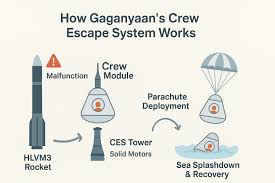
Context: India’s human spaceflight mission Gaganyaan involves safe return of astronauts from orbit. The crew module re-enters Earth’s atmosphere at ~7,800 m/s, requiring controlled reduction of speed for safe landing.
About Gaganyaan Return Mechanism
- Re-entry and Speed Reduction
- The module sheds most of its kinetic energy through atmospheric drag, a process called aerobraking.
- Aerobraking acts as the primary braking mechanism, significantly reducing velocity during re-entry.
- Multi-stage Parachute Deployment
- Once the module descends to about 12 km altitude, a multi-stage parachute system is deployed.
- Parachutes further reduce velocity for safe descent, but do not handle complete deceleration.
- The recovery system includes:
- Parachutes for descent control
- Locating devices for tracking landing site
- Orientation system to ensure proper positioning in sea
- For land landings, braking motors (retro-rockets) are used to reduce final impact velocity.
Why Parachutes Alone Are Not Sufficient
- Safe landing requires:
- 1–2 m/s on land
- 7–9 m/s in water (water absorbs impact energy)
- Reducing velocity below 2 m/s using parachutes alone is impractical.
- Due to inverse-square relationship between speed and drag area: Slowing from 7 m/s to 1 m/s requires a parachute ~49 times larger.
Landing Strategy: Sea vs Land
- Sea Landing (Preferred)
- Safer due to natural cushioning effect of water.
- Does not require large empty land areas.
- Requires:
- Recovery ships
- Flotation systems
- Specialised rescue operations
- Land Landing
- Requires vast, uninhabited areas.
- Allows faster crew recovery and module reuse.
- Needs retro-rockets for final braking.
- Why Landing Zone is Elliptical
- Landing is not a precise point but an elongated ellipse.
- At hypersonic speeds:
- Small variations in atmospheric density or velocity can cause large forward/backward deviations.
- Lateral movement is minimal due to low sideways energy.
- Hence, landing footprint is elongated along flight path.
Cuba – Geography, Resources, and Strategic Location
About Cuba
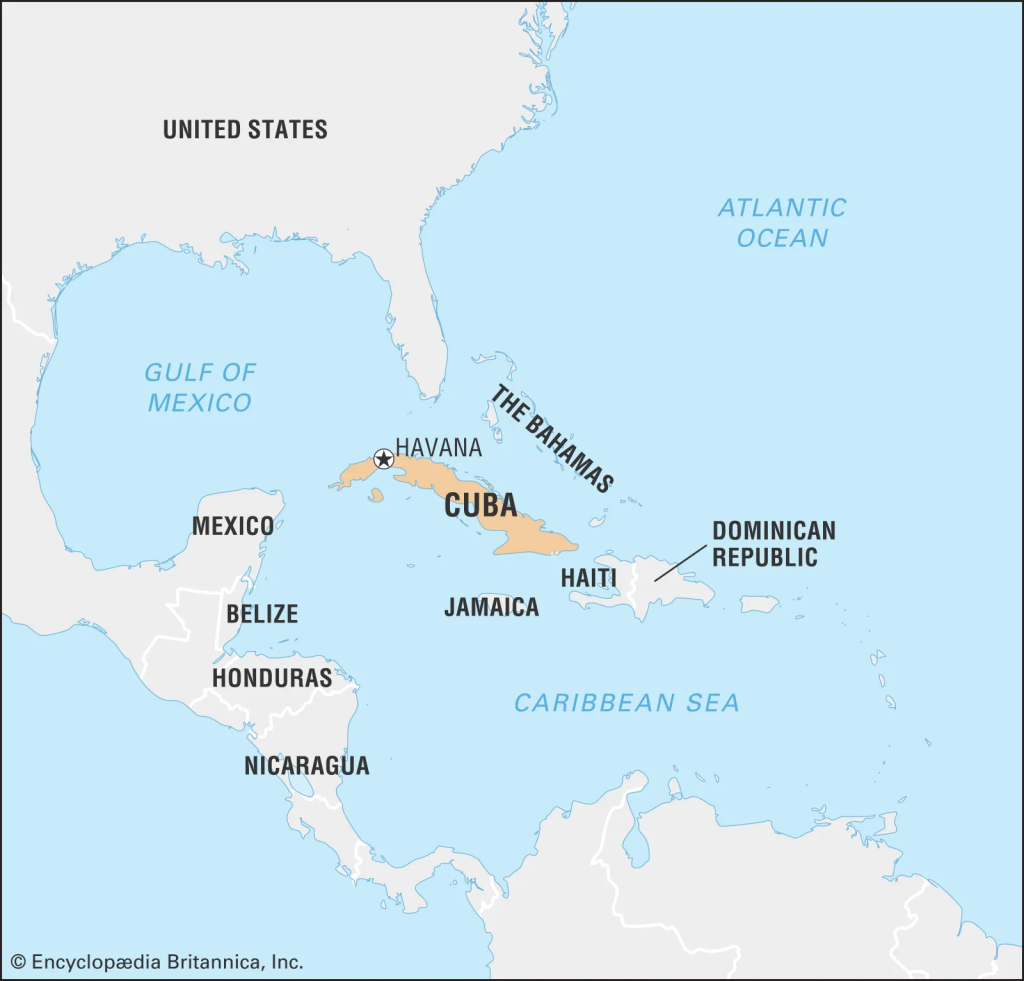
- Location: Cuba is situated at the confluence of the Caribbean Sea, Gulf of Mexico, and the Atlantic Ocean.
- Neighbouring Regions
- East: Hispaniola (Haiti and Dominican Republic).
- West: Yucatán Peninsula (Mexico).
- North: Florida (USA) and the Bahamas.
- South: Jamaica and Cayman Islands.
- Capital: The capital city of Cuba is Havana.
- Geographical Features
- Cauto is the longest river of Cuba.
- Toa is another important river of Cuba.
- Mineral Resources
- Cuba possesses significant reserves of nickel and cobalt.
- Cuba also has deposits of iron ore, copper, and petroleum.
- Climate
- Cuba experiences a tropical climate.
- The climate is seasonally humid.
- The climate is influenced by maritime conditions.
Privileges Committee – Constitutional Provisions (Article 105, 194), Functions, and Powers

Context: The Privileges Committee of the Maharashtra Legislature examined a breach of privilege case involving a public figure for alleged remarks against a Deputy Chief Minister.
About Privileges Committee
- The Privileges Committee is a specialised standing committee of the legislature.
- It functions as a quasi-judicial body.
- It safeguards the privileges (special rights and immunities) of the House and its members.
- It ensures that legislators can function without external interference or fear.
- Origin
- The concept originates from British Parliamentary conventions.
- These privileges evolved in medieval England to protect the legislature from the absolute authority of the Monarch.
- Constitutional Provisions
- Article 105 defines the powers, privileges, and immunities of Parliament and its members.
- Article 194 defines the same for State Legislatures and their members.
- Composition
- Lok Sabha: 15 members nominated by the Speaker.
- Rajya Sabha: 10 members nominated by the Chairman.
- State Legislatures: Usually 9–15 members (e.g., Maharashtra Legislative Council has 9 members).
- Key Functions
- The committee examines breach of privilege cases referred by the House or Presiding Officer.
- It has the power to summon individuals, record evidence, and call for documents.
- It determines whether a breach of privilege or contempt has occurred.
- It submits a report with recommendations to the House.
Active Pharmaceutical Ingredients (APIs) – Definition, Importance, and India’s Pharma Sector

Basic Overview
- APIs are the active components in a pharmaceutical drug that produce the intended therapeutic effect in the body.
- They interact with specific receptors or target molecules to generate the required physiological response.
- APIs are the core functional part of any medicine.
- APIs are produced through the processing of chemical compounds.
Composition of Drugs
- Every drug consists of two main components:
- Active Pharmaceutical Ingredient (API) → Provides therapeutic action.
- Excipients → Support delivery and effectiveness of the drug.
International Atomic Energy Agency (IAEA)

Context: International Atomic Energy Agency inspectors have begun work at key nuclear sites in Bushehr (Iran).
About IAEA
- The IAEA was established in 1957.
- It is the world’s central intergovernmental forum for scientific and technical cooperation in the nuclear field.
- The Agency promotes safe, secure, and peaceful use of nuclear science and technology.
- The IAEA has two main policy-making organs:
- General Conference → Comprising all Member States
- Board of Governors → 35-member executive body
- The headquarters of IAEA is located in Vienna, Austria.
- The IAEA was awarded the Nobel Peace Prize in 2005.
Thitu Island and Spratly Islands – South China Sea Disputes and Strategic Importance

Context: Thitu Island, located in the South China Sea, is strategically important due to competing territorial claims in the Spratly Islands region.
About Thitu Island
- Thitu Island (also known as Pag-asa Island) is situated in the South China Sea.
- It forms part of the Spratly Islands archipelago.
- Thitu Island is the second-largest naturally occurring island in the Spratly group.
- It is the largest among the nine islands occupied by the Philippines.
About Spratly Islands
- The Spratly Islands consist of more than 100 small islands and reefs.
- They are claimed by:
- China, Taiwan, and Vietnam (entire claim)
- Malaysia and the Philippines (partial claims)
RBI Exchange Rate Policy – Managed Float, Intervention Mechanisms, and Rupee Volatility
Context: Reserve Bank of India received positive remarks from World Bank officials regarding its management of the rupee’s exchange rate. The appreciation comes amid global economic uncertainties and currency volatility.
More in News
- RBI’s approach was described as consistent and pragmatic, helping India withstand external shocks.
- The rupee experienced fluctuations between ₹90–95 per US dollar, influenced by global geopolitical tensions.
- RBI intervened through foreign exchange market operations to stabilise excessive volatility.
About RBI’s Exchange Rate Policy
- Nature of Policy
- RBI follows a managed float exchange rate system.
- It does not target a specific exchange rate level.
- The focus is on reducing excessive volatility and disorderly movements.
- Mechanism of Intervention
- RBI intervenes by:
- Buying or selling foreign currency (mainly US dollars)
- Operating in spot and forward markets
- Objective is to:
- Smoothen sharp fluctuations
- Prevent speculative pressures
- RBI intervenes by:
External Factors Affecting Rupee
- Geopolitical tensions (e.g., West Asia conflict) influencing global markets
- Foreign investor outflows impacting currency stability
- Global energy prices affecting trade balance
- US economic conditions and dollar strength