

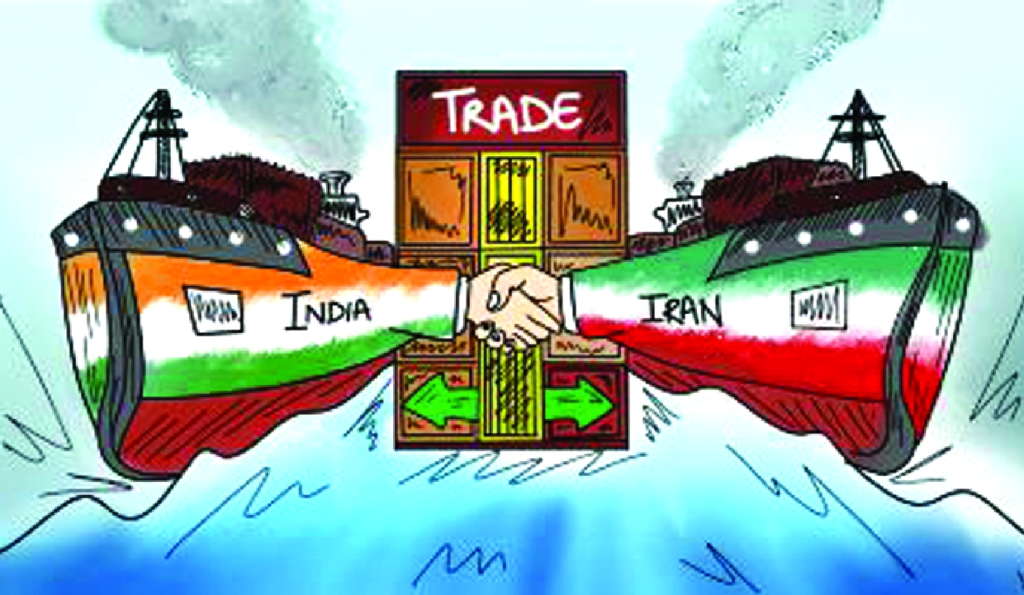
Context: The expiry of the U.S. sanctions waiver on Chabahar Port has placed India at a critical juncture, thus forcing a choice between compliance with U.S. sanctions or continuation of its strategic connectivity project with Iran.
Strategic Importance of Chabahar Port
- Chabahar enables India to bypass Pakistan, ensuring direct access to landlocked regions.
- It is linked with projects like the Zaranj–Delaram highway and INSTC, enhancing regional trade integration.
- The port acts as a counterweight to China’s Gwadar Port in Pakistan.
- India has committed over $600 million, including operational and infrastructure development.
- Thus, Chabahar is not just a port, but a strategic pillar of India’s regional outreach.
U.S. Sanctions and India’s Policy Constraints
- U.S. sanctions on Iran are unilateral, yet have global impact due to financial and trade dominance.
- Waiver mechanism: Temporary exemptions (e.g., 2018, 2025–26) allowed India limited operations, now withdrawn.
- Pattern of pressure: India has earlier been compelled to reduce or stop imports of Iranian, Venezuelan, and Russian oil.
- Current dilemma:
- If India continues the engagement then risk sanctions and financial penalties
- If India withdraw → lose strategic investment and influence
Implications for India’s Strategic Autonomy
- Erosion of sovereign decision-making: Repeated compliance may weaken India’s ability to pursue an independent foreign policy.
- Connectivity setback: Abandoning Chabahar would disrupt India’s access to Central Asia and Afghanistan.
- Credibility concerns: Frequent “start-stop” engagement reduces India’s reliability as a long-term partner.
- Precedent for future pressure: U.S. demands may extend to BRICS, trade partnerships, and geopolitical alignments.
Way Forward: Recalibrating India’s Foreign Policy
- Adopt calibrated autonomy: Balance relations with the U.S. while safeguarding core strategic interests.
- Diversify partnerships: Strengthen ties with Global South, Central Asia, and multilateral groupings.
- Develop alternative financial channels: Reduce dependence on dollar-based systems through local currency trade and new payment mechanisms.
- Continue strategic engagement with Iran: Explore options like temporary stake transfer without abandoning long-term presence.
- Strengthen domestic resilience: Reduce vulnerability through energy security and economic self-reliance.
Conclusion
- The Chabahar issue represents a turning point in India’s foreign policy, testing its ability to balance strategic partnerships with sovereign autonomy. Thus, sustaining an independent global role will require India to move from reactive compliance to confident, interest-driven diplomacy.
