

Article 21 & Right to Safe Travel

Context: Supreme Court held that safe travel on highways is part of Right to Life (Article 21). It highlighted that road safety is a constitutional obligation of the State. The court issued directions on regulated parking, removal of hazards, and highway safety norms.
Article 21
- States that no person shall be deprived of life or personal liberty except by procedure established by law.
- Applicable to citizens as well as non-citizens.
- Forms the heart of Fundamental Rights framework.
- Expanding Scope of Article 21
- Initially narrow (procedural) → now broad and substantive.
- Interpreted to include dignity, safety, and quality of life.
- Courts transformed it into a dynamic and evolving right.
Rights Derived from Article 21
- Personal Liberties
- Right to live with dignity
- Right to privacy
- Protection from custodial torture
- Socio-Economic Rights
- Right to livelihood, health, environment, shelter, education
- Criminal Justice Safeguards
- Right to speedy trial and legal aid
- Protection from arbitrary arrest and detention
- Recent Expansion: Right to safe travel and road safety
Landmark Judgements
- A.K. Gopalan (1950): Narrow interpretation of Article 21.
- Maneka Gandhi (1978): Procedure must be just, fair, reasonable.
- Francis Coralie Mullin (1981): Right to live with dignity.
- Olga Tellis (1985): Right to livelihood.
- Hussainara Khatoon (1979): Right to speedy trial.
- K.S. Puttaswamy (2017): Right to privacy.
- Common Cause (2018): Right to die with dignity.
Denotified, Nomadic & Semi-Nomadic Tribes (DNTs)

Context: Inclusion of DNTs in Census 2027 discussed during Social Justice Ministry’s Chintan Shivir. The demand was made for separate Census column and distinct classification for DNT communities.
Who are DNTs?
- Denotified Tribes (DNTs) were earlier labelled as “criminal tribes” under Criminal Tribes Act, 1871.
- Members had to register with authorities, failing which they were treated as offenders.
- After Independence, the Act was repealed in 1952, and these communities were “denotified”.
- Many of these groups were also nomadic or semi-nomadic in lifestyle.
- Types of Communities
- Denotified Tribes (DNTs): Removed from “criminal” classification post-1952.
- Nomadic Tribes (NTs): Move continuously for livelihood; no permanent settlement.
- Semi-Nomadic Tribes (SNTs): Partially settled but still migrate periodically.
- Socio-Economic Reality
- Among the most marginalised and neglected communities in India.
- Traditionally landless, dependent on forests, grazing lands, and informal occupations.
- Face poverty, stigma, and lack of access to welfare schemes.
- Continue to struggle with identity and recognition issues.
Committees & Institutional Efforts
- Renke Commission (2008)
- First major effort to identify and list DNT communities.
- National Commission for DNTs (NCDNT), 2014
- Chaired by Bhiku Ramji Idate.
- Mandate
- Prepare state-wise list of DNTs
- Suggest policy measures for their welfare
- Report submitted in 2018.
- Development & Welfare Board for DNTs (DWBDNC), 2019
- Focuses on implementation of welfare schemes.
- Works under Ministry of Social Justice & Empowerment.
Kwashiorkor & Marasmus

Kwashiorkor
- Kwashiorkor arises due to severe protein deficiency despite relatively adequate caloric intake.
- Commonly observed in children aged 1–3 years, particularly after early weaning.
- Clinical Features:
- Generalised oedema, especially in lower limbs and face.
- Fatty liver enlargement due to impaired lipid metabolism.
- Dermatosis with hyperpigmented, flaky skin (“flaky paint appearance”).
- Hair changes including depigmentation and sparse texture (“flag sign”).
- Associated with growth retardation, apathy, and immune suppression.
- Pathophysiology: Reduced protein intake leads to hypoalbuminaemia, causing fluid shift into interstitial spaces and resultant oedema.
Marasmus
- Marasmus results from severe deficiency of both protein and caloric intake, leading to extreme wasting.
- Typically affects infants and younger children deprived of adequate nutrition.
- Clinical Features:
- Marked emaciation with prominent bones and muscle wasting.
- Absence of oedema distinguishes it from Kwashiorkor.
- Dry, wrinkled skin due to loss of subcutaneous fat.
- Associated with growth failure, anaemia, and hypoglycaemia.
- Pathophysiology: Chronic energy deficiency induces catabolism of fat and muscle, leading to progressive wasting and reduced metabolic activity.
Kwashiorkor vs Marasmus
| Parameter | Kwashiorkor | Marasmus |
| Primary deficiency | Protein | Protein + Energy |
| Oedema | Present | Absent |
| Body weight | Moderately reduced | Severely reduced |
| Fat & muscle | Relatively preserved | Severely wasted |
| Liver | Fatty infiltration | Normal or reduced |
| Appetite | Poor | Often preserved |
| Age group | 1–3 years | Below 1 year |
Fossil Assemblage in Tamil Nadu
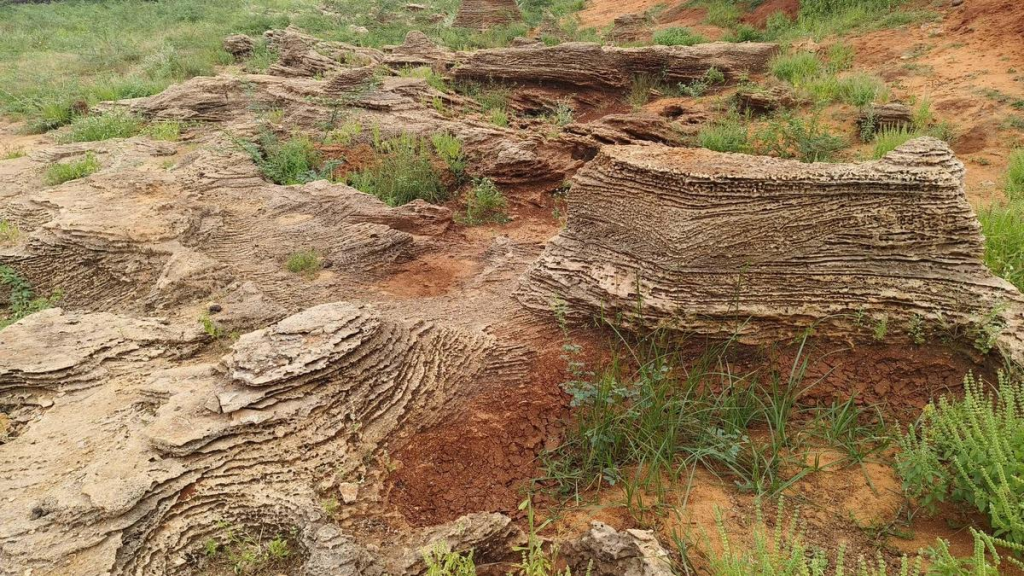
Context
- A fossil assemblage discovered at Panaiyur village, Thoothukudi district (Tamil Nadu) has been dated to the middle to late Holocene period (~8,000–12,000 years ago).
- The site was initially identified by a local archaeology enthusiast, prompting official scientific investigation.
More in News
- A scientific team from the Zoological Survey of India (ZSI) conducted a detailed paleontological assessment of the site.
- The study determined the age based on stratigraphic position, sedimentological features, fossilisation degree, and comparison with quaternary deposits.
- The fossil assemblage provides valuable evidence for understanding Holocene ecology, faunal diversity, and environmental conditions in South India.
Holocene Period
- The Holocene Epoch is the current geological epoch, beginning around 11,700 years ago after the last Ice Age.
- Characterised by climatic stability, human civilisation growth, and biodiversity expansion.
About Zoological Survey of India (ZSI)
- Established in 1916 as India’s premier institution for faunal research and exploration.
- Functions under the Ministry of Environment, Forest and Climate Change.
- Headquarters located in Kolkata.
- Key Functions:
- Conducts faunal surveys across India.
- Studies biodiversity in protected areas and ecosystems.
- Undertakes status assessment of endangered species.
- Publishes Fauna of India and carries out ecological impact studies.
Antivenom
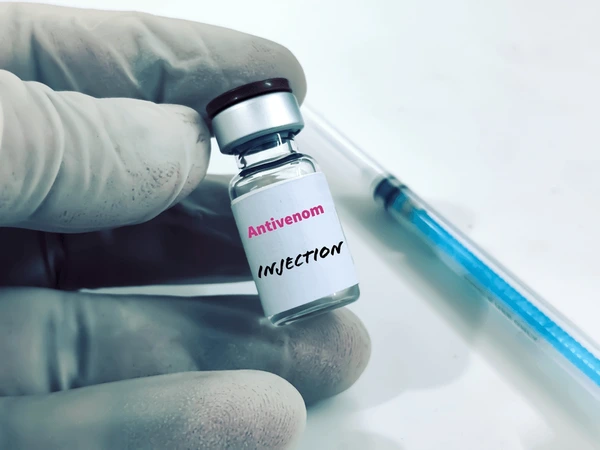
What is Antivenom?
- Antivenoms (antivenins) are biological medicines used to neutralise toxins from snake bites.
- They act as the primary and life-saving treatment in envenomation cases.
- Function by binding venom toxins, enabling safe removal by the body.
Nature of Snake Venom
- Snake venom is a complex mixture of toxic proteins and enzymes.
- Major Components:
- Haemotoxins → destroy blood cells and impair clotting.
- Neurotoxins → block nerve transmission, causing paralysis.
- Cytotoxins → damage tissues at bite site.
- Untreated envenomation can lead to organ failure and death.
Types of Antivenom
- Monovalent effective against a single snake species.
- Polyvalent Antivenom (PVA) targets multiple species.
- Widely used in India but limited efficacy for rare species.
Rupee Depreciation & Its Impact on Investments

Context
- The Indian Rupee has exhibited a persistent depreciation trend against the US Dollar, averaging 2.5–3% annually over the long term.
- In 2025–26, the rupee depreciated sharply from ₹85.53/$ to ~₹92–94/$, reflecting external and domestic pressures.
Causes of Rupee Depreciation
- Trade Deficit: India’s import dependence, particularly on crude oil, exerts downward pressure on the rupee.
- Capital Outflows: Withdrawal of investments by Foreign Portfolio Investors reduces demand for the domestic currency.
- Global Strength of US Dollar: Monetary tightening in advanced economies strengthens the dollar vis-à-vis emerging market currencies.
- Inflation Differential: Higher domestic inflation relative to global levels weakens currency competitiveness.
Macroeconomic Impact
- Imported Inflation
- Depreciation increases the landed cost of imports, especially crude oil.
- This leads to inflationary pressures within the domestic economy.
- Monetary Policy Implications
- Elevated inflation may compel the Reserve Bank of India to adopt a tighter monetary stance.
- This results in higher interest rates and moderation in economic growth.
Impact on Investments
- Equity Market
- Rupee depreciation has limited direct impact on domestic equities.
- However, it adversely affects market sentiment through:
- Foreign capital outflows
- Rising input costs (e.g., crude oil)
- Equity market movements remain multi-factorial in nature.
- Debt Market
- Debt instruments are highly sensitive to inflation dynamics.
- Depreciation-induced inflation leads to higher interest rates, resulting in a decline in bond prices.
- Gold as a Hedge
- Gold prices are denominated in US Dollars internationally.
- Rupee depreciation leads to higher domestic gold prices, enhancing returns.
- Gold acts as an effective hedge against inflation and currency risk.
- Global Investments
- Depreciation enhances returns from foreign investments due to currency conversion gains.
- Investments abroad through mutual funds, direct routes, or Liberalised Remittance Scheme (LRS) benefit from rupee weakness.
Impact on Individuals
- Domestic purchasing power declines due to inflationary pressures.
- Foreign expenditures (education, travel) become significantly costlier.
- Exchange rate fluctuations remain beyond individual control, necessitating prudent financial planning.
