

Anti-Defection Law

Overview
- The Anti-Defection Law provides for disqualification of elected representatives on grounds of defection.
- Incorporated through the 52nd Constitutional Amendment Act, 1985.
- Added as the Tenth Schedule of the Constitution.
- Objective: Ensure political stability and curb opportunistic party-switching.
- A member is liable for disqualification if:
- Voluntarily gives up party membership (formal resignation not necessary; inferred from conduct).
- Votes or abstains against party whip without prior permission.
- Exception: If condoned by party within 15 days.
- Independent member joins a political party after election.
- Nominated member joins a political party after 6 months of nomination.
Exceptions (Merger Provision)
- Defection is not applicable in case of a valid merger.
- Condition: At least 2/3rd of members of a legislative party must support the merger.
- 91st Constitutional Amendment Act, 2003 removed earlier provision of 1/3rd split.
Decision-Making Authority
- Decision on disqualification lies with the Speaker (Lok Sabha/State Assembly) or Chairman (Rajya Sabha).
- Their decision is subject to judicial review.
- No fixed time limit prescribed for decision thus it leads to delays.
Shanghai Cooperation Organisation (SCO)
Evolution
- The Shanghai Cooperation Organisation (SCO) is a Eurasian political, economic and security grouping, established in 2001 (Shanghai).
- It evolved from the Shanghai Five mechanism (1996) aimed at confidence-building and border stabilisation in post-Soviet space.
- China, Kazakhstan, Kyrgyzstan, Russia and Tajikistan
- Expansion with Uzbekistan (2001) transformed it into a multilateral regional organisation.
- India became a full member in 2017, marking its entry into Eurasian institutional frameworks.
Institutional Design
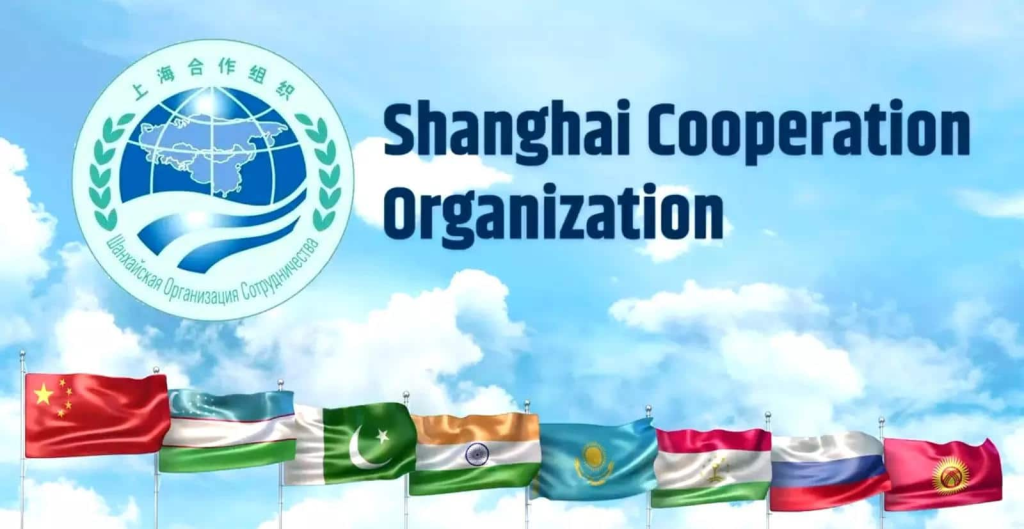
- Full Members (10): China, Russia, India, Pakistan, Kazakhstan, Kyrgyzstan, Tajikistan, Uzbekistan, Iran, Belarus.
- Secretariat (Beijing): Administrative and coordination functions.
- Regional Anti-Terrorist Structure (RATS), Tashkent: Core security mechanism.
Decision-Making Organs
- Council of Heads of State: Apex decision-making authority.
- Council of Heads of Government: Economic and policy coordination.
- Council of Foreign Ministers: External relations and diplomacy.
- Auxiliary Platforms: NSA meetings, Business Council, Interbank Consortium.
PM-WANI Scheme
Objective
- Prime Minister Wi-Fi Access Network Interface (PM-WANI) scheme launched in December 2020 by the Department of Telecommunications (DoT).
- Aims to democratise internet access by expanding public Wi-Fi hotspots, particularly in rural and underserved urban areas.
- Seeks to promote digital inclusion, affordable connectivity, and last-mile internet delivery.
Core Design Philosophy
- Based on the principle of “Public Wi-Fi as Digital Public Infrastructure”.
- Focus on decentralised, licence-free model to encourage small entrepreneurs.
- Enables ease of doing business in the telecom sector by removing entry barriers.
PM-WANI Ecosystem Architecture
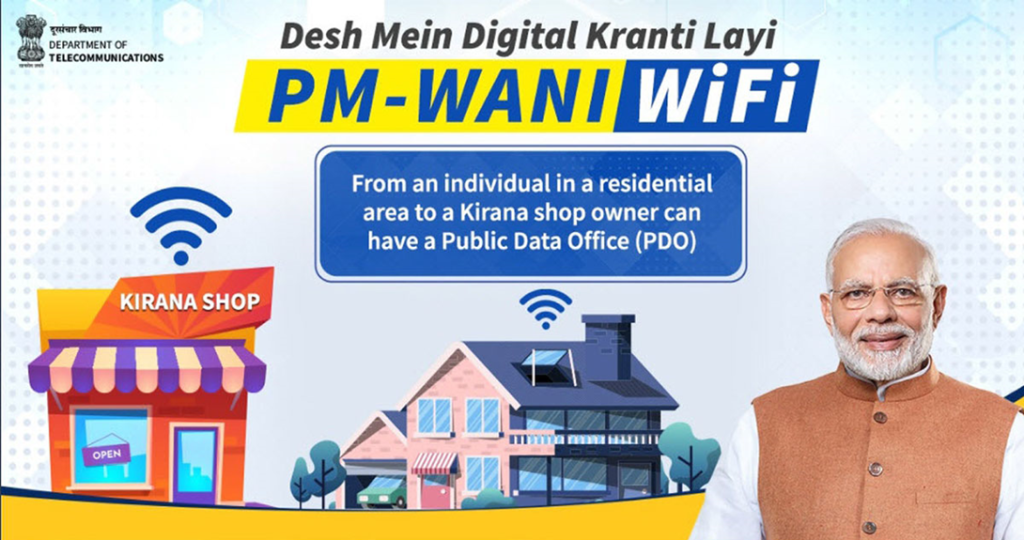
- Public Data Office (PDO)
- Establishes and operates WANI-compliant Wi-Fi hotspots.
- No licence or registration fee required from DoT.
- Typically includes local shops, kirana stores, and small establishments.
- Acts as a last-mile internet provider and income source for micro-entrepreneurs.
- Public Data Office Aggregator (PDOA)
- Aggregates multiple PDOs.
- Responsible for authorisation, accounting, and service management.
- Develop applications for:
- User authentication
- Discovery of nearby Wi-Fi hotspots
- Facilitate seamless user access and interface.
- Central Registry
- Maintains records of PDOs, PDOAs, and App Providers.
- Managed by Centre for Development of Telematics (C-DoT).
Access Mechanism
- User downloads a WANI-enabled app.
- Completes authentication process.
- App displays available public Wi-Fi hotspots nearby.
- User selects network and pays via digital mode or voucher.
- Internet access continues until data balance is exhausted.
CAR T-Cell Therapy
Concept
- CAR T-Cell Therapy (Chimeric Antigen Receptor T-Cell Therapy) is a cutting-edge immunotherapy used in cancer treatment.
- It involves genetic modification of a patient’s own T-cells to recognise and destroy cancer cells.
- Represents a shift from conventional chemotherapy to targeted, personalised medicine.
Mechanism of Action
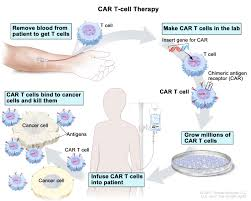
- Extraction: T-cells are collected from the patient’s blood.
- Genetic Engineering: T-cells are modified to express Chimeric Antigen Receptors (CARs).
- Multiplication: Engineered cells are expanded in laboratory conditions.
- Reinfusion: Modified CAR T-cells are infused back into the patient.
- Targeting: CAR T-cells identify and destroy cancerous B-cells, preventing relapse.
Clinical Relevance
- Particularly effective in B-cell malignancies such as:
- Acute Lymphoblastic Leukemia (ALL)
- Non-Hodgkin Lymphoma
- Used in relapsed or refractory cancers, where conventional therapies fail.
- Provides long-term immune surveillance, reducing recurrence risk.
Advantages over Conventional Therapy
- Highly specific: Targets cancer cells without damaging healthy tissues.
- Personalised treatment: Derived from patient’s own immune cells.
- Long-term efficacy: Modified cells persist and provide sustained immunity.
- Reduces dependence on repeated chemotherapy cycles.
India’s Breakthrough: NexCAR19
- NexCAR19 is India’s first indigenously developed CAR T-cell therapy.
- Developed through collaboration of:
- IIT Bombay
- Tata Memorial Centre
- ImmunoACT
- Notable for being one of the most affordable CAR-T therapies globally.
- Significance for India
- Enhances access to advanced cancer treatment.
- Positions India in global cell and gene therapy research.
- Supports Atmanirbhar Bharat in biotechnology.
- Future Potential
- Expansion into solid tumours and other cancers.
- Integration with gene editing and immunotherapy combinations.
- Potential to transform precision oncology in India.
Atacama Desert
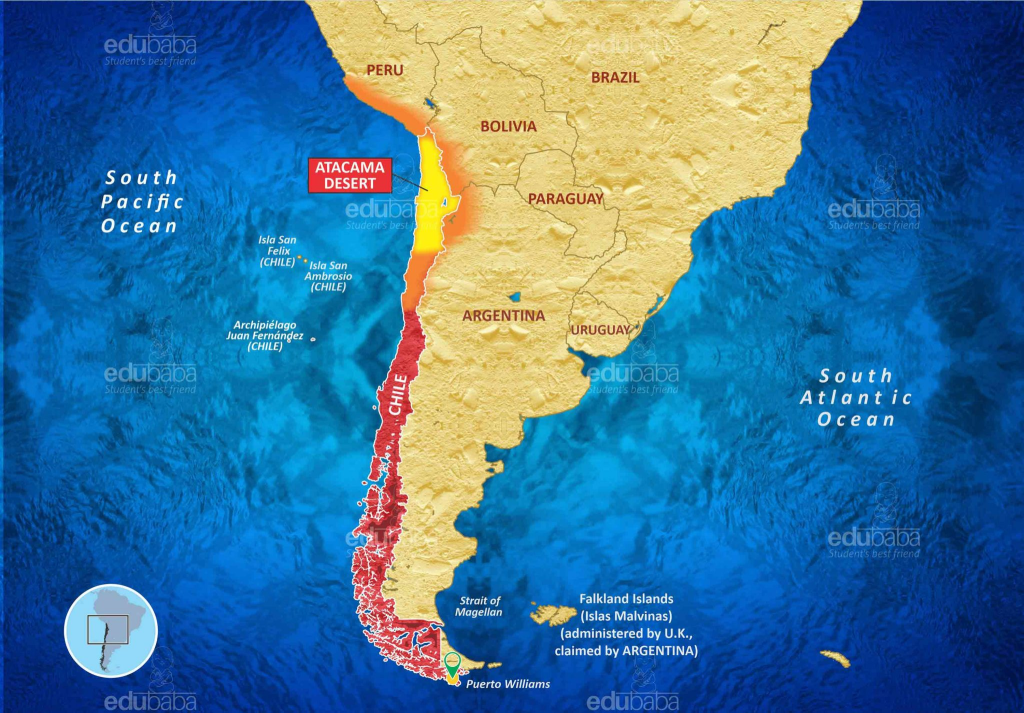
Location
- The Atacama Desert is the driest desert in the world, located in northern Chile (South America).
- Lies between the Andes Mountains (east) and the Pacific Ocean (west).
- Extends as a ~1,000 km long narrow coastal strip along Chile.
- Geopolitically connected with regions near Peru, Bolivia, and Argentina.
Climatic Characteristics
- Extremely low rainfall: Average ~1 mm/year.
- Some regions have never recorded rainfall (hyper-arid conditions).
- Temperature : Moderately stable (~18°C average), due to maritime influence.
- Reason for Extreme Aridity
- Cold Humboldt Current suppresses evaporation and cloud formation.
- Rain shadow effect of Andes blocks moisture from Amazon basin.
- Subtropical high-pressure belt inhibits precipitation.
Physical & Geological Features
- Contains ~12 volcanoes, mainly in Andean margins.
- Characterised by salt flats, barren plateaus, and rocky terrain.
- One of the oldest deserts in the world (geologically stable).
Economic Importance
- World’s largest deposits of Sodium Nitrate (Chile saltpetre).
- Used in fertilisers and explosives.
- Also rich in copper and lithium reserves.
Cloud Computing

Concept
- Cloud Computing refers to the delivery of computing services such as servers, storage, databases, networking, software, analytics, and intelligence over the Internet (“cloud”).
- It enables on-demand access to resources without owning physical infrastructure.
- Follows a pay-as-you-use model, ensuring cost efficiency and scalability.
Key Features
- On-demand self-service → Resources accessed instantly.
- Scalability & flexibility → Increase/decrease usage as required.
- Cost efficiency → No need for heavy capital investment.
- Remote accessibility → Data and services available anywhere.
Types of Cloud Computing
- Public Cloud
- Services delivered over the internet and shared across users.
- Managed by third-party providers.
- Examples: Amazon Web Services (AWS), Microsoft Azure.
- Private Cloud
- Dedicated to a single organisation.
- Offers higher security and control.
- Can be on-premises or externally hosted.
- Hybrid Cloud
- Combines public + private cloud.
- Sensitive data stored privately, while public cloud used for scalability.
- Multi-Cloud
- Use of multiple cloud providers simultaneously.
- Avoids vendor dependency and enhances flexibility.
- Infrastructure as a Service (IaaS)
- Provides basic computing infrastructure (servers, storage, networking).
- Offers maximum control to users.
- Example: Amazon EC2, Government’s MeghRaj Cloud.
- Platform as a Service (PaaS)
- Provides platform for application development.
- Developers focus on coding, not infrastructure.
- Example: Microsoft Azure App Services.
- Software as a Service (SaaS)
- Provides ready-to-use applications over the internet.
- No installation or maintenance required.
- Examples: Google Workspace, DigiLocker, BHIM, GSTN.
Mount Fuji

Overview
- Mount Fuji is located on Honshu Island (Japan), about 100 km southwest of Tokyo.
- It is the highest peak in Japan (3,776 m).
- Classified as a Stratovolcano (composite volcano) with a symmetrical conical shape.
- Designated as a UNESCO World Heritage Site (2013) for its cultural and aesthetic significance.
Geological Characteristics
- Formed through successive volcanic eruptions over thousands of years.
- Current structure stabilised around 300,000 years ago.
- Last major eruption: 1707 (Hoei eruption), which deposited ash over Edo (modern Tokyo).
- Considered dormant but active, hence closely monitored.
Climatic Features
- Exhibits altitudinal variation in climate.
- Summit remains snow-covered from November to May.
- Lower slopes experience temperate climatic conditions, while upper regions are cold and harsh.
Surrounding Geography
- Located within Fuji-Hakone-Izu National Park.
- Surrounded by the Fuji Five Lakes:
- Lake Kawaguchi
- Lake Yamanaka
- Lake Sai
- Lake Shoji
- Lake Motosu
Cultural & Religious Significance
- Recognised as a national symbol of Japan.
- Considered sacred in Shinto tradition, associated with deity Konohanasakuya-hime.
- One of Japan’s “Three Holy Mountains”.
